

Numerical Simulation of Gas–Liquid Flow …
39
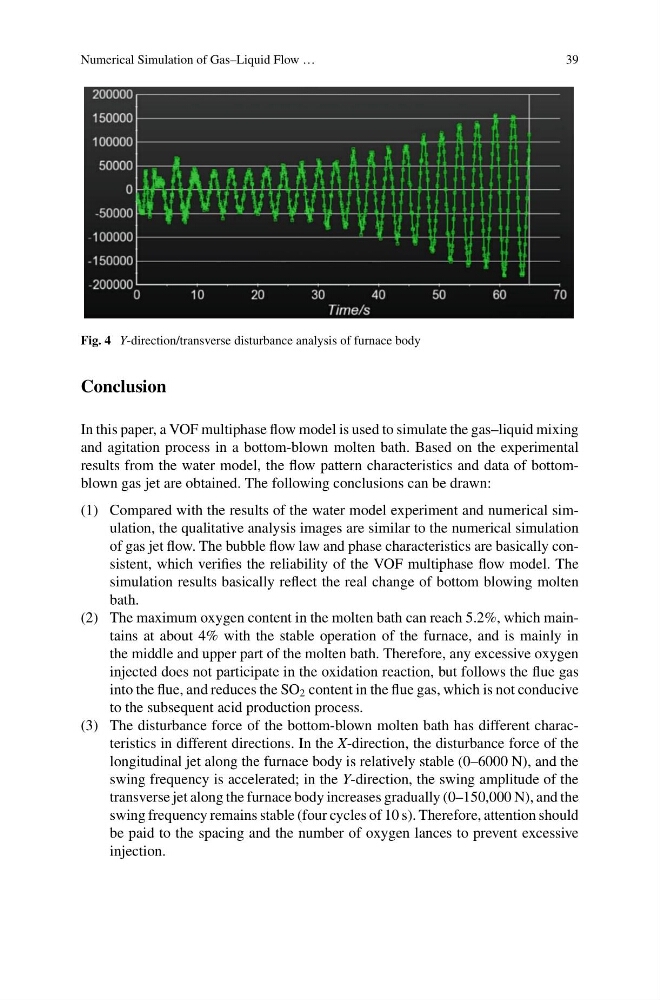
Fig. 4 Y-direction/transverse disturbance analysis of furnace body
Conclusion
In this paper, a VOF multiphase flow model is used to simulate the gas–liquid mixing
and agitation process in a bottom-blown molten bath. Based on the experimental
results from the water model, the flow pattern characteristics and data of bottomblown gas jet are obtained. The following conclusions can be drawn:
(1) Compared with the results of the water model experiment and numerical simulation, the qualitative analysis images are similar to the numerical simulation
of gas jet flow. The bubble flow law and phase characteristics are basically consistent, which verifies the reliability of the VOF multiphase flow model. The
simulation results basically reflect the real change of bottom blowing molten
bath.
(2) The maximum oxygen content in the molten bath can reach 5.2%, which maintains at about 4% with the stable operation of the furnace, and is mainly in
the middle and upper part of the molten bath. Therefore, any excessive oxygen
injected does not participate in the oxidation reaction, but follows the flue gas
into the flue, and reduces the SO 2 content in the flue gas, which is not conducive
to the subsequent acid production process.
(3) The disturbance force of the bottom-blown molten bath has different characteristics in different directions. In the X-direction, the disturbance force of the
longitudinal jet along the furnace body is relatively stable (0–6000 N), and the
swing frequency is accelerated; in the Y-direction, the swing amplitude of the
transverse jet along the furnace body increases gradually (0–150,000 N), and the
swing frequency remains stable (four cycles of 10 s). Therefore, attention should
be paid to the spacing and the number of oxygen lances to prevent excessive
injection.
39
Fig. 4 Y-direction/transverse disturbance analysis of furnace body
Conclusion
In this paper, a VOF multiphase flow model is used to simulate the gas–liquid mixing
and agitation process in a bottom-blown molten bath. Based on the experimental
results from the water model, the flow pattern characteristics and data of bottomblown gas jet are obtained. The following conclusions can be drawn:
(1) Compared with the results of the water model experiment and numerical simulation, the qualitative analysis images are similar to the numerical simulation
of gas jet flow. The bubble flow law and phase characteristics are basically consistent, which verifies the reliability of the VOF multiphase flow model. The
simulation results basically reflect the real change of bottom blowing molten
bath.
(2) The maximum oxygen content in the molten bath can reach 5.2%, which maintains at about 4% with the stable operation of the furnace, and is mainly in
the middle and upper part of the molten bath. Therefore, any excessive oxygen
injected does not participate in the oxidation reaction, but follows the flue gas
into the flue, and reduces the SO 2 content in the flue gas, which is not conducive
to the subsequent acid production process.
(3) The disturbance force of the bottom-blown molten bath has different characteristics in different directions. In the X-direction, the disturbance force of the
longitudinal jet along the furnace body is relatively stable (0–6000 N), and the
swing frequency is accelerated; in the Y-direction, the swing amplitude of the
transverse jet along the furnace body increases gradually (0–150,000 N), and the
swing frequency remains stable (four cycles of 10 s). Therefore, attention should
be paid to the spacing and the number of oxygen lances to prevent excessive
injection.