

Influence of Minor Elements in Waste Lead Battery Recycling
577
time. At the same time, refined lead dross generated during the Harris refining is
transferred to the sintering and smelting process.
Effect of Adhered Sulfuric Acid
Corrosive Damage on the CF Water Cooling Jacket
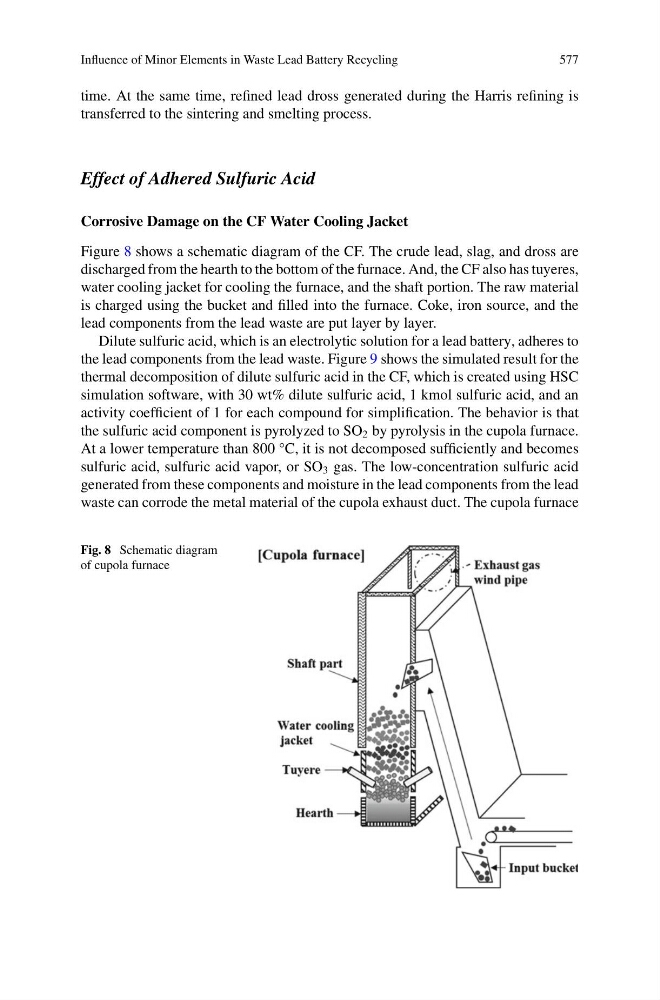
Figure 8 shows a schematic diagram of the CF. The crude lead, slag, and dross are
discharged from the hearth to the bottom of the furnace. And, the CF also has tuyeres,
water cooling jacket for cooling the furnace, and the shaft portion. The raw material
is charged using the bucket and filled into the furnace. Coke, iron source, and the
lead components from the lead waste are put layer by layer.
Dilute sulfuric acid, which is an electrolytic solution for a lead battery, adheres to
the lead components from the lead waste. Figure 9 shows the simulated result for the
thermal decomposition of dilute sulfuric acid in the CF, which is created using HSC
simulation software, with 30 wt% dilute sulfuric acid, 1 kmol sulfuric acid, and an
activity coefficient of 1 for each compound for simplification. The behavior is that
the sulfuric acid component is pyrolyzed to SO 2 by pyrolysis in the cupola furnace.
At a lower temperature than 800 °C, it is not decomposed sufficiently and becomes
sulfuric acid, sulfuric acid vapor, or SO 3 gas. The low-concentration sulfuric acid
generated from these components and moisture in the lead components from the lead
waste can corrode the metal material of the cupola exhaust duct. The cupola furnace
Fig. 8 Schematic diagram
of cupola furnace
577
time. At the same time, refined lead dross generated during the Harris refining is
transferred to the sintering and smelting process.
Effect of Adhered Sulfuric Acid
Corrosive Damage on the CF Water Cooling Jacket
Figure 8 shows a schematic diagram of the CF. The crude lead, slag, and dross are
discharged from the hearth to the bottom of the furnace. And, the CF also has tuyeres,
water cooling jacket for cooling the furnace, and the shaft portion. The raw material
is charged using the bucket and filled into the furnace. Coke, iron source, and the
lead components from the lead waste are put layer by layer.
Dilute sulfuric acid, which is an electrolytic solution for a lead battery, adheres to
the lead components from the lead waste. Figure 9 shows the simulated result for the
thermal decomposition of dilute sulfuric acid in the CF, which is created using HSC
simulation software, with 30 wt% dilute sulfuric acid, 1 kmol sulfuric acid, and an
activity coefficient of 1 for each compound for simplification. The behavior is that
the sulfuric acid component is pyrolyzed to SO 2 by pyrolysis in the cupola furnace.
At a lower temperature than 800 °C, it is not decomposed sufficiently and becomes
sulfuric acid, sulfuric acid vapor, or SO 3 gas. The low-concentration sulfuric acid
generated from these components and moisture in the lead components from the lead
waste can corrode the metal material of the cupola exhaust duct. The cupola furnace
Fig. 8 Schematic diagram
of cupola furnace