

476
K. Tang et al.
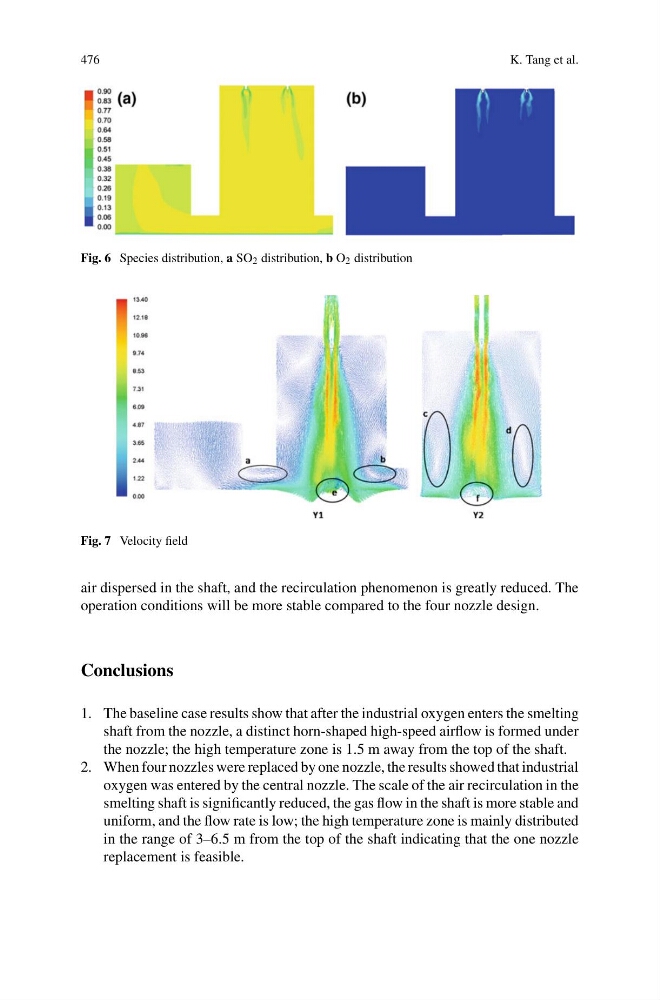
Fig. 6 Species distribution, a SO 2 distribution, b O 2 distribution
Fig. 7 Velocity field
air dispersed in the shaft, and the recirculation phenomenon is greatly reduced. The
operation conditions will be more stable compared to the four nozzle design.
Conclusions
1. The baseline case results show that after the industrial oxygen enters the smelting
shaft from the nozzle, a distinct horn-shaped high-speed airflow is formed under
the nozzle; the high temperature zone is 1.5 m away from the top of the shaft.
2. When four nozzles were replaced by one nozzle, the results showed that industrial
oxygen was entered by the central nozzle. The scale of the air recirculation in the
smelting shaft is significantly reduced, the gas flow in the shaft is more stable and
uniform, and the flow rate is low; the high temperature zone is mainly distributed
in the range of 3–6.5 m from the top of the shaft indicating that the one nozzle
replacement is feasible.
K. Tang et al.
Fig. 6 Species distribution, a SO 2 distribution, b O 2 distribution
Fig. 7 Velocity field
air dispersed in the shaft, and the recirculation phenomenon is greatly reduced. The
operation conditions will be more stable compared to the four nozzle design.
Conclusions
1. The baseline case results show that after the industrial oxygen enters the smelting
shaft from the nozzle, a distinct horn-shaped high-speed airflow is formed under
the nozzle; the high temperature zone is 1.5 m away from the top of the shaft.
2. When four nozzles were replaced by one nozzle, the results showed that industrial
oxygen was entered by the central nozzle. The scale of the air recirculation in the
smelting shaft is significantly reduced, the gas flow in the shaft is more stable and
uniform, and the flow rate is low; the high temperature zone is mainly distributed
in the range of 3–6.5 m from the top of the shaft indicating that the one nozzle
replacement is feasible.