

Leaching of Turkish Oxidized Pb–Zn Flotation Tailings …
453
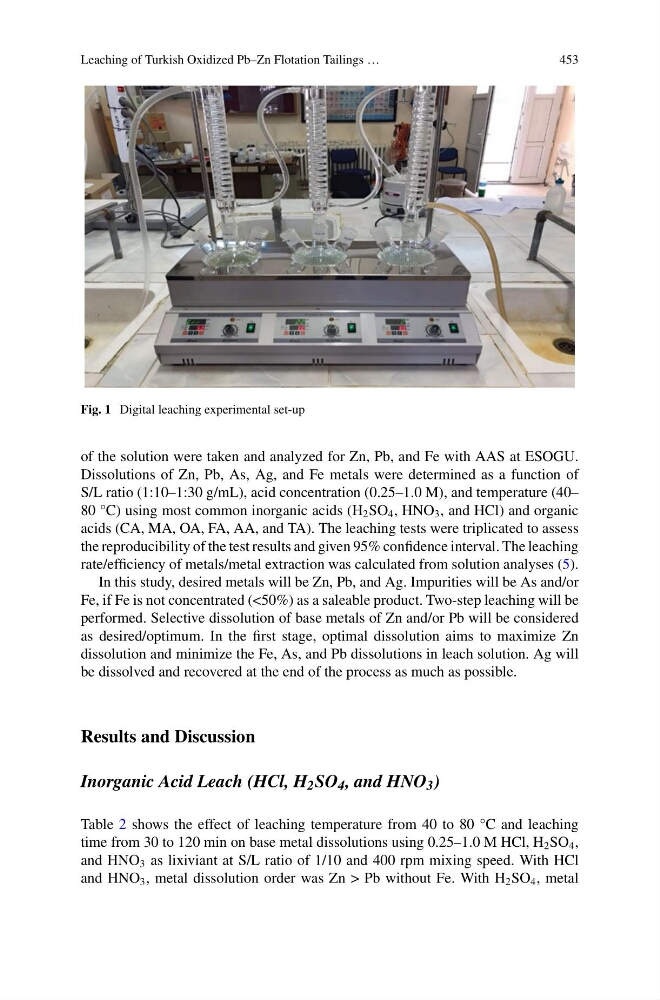
Fig. 1 Digital leaching experimental set-up
of the solution were taken and analyzed for Zn, Pb, and Fe with AAS at ESOGU.
Dissolutions of Zn, Pb, As, Ag, and Fe metals were determined as a function of
S/L ratio (1:10–1:30 g/mL), acid concentration (0.25–1.0 M), and temperature (40–
80 °C) using most common inorganic acids (H 2 SO 4 , HNO 3 , and HCl) and organic
acids (CA, MA, OA, FA, AA, and TA). The leaching tests were triplicated to assess
the reproducibility of the test results and given 95% confidence interval. The leaching
rate/efficiency of metals/metal extraction was calculated from solution analyses (5).
In this study, desired metals will be Zn, Pb, and Ag. Impurities will be As and/or
Fe, if Fe is not concentrated (<50%) as a saleable product. Two-step leaching will be
performed. Selective dissolution of base metals of Zn and/or Pb will be considered
as desired/optimum. In the first stage, optimal dissolution aims to maximize Zn
dissolution and minimize the Fe, As, and Pb dissolutions in leach solution. Ag will
be dissolved and recovered at the end of the process as much as possible.
Results and Discussion
Inorganic Acid Leach (HCl, H 2 SO 4 , and HNO 3 )
Table 2 shows the effect of leaching temperature from 40 to 80 °C and leaching
time from 30 to 120 min on base metal dissolutions using 0.25–1.0 M HCl, H 2 SO 4 ,
and HNO 3 as lixiviant at S/L ratio of 1/10 and 400 rpm mixing speed. With HCl
and HNO 3 , metal dissolution order was Zn > Pb without Fe. With H 2 SO 4 , metal
453
Fig. 1 Digital leaching experimental set-up
of the solution were taken and analyzed for Zn, Pb, and Fe with AAS at ESOGU.
Dissolutions of Zn, Pb, As, Ag, and Fe metals were determined as a function of
S/L ratio (1:10–1:30 g/mL), acid concentration (0.25–1.0 M), and temperature (40–
80 °C) using most common inorganic acids (H 2 SO 4 , HNO 3 , and HCl) and organic
acids (CA, MA, OA, FA, AA, and TA). The leaching tests were triplicated to assess
the reproducibility of the test results and given 95% confidence interval. The leaching
rate/efficiency of metals/metal extraction was calculated from solution analyses (5).
In this study, desired metals will be Zn, Pb, and Ag. Impurities will be As and/or
Fe, if Fe is not concentrated (<50%) as a saleable product. Two-step leaching will be
performed. Selective dissolution of base metals of Zn and/or Pb will be considered
as desired/optimum. In the first stage, optimal dissolution aims to maximize Zn
dissolution and minimize the Fe, As, and Pb dissolutions in leach solution. Ag will
be dissolved and recovered at the end of the process as much as possible.
Results and Discussion
Inorganic Acid Leach (HCl, H 2 SO 4 , and HNO 3 )
Table 2 shows the effect of leaching temperature from 40 to 80 °C and leaching
time from 30 to 120 min on base metal dissolutions using 0.25–1.0 M HCl, H 2 SO 4 ,
and HNO 3 as lixiviant at S/L ratio of 1/10 and 400 rpm mixing speed. With HCl
and HNO 3 , metal dissolution order was Zn > Pb without Fe. With H 2 SO 4 , metal