

Smelting Jarosite and Sulphur Residue in a Plasma Furnace
401
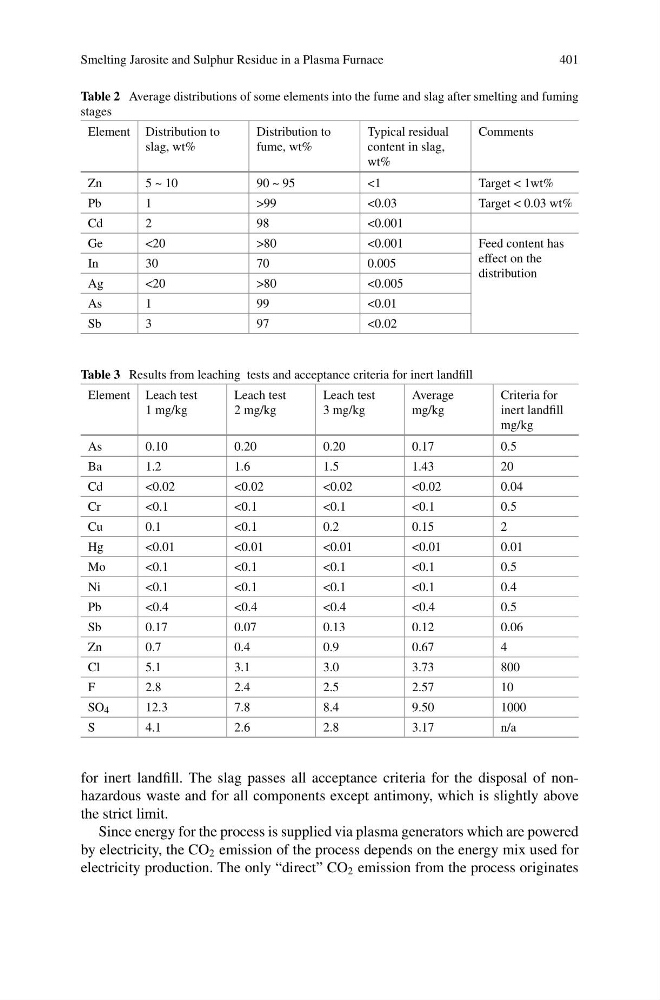
Table 2 Average distributions of some elements into the fume and slag after smelting and fuming
stages
Element Distribution to
slag, wt%
Distribution to
fume, wt%
Typical residual
content in slag,
wt%
Comments
Zn
5 ~ 10
90 ~ 95
<1
Target < 1wt%
Pb
1
>99
<0.03
Target < 0.03 wt%
Cd
2
98
<0.001
Ge
<20
>80
<0.001
Feed content has
effect on the
distribution
In
30
70
0.005
Ag
<20
>80
<0.005
As
1
99
<0.01
Sb
3
97
<0.02
Table 3 Results from leaching tests and acceptance criteria for inert landfill
Element Leach test
1 mg/kg
Leach test
2 mg/kg
Leach test
3 mg/kg
Average
mg/kg
Criteria for
inert landfill
mg/kg
As
0.10
0.20
0.20
0.17
0.5
Ba
1.2
1.6
1.5
1.43
20
Cd
<0.02
<0.02
<0.02
<0.02
0.04
Cr
<0.1
<0.1
<0.1
<0.1
0.5
Cu
0.1
<0.1
0.2
0.15
2
Hg
<0.01
<0.01
<0.01
<0.01
0.01
Mo
<0.1
<0.1
<0.1
<0.1
0.5
Ni
<0.1
<0.1
<0.1
<0.1
0.4
Pb
<0.4
<0.4
<0.4
<0.4
0.5
Sb
0.17
0.07
0.13
0.12
0.06
Zn
0.7
0.4
0.9
0.67
4
Cl
5.1
3.1
3.0
3.73
800
F
2.8
2.4
2.5
2.57
10
SO 4
12.3
7.8
8.4
9.50
1000
S
4.1
2.6
2.8
3.17
n/a
for inert landfill. The slag passes all acceptance criteria for the disposal of nonhazardous waste and for all components except antimony, which is slightly above
the strict limit.
Since energy for the process is supplied via plasma generators which are powered
by electricity, the CO 2 emission of the process depends on the energy mix used for
electricity production. The only “direct” CO 2 emission from the process originates
401
Table 2 Average distributions of some elements into the fume and slag after smelting and fuming
stages
Element Distribution to
slag, wt%
Distribution to
fume, wt%
Typical residual
content in slag,
wt%
Comments
Zn
5 ~ 10
90 ~ 95
<1
Target < 1wt%
Pb
1
>99
<0.03
Target < 0.03 wt%
Cd
2
98
<0.001
Ge
<20
>80
<0.001
Feed content has
effect on the
distribution
In
30
70
0.005
Ag
<20
>80
<0.005
As
1
99
<0.01
Sb
3
97
<0.02
Table 3 Results from leaching tests and acceptance criteria for inert landfill
Element Leach test
1 mg/kg
Leach test
2 mg/kg
Leach test
3 mg/kg
Average
mg/kg
Criteria for
inert landfill
mg/kg
As
0.10
0.20
0.20
0.17
0.5
Ba
1.2
1.6
1.5
1.43
20
Cd
<0.02
<0.02
<0.02
<0.02
0.04
Cr
<0.1
<0.1
<0.1
<0.1
0.5
Cu
0.1
<0.1
0.2
0.15
2
Hg
<0.01
<0.01
<0.01
<0.01
0.01
Mo
<0.1
<0.1
<0.1
<0.1
0.5
Ni
<0.1
<0.1
<0.1
<0.1
0.4
Pb
<0.4
<0.4
<0.4
<0.4
0.5
Sb
0.17
0.07
0.13
0.12
0.06
Zn
0.7
0.4
0.9
0.67
4
Cl
5.1
3.1
3.0
3.73
800
F
2.8
2.4
2.5
2.57
10
SO 4
12.3
7.8
8.4
9.50
1000
S
4.1
2.6
2.8
3.17
n/a
for inert landfill. The slag passes all acceptance criteria for the disposal of nonhazardous waste and for all components except antimony, which is slightly above
the strict limit.
Since energy for the process is supplied via plasma generators which are powered
by electricity, the CO 2 emission of the process depends on the energy mix used for
electricity production. The only “direct” CO 2 emission from the process originates