

374
B. Saxén et al.
The FPS is located upstream of the roasters close to the existing concentrate bins
and the new sulphur cake filtration station. It produces a homogeneous feed blend
for all three roasters. The core area of the FPS comprises granulator, dosing, feeding,
and discharge systems for the feed materials and the FPS product as well as a control
unit for the batch operated system. The FPS receives concentrate from the existing
belt conveyor running through the concentrate storage and sulphur cake from the new
sulphur cake filter presses. Both feed streams are dosed in an exact mass ratio into
the feed hoppers. The separate zinc concentrate and sulfur cake conveyor systems
convey a preset amount of materials, which is weighed on belt conveyor. A batch
cycle starts with discharge of an exact measured amount from the feed hopper into
the dedicated granulator. The operation of the granulator is a sequential treatment
scheme, which was developed during the pilot test work at Outotec R&D center. The
FPS product is finally conveyed to the existing roaster feed bins and fed into the
roasters via the existing table feeders and slinger belts.
Important process parameters have been analyzed and defined during the pilot
plant test work in Outotec R&D center. The FPS product is a homogeneous mixture
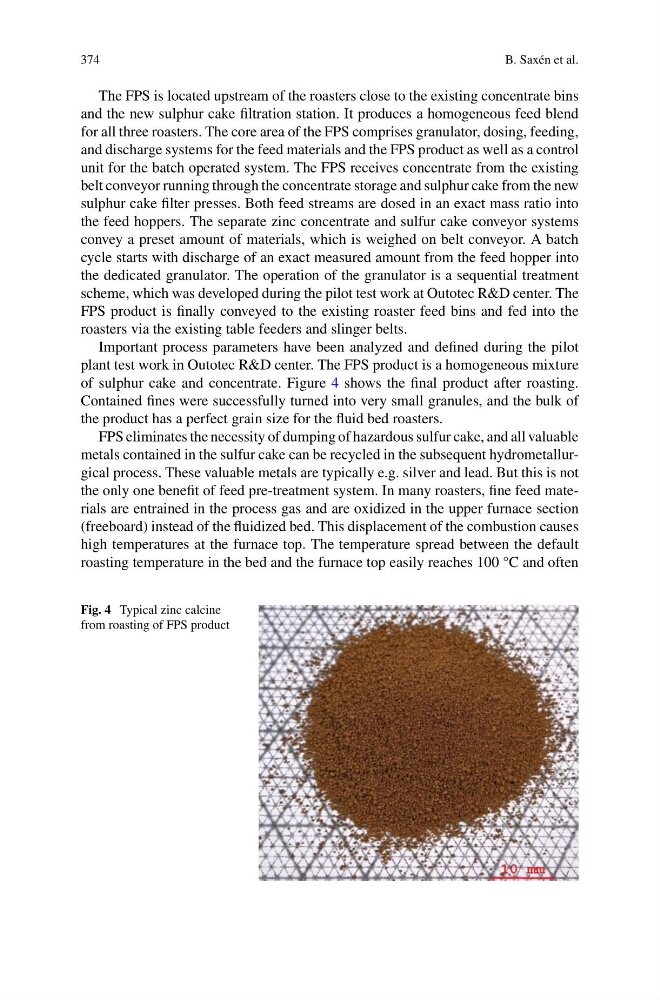
of sulphur cake and concentrate. Figure 4 shows the final product after roasting.
Contained fines were successfully turned into very small granules, and the bulk of
the product has a perfect grain size for the fluid bed roasters.
FPS eliminates the necessity of dumping of hazardous sulfur cake, and all valuable
metals contained in the sulfur cake can be recycled in the subsequent hydrometallurgical process. These valuable metals are typically e.g. silver and lead. But this is not
the only one benefit of feed pre-treatment system. In many roasters, fine feed materials are entrained in the process gas and are oxidized in the upper furnace section
(freeboard) instead of the fluidized bed. This displacement of the combustion causes
high temperatures at the furnace top. The temperature spread between the default
roasting temperature in the bed and the furnace top easily reaches 100 °C and often
Fig. 4 Typical zinc calcine
from roasting of FPS product
B. Saxén et al.
The FPS is located upstream of the roasters close to the existing concentrate bins
and the new sulphur cake filtration station. It produces a homogeneous feed blend
for all three roasters. The core area of the FPS comprises granulator, dosing, feeding,
and discharge systems for the feed materials and the FPS product as well as a control
unit for the batch operated system. The FPS receives concentrate from the existing
belt conveyor running through the concentrate storage and sulphur cake from the new
sulphur cake filter presses. Both feed streams are dosed in an exact mass ratio into
the feed hoppers. The separate zinc concentrate and sulfur cake conveyor systems
convey a preset amount of materials, which is weighed on belt conveyor. A batch
cycle starts with discharge of an exact measured amount from the feed hopper into
the dedicated granulator. The operation of the granulator is a sequential treatment
scheme, which was developed during the pilot test work at Outotec R&D center. The
FPS product is finally conveyed to the existing roaster feed bins and fed into the
roasters via the existing table feeders and slinger belts.
Important process parameters have been analyzed and defined during the pilot
plant test work in Outotec R&D center. The FPS product is a homogeneous mixture
of sulphur cake and concentrate. Figure 4 shows the final product after roasting.
Contained fines were successfully turned into very small granules, and the bulk of
the product has a perfect grain size for the fluid bed roasters.
FPS eliminates the necessity of dumping of hazardous sulfur cake, and all valuable
metals contained in the sulfur cake can be recycled in the subsequent hydrometallurgical process. These valuable metals are typically e.g. silver and lead. But this is not
the only one benefit of feed pre-treatment system. In many roasters, fine feed materials are entrained in the process gas and are oxidized in the upper furnace section
(freeboard) instead of the fluidized bed. This displacement of the combustion causes
high temperatures at the furnace top. The temperature spread between the default
roasting temperature in the bed and the furnace top easily reaches 100 °C and often
Fig. 4 Typical zinc calcine
from roasting of FPS product