

368
B. Saxén et al.
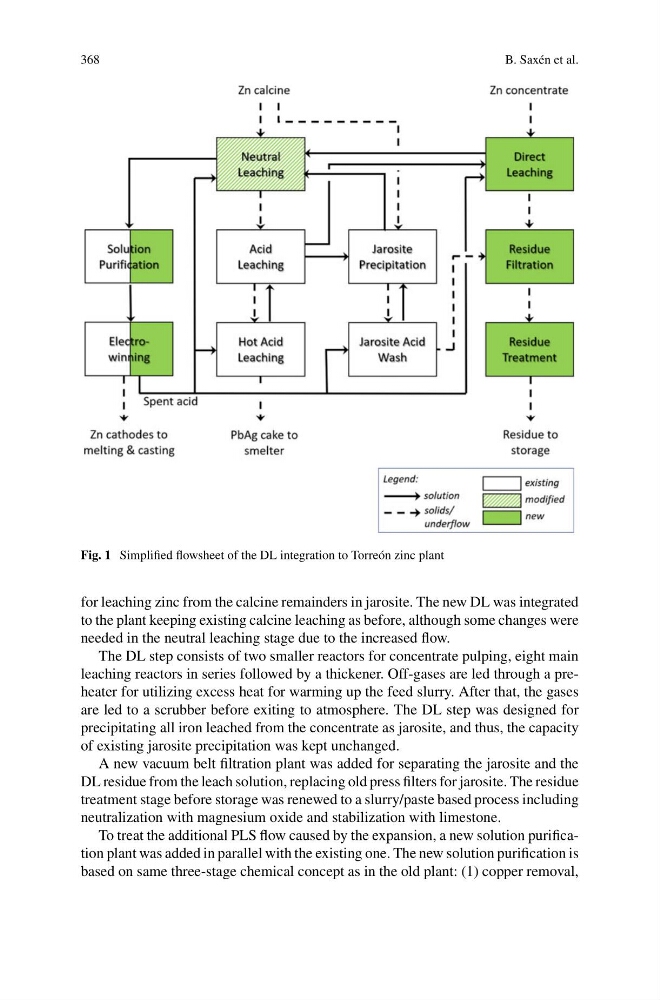
Fig. 1 Simplified flowsheet of the DL integration to Torreón zinc plant
for leaching zinc from the calcine remainders in jarosite. The new DL was integrated
to the plant keeping existing calcine leaching as before, although some changes were
needed in the neutral leaching stage due to the increased flow.
The DL step consists of two smaller reactors for concentrate pulping, eight main
leaching reactors in series followed by a thickener. Off-gases are led through a preheater for utilizing excess heat for warming up the feed slurry. After that, the gases
are led to a scrubber before exiting to atmosphere. The DL step was designed for
precipitating all iron leached from the concentrate as jarosite, and thus, the capacity
of existing jarosite precipitation was kept unchanged.
A new vacuum belt filtration plant was added for separating the jarosite and the
DL residue from the leach solution, replacing old press filters for jarosite. The residue
treatment stage before storage was renewed to a slurry/paste based process including
neutralization with magnesium oxide and stabilization with limestone.
To treat the additional PLS flow caused by the expansion, a new solution purification plant was added in parallel with the existing one. The new solution purification is
based on same three-stage chemical concept as in the old plant: (1) copper removal,
B. Saxén et al.
Fig. 1 Simplified flowsheet of the DL integration to Torreón zinc plant
for leaching zinc from the calcine remainders in jarosite. The new DL was integrated
to the plant keeping existing calcine leaching as before, although some changes were
needed in the neutral leaching stage due to the increased flow.
The DL step consists of two smaller reactors for concentrate pulping, eight main
leaching reactors in series followed by a thickener. Off-gases are led through a preheater for utilizing excess heat for warming up the feed slurry. After that, the gases
are led to a scrubber before exiting to atmosphere. The DL step was designed for
precipitating all iron leached from the concentrate as jarosite, and thus, the capacity
of existing jarosite precipitation was kept unchanged.
A new vacuum belt filtration plant was added for separating the jarosite and the
DL residue from the leach solution, replacing old press filters for jarosite. The residue
treatment stage before storage was renewed to a slurry/paste based process including
neutralization with magnesium oxide and stabilization with limestone.
To treat the additional PLS flow caused by the expansion, a new solution purification plant was added in parallel with the existing one. The new solution purification is
based on same three-stage chemical concept as in the old plant: (1) copper removal,