

360
A. Abadías Llamas et al.
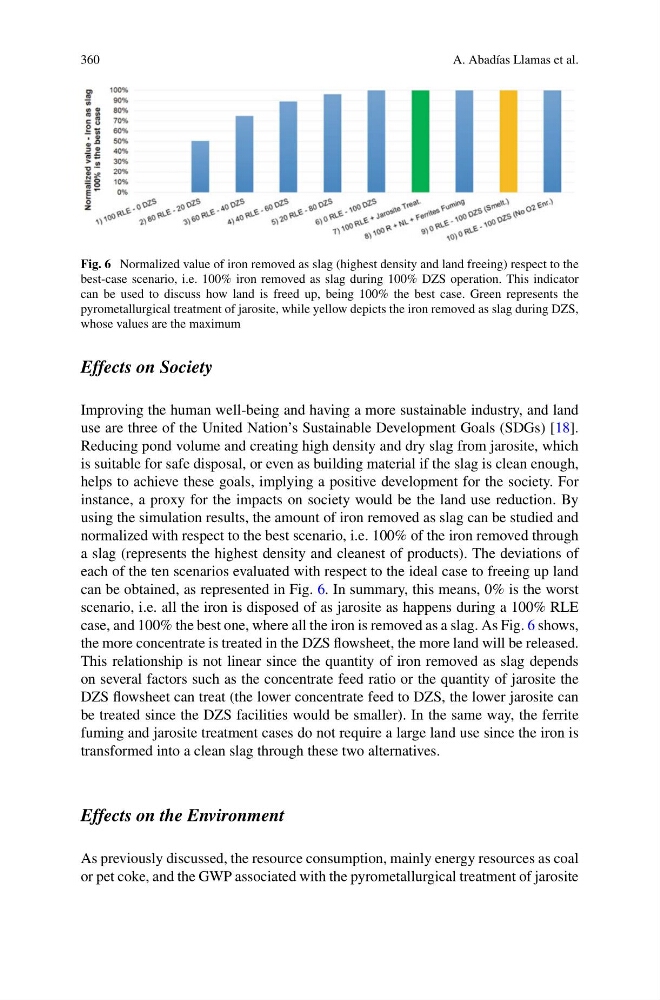
Fig. 6 Normalized value of iron removed as slag (highest density and land freeing) respect to the
best-case scenario, i.e. 100% iron removed as slag during 100% DZS operation. This indicator
can be used to discuss how land is freed up, being 100% the best case. Green represents the
pyrometallurgical treatment of jarosite, while yellow depicts the iron removed as slag during DZS,
whose values are the maximum
Effects on Society
Improving the human well-being and having a more sustainable industry, and land
use are three of the United Nation’s Sustainable Development Goals (SDGs) [18].
Reducing pond volume and creating high density and dry slag from jarosite, which
is suitable for safe disposal, or even as building material if the slag is clean enough,
helps to achieve these goals, implying a positive development for the society. For
instance, a proxy for the impacts on society would be the land use reduction. By
using the simulation results, the amount of iron removed as slag can be studied and
normalized with respect to the best scenario, i.e. 100% of the iron removed through
a slag (represents the highest density and cleanest of products). The deviations of
each of the ten scenarios evaluated with respect to the ideal case to freeing up land
can be obtained, as represented in Fig. 6. In summary, this means, 0% is the worst
scenario, i.e. all the iron is disposed of as jarosite as happens during a 100% RLE
case, and 100% the best one, where all the iron is removed as a slag. As Fig. 6 shows,
the more concentrate is treated in the DZS flowsheet, the more land will be released.
This relationship is not linear since the quantity of iron removed as slag depends
on several factors such as the concentrate feed ratio or the quantity of jarosite the
DZS flowsheet can treat (the lower concentrate feed to DZS, the lower jarosite can
be treated since the DZS facilities would be smaller). In the same way, the ferrite
fuming and jarosite treatment cases do not require a large land use since the iron is
transformed into a clean slag through these two alternatives.
Effects on the Environment
As previously discussed, the resource consumption, mainly energy resources as coal
or pet coke, and the GWP associated with the pyrometallurgical treatment of jarosite
A. Abadías Llamas et al.
Fig. 6 Normalized value of iron removed as slag (highest density and land freeing) respect to the
best-case scenario, i.e. 100% iron removed as slag during 100% DZS operation. This indicator
can be used to discuss how land is freed up, being 100% the best case. Green represents the
pyrometallurgical treatment of jarosite, while yellow depicts the iron removed as slag during DZS,
whose values are the maximum
Effects on Society
Improving the human well-being and having a more sustainable industry, and land
use are three of the United Nation’s Sustainable Development Goals (SDGs) [18].
Reducing pond volume and creating high density and dry slag from jarosite, which
is suitable for safe disposal, or even as building material if the slag is clean enough,
helps to achieve these goals, implying a positive development for the society. For
instance, a proxy for the impacts on society would be the land use reduction. By
using the simulation results, the amount of iron removed as slag can be studied and
normalized with respect to the best scenario, i.e. 100% of the iron removed through
a slag (represents the highest density and cleanest of products). The deviations of
each of the ten scenarios evaluated with respect to the ideal case to freeing up land
can be obtained, as represented in Fig. 6. In summary, this means, 0% is the worst
scenario, i.e. all the iron is disposed of as jarosite as happens during a 100% RLE
case, and 100% the best one, where all the iron is removed as a slag. As Fig. 6 shows,
the more concentrate is treated in the DZS flowsheet, the more land will be released.
This relationship is not linear since the quantity of iron removed as slag depends
on several factors such as the concentrate feed ratio or the quantity of jarosite the
DZS flowsheet can treat (the lower concentrate feed to DZS, the lower jarosite can
be treated since the DZS facilities would be smaller). In the same way, the ferrite
fuming and jarosite treatment cases do not require a large land use since the iron is
transformed into a clean slag through these two alternatives.
Effects on the Environment
As previously discussed, the resource consumption, mainly energy resources as coal
or pet coke, and the GWP associated with the pyrometallurgical treatment of jarosite