

358
A. Abadías Llamas et al.
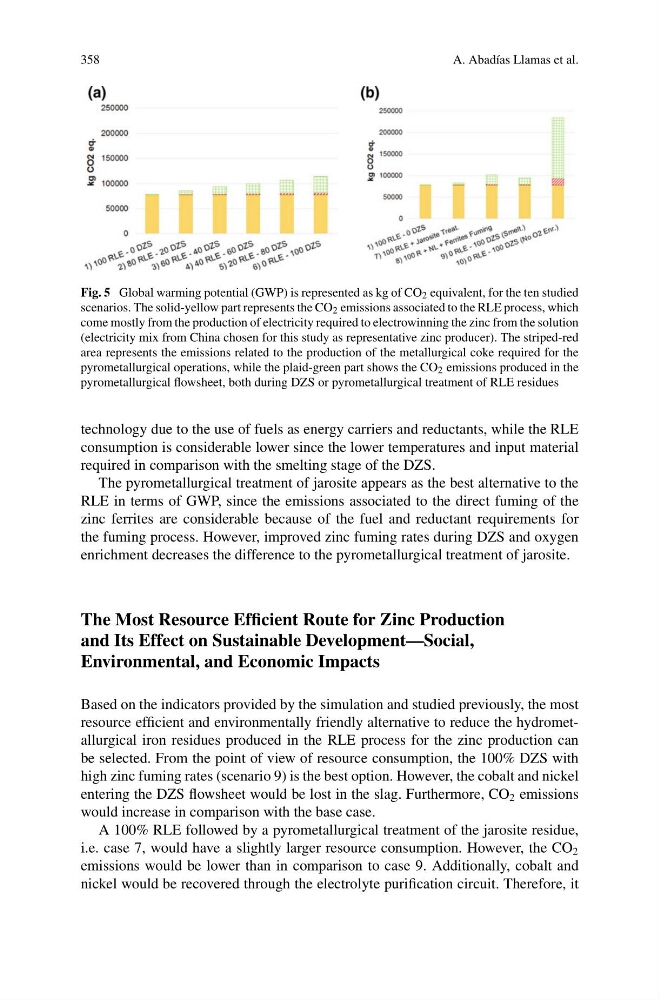
Fig. 5 Global warming potential (GWP) is represented as kg of CO 2 equivalent, for the ten studied
scenarios. The solid-yellow part represents the CO 2 emissions associated to the RLE process, which
come mostly from the production of electricity required to electrowinning the zinc from the solution
(electricity mix from China chosen for this study as representative zinc producer). The striped-red
area represents the emissions related to the production of the metallurgical coke required for the
pyrometallurgical operations, while the plaid-green part shows the CO 2 emissions produced in the
pyrometallurgical flowsheet, both during DZS or pyrometallurgical treatment of RLE residues
technology due to the use of fuels as energy carriers and reductants, while the RLE
consumption is considerable lower since the lower temperatures and input material
required in comparison with the smelting stage of the DZS.
The pyrometallurgical treatment of jarosite appears as the best alternative to the
RLE in terms of GWP, since the emissions associated to the direct fuming of the
zinc ferrites are considerable because of the fuel and reductant requirements for
the fuming process. However, improved zinc fuming rates during DZS and oxygen
enrichment decreases the difference to the pyrometallurgical treatment of jarosite.
The Most Resource Efficient Route for Zinc Production
and Its Effect on Sustainable Development—Social,
Environmental, and Economic Impacts
Based on the indicators provided by the simulation and studied previously, the most
resource efficient and environmentally friendly alternative to reduce the hydrometallurgical iron residues produced in the RLE process for the zinc production can
be selected. From the point of view of resource consumption, the 100% DZS with
high zinc fuming rates (scenario 9) is the best option. However, the cobalt and nickel
entering the DZS flowsheet would be lost in the slag. Furthermore, CO 2 emissions
would increase in comparison with the base case.
A 100% RLE followed by a pyrometallurgical treatment of the jarosite residue,
i.e. case 7, would have a slightly larger resource consumption. However, the CO 2
emissions would be lower than in comparison to case 9. Additionally, cobalt and
nickel would be recovered through the electrolyte purification circuit. Therefore, it
A. Abadías Llamas et al.
Fig. 5 Global warming potential (GWP) is represented as kg of CO 2 equivalent, for the ten studied
scenarios. The solid-yellow part represents the CO 2 emissions associated to the RLE process, which
come mostly from the production of electricity required to electrowinning the zinc from the solution
(electricity mix from China chosen for this study as representative zinc producer). The striped-red
area represents the emissions related to the production of the metallurgical coke required for the
pyrometallurgical operations, while the plaid-green part shows the CO 2 emissions produced in the
pyrometallurgical flowsheet, both during DZS or pyrometallurgical treatment of RLE residues
technology due to the use of fuels as energy carriers and reductants, while the RLE
consumption is considerable lower since the lower temperatures and input material
required in comparison with the smelting stage of the DZS.
The pyrometallurgical treatment of jarosite appears as the best alternative to the
RLE in terms of GWP, since the emissions associated to the direct fuming of the
zinc ferrites are considerable because of the fuel and reductant requirements for
the fuming process. However, improved zinc fuming rates during DZS and oxygen
enrichment decreases the difference to the pyrometallurgical treatment of jarosite.
The Most Resource Efficient Route for Zinc Production
and Its Effect on Sustainable Development—Social,
Environmental, and Economic Impacts
Based on the indicators provided by the simulation and studied previously, the most
resource efficient and environmentally friendly alternative to reduce the hydrometallurgical iron residues produced in the RLE process for the zinc production can
be selected. From the point of view of resource consumption, the 100% DZS with
high zinc fuming rates (scenario 9) is the best option. However, the cobalt and nickel
entering the DZS flowsheet would be lost in the slag. Furthermore, CO 2 emissions
would increase in comparison with the base case.
A 100% RLE followed by a pyrometallurgical treatment of the jarosite residue,
i.e. case 7, would have a slightly larger resource consumption. However, the CO 2
emissions would be lower than in comparison to case 9. Additionally, cobalt and
nickel would be recovered through the electrolyte purification circuit. Therefore, it