

344
E. Jak et al.
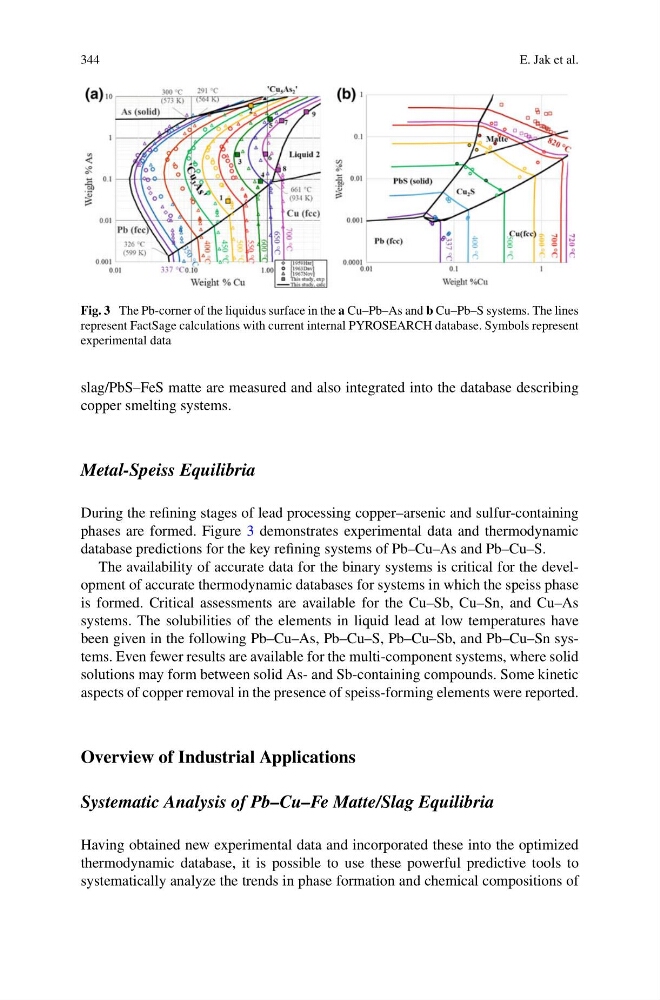
Fig. 3 The Pb-corner of the liquidus surface in the a Cu–Pb–As and b Cu–Pb–S systems. The lines
represent FactSage calculations with current internal PYROSEARCH database. Symbols represent
experimental data
slag/PbS–FeS matte are measured and also integrated into the database describing
copper smelting systems.
Metal-Speiss Equilibria
During the refining stages of lead processing copper–arsenic and sulfur-containing
phases are formed. Figure 3 demonstrates experimental data and thermodynamic
database predictions for the key refining systems of Pb–Cu–As and Pb–Cu–S.
The availability of accurate data for the binary systems is critical for the development of accurate thermodynamic databases for systems in which the speiss phase
is formed. Critical assessments are available for the Cu–Sb, Cu–Sn, and Cu–As
systems. The solubilities of the elements in liquid lead at low temperatures have
been given in the following Pb–Cu–As, Pb–Cu–S, Pb–Cu–Sb, and Pb–Cu–Sn systems. Even fewer results are available for the multi-component systems, where solid
solutions may form between solid As- and Sb-containing compounds. Some kinetic
aspects of copper removal in the presence of speiss-forming elements were reported.
Overview of Industrial Applications
Systematic Analysis of Pb–Cu–Fe Matte/Slag Equilibria
Having obtained new experimental data and incorporated these into the optimized
thermodynamic database, it is possible to use these powerful predictive tools to
systematically analyze the trends in phase formation and chemical compositions of
E. Jak et al.
Fig. 3 The Pb-corner of the liquidus surface in the a Cu–Pb–As and b Cu–Pb–S systems. The lines
represent FactSage calculations with current internal PYROSEARCH database. Symbols represent
experimental data
slag/PbS–FeS matte are measured and also integrated into the database describing
copper smelting systems.
Metal-Speiss Equilibria
During the refining stages of lead processing copper–arsenic and sulfur-containing
phases are formed. Figure 3 demonstrates experimental data and thermodynamic
database predictions for the key refining systems of Pb–Cu–As and Pb–Cu–S.
The availability of accurate data for the binary systems is critical for the development of accurate thermodynamic databases for systems in which the speiss phase
is formed. Critical assessments are available for the Cu–Sb, Cu–Sn, and Cu–As
systems. The solubilities of the elements in liquid lead at low temperatures have
been given in the following Pb–Cu–As, Pb–Cu–S, Pb–Cu–Sb, and Pb–Cu–Sn systems. Even fewer results are available for the multi-component systems, where solid
solutions may form between solid As- and Sb-containing compounds. Some kinetic
aspects of copper removal in the presence of speiss-forming elements were reported.
Overview of Industrial Applications
Systematic Analysis of Pb–Cu–Fe Matte/Slag Equilibria
Having obtained new experimental data and incorporated these into the optimized
thermodynamic database, it is possible to use these powerful predictive tools to
systematically analyze the trends in phase formation and chemical compositions of