

342
E. Jak et al.
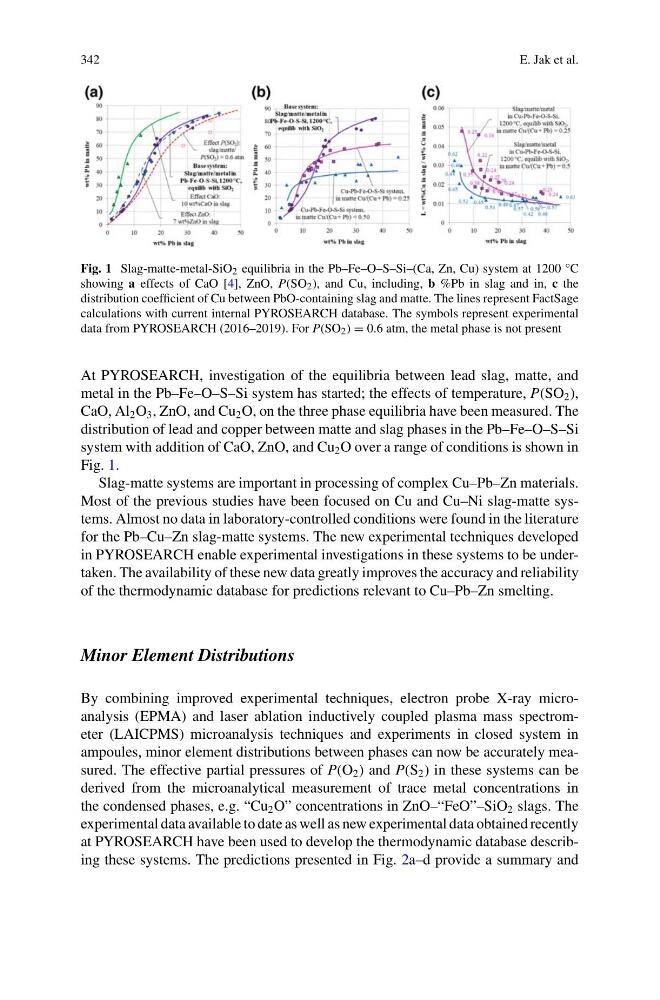
Fig. 1 Slag-matte-metal-SiO 2 equilibria in the Pb–Fe–O–S–Si–(Ca, Zn, Cu) system at 1200 °C
showing a effects of CaO [4], ZnO, P(SO 2 ), and Cu, including, b %Pb in slag and in, c the
distribution coefficient of Cu between PbO-containing slag and matte. The lines represent FactSage
calculations with current internal PYROSEARCH database. The symbols represent experimental
data from PYROSEARCH (2016–2019). For P(SO 2 ) = 0.6 atm, the metal phase is not present
At PYROSEARCH, investigation of the equilibria between lead slag, matte, and
metal in the Pb–Fe–O–S–Si system has started; the effects of temperature, P(SO 2 ),
CaO, Al 2 O 3 , ZnO, and Cu 2 O, on the three phase equilibria have been measured. The
distribution of lead and copper between matte and slag phases in the Pb–Fe–O–S–Si
system with addition of CaO, ZnO, and Cu 2 O over a range of conditions is shown in
Fig. 1.
Slag-matte systems are important in processing of complex Cu–Pb–Zn materials.
Most of the previous studies have been focused on Cu and Cu–Ni slag-matte systems. Almost no data in laboratory-controlled conditions were found in the literature
for the Pb–Cu–Zn slag-matte systems. The new experimental techniques developed
in PYROSEARCH enable experimental investigations in these systems to be undertaken. The availability of these new data greatly improves the accuracy and reliability
of the thermodynamic database for predictions relevant to Cu–Pb–Zn smelting.
Minor Element Distributions
By combining improved experimental techniques, electron probe X-ray microanalysis (EPMA) and laser ablation inductively coupled plasma mass spectrometer (LAICPMS) microanalysis techniques and experiments in closed system in
ampoules, minor element distributions between phases can now be accurately measured. The effective partial pressures of P(O 2 ) and P(S 2 ) in these systems can be
derived from the microanalytical measurement of trace metal concentrations in
the condensed phases, e.g. “Cu 2 O” concentrations in ZnO–“FeO”–SiO 2 slags. The
experimental data available to date as well as new experimental data obtained recently
at PYROSEARCH have been used to develop the thermodynamic database describing these systems. The predictions presented in Fig. 2a–d provide a summary and
E. Jak et al.
Fig. 1 Slag-matte-metal-SiO 2 equilibria in the Pb–Fe–O–S–Si–(Ca, Zn, Cu) system at 1200 °C
showing a effects of CaO [4], ZnO, P(SO 2 ), and Cu, including, b %Pb in slag and in, c the
distribution coefficient of Cu between PbO-containing slag and matte. The lines represent FactSage
calculations with current internal PYROSEARCH database. The symbols represent experimental
data from PYROSEARCH (2016–2019). For P(SO 2 ) = 0.6 atm, the metal phase is not present
At PYROSEARCH, investigation of the equilibria between lead slag, matte, and
metal in the Pb–Fe–O–S–Si system has started; the effects of temperature, P(SO 2 ),
CaO, Al 2 O 3 , ZnO, and Cu 2 O, on the three phase equilibria have been measured. The
distribution of lead and copper between matte and slag phases in the Pb–Fe–O–S–Si
system with addition of CaO, ZnO, and Cu 2 O over a range of conditions is shown in
Fig. 1.
Slag-matte systems are important in processing of complex Cu–Pb–Zn materials.
Most of the previous studies have been focused on Cu and Cu–Ni slag-matte systems. Almost no data in laboratory-controlled conditions were found in the literature
for the Pb–Cu–Zn slag-matte systems. The new experimental techniques developed
in PYROSEARCH enable experimental investigations in these systems to be undertaken. The availability of these new data greatly improves the accuracy and reliability
of the thermodynamic database for predictions relevant to Cu–Pb–Zn smelting.
Minor Element Distributions
By combining improved experimental techniques, electron probe X-ray microanalysis (EPMA) and laser ablation inductively coupled plasma mass spectrometer (LAICPMS) microanalysis techniques and experiments in closed system in
ampoules, minor element distributions between phases can now be accurately measured. The effective partial pressures of P(O 2 ) and P(S 2 ) in these systems can be
derived from the microanalytical measurement of trace metal concentrations in
the condensed phases, e.g. “Cu 2 O” concentrations in ZnO–“FeO”–SiO 2 slags. The
experimental data available to date as well as new experimental data obtained recently
at PYROSEARCH have been used to develop the thermodynamic database describing these systems. The predictions presented in Fig. 2a–d provide a summary and