

196
P. Weber et al.
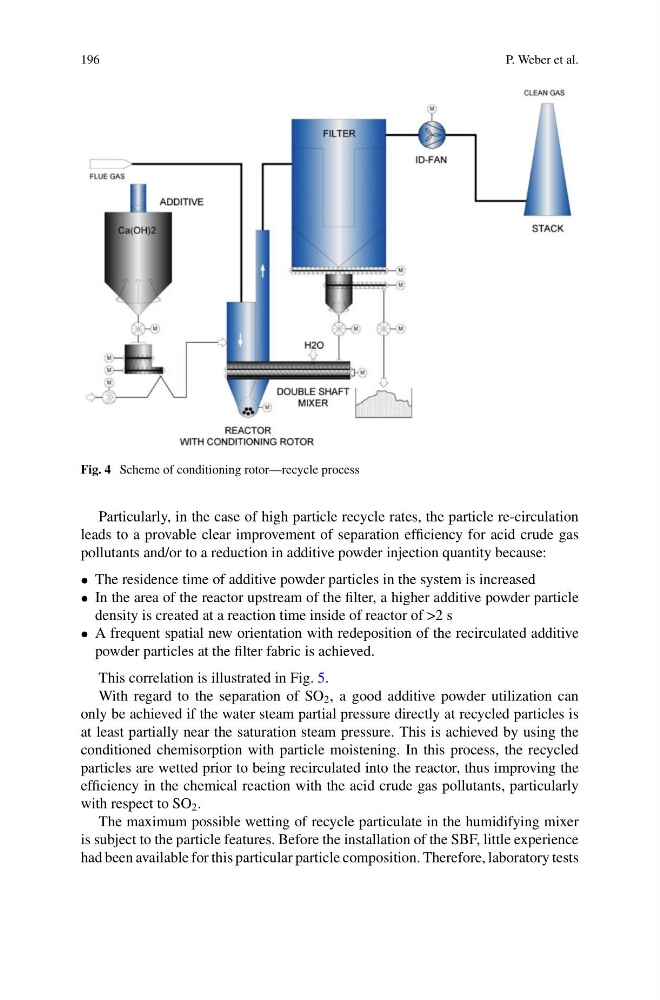
Fig. 4 Scheme of conditioning rotor—recycle process
Particularly, in the case of high particle recycle rates, the particle re-circulation
leads to a provable clear improvement of separation efficiency for acid crude gas
pollutants and/or to a reduction in additive powder injection quantity because:
• The residence time of additive powder particles in the system is increased
• In the area of the reactor upstream of the filter, a higher additive powder particle
density is created at a reaction time inside of reactor of >2 s
• A frequent spatial new orientation with redeposition of the recirculated additive
powder particles at the filter fabric is achieved.
This correlation is illustrated in Fig. 5.
With regard to the separation of SO 2 , a good additive powder utilization can
only be achieved if the water steam partial pressure directly at recycled particles is
at least partially near the saturation steam pressure. This is achieved by using the
conditioned chemisorption with particle moistening. In this process, the recycled
particles are wetted prior to being recirculated into the reactor, thus improving the
efficiency in the chemical reaction with the acid crude gas pollutants, particularly
with respect to SO 2 .
The maximum possible wetting of recycle particulate in the humidifying mixer
is subject to the particle features. Before the installation of the SBF, little experience
had been available for this particular particle composition. Therefore, laboratory tests
P. Weber et al.
Fig. 4 Scheme of conditioning rotor—recycle process
Particularly, in the case of high particle recycle rates, the particle re-circulation
leads to a provable clear improvement of separation efficiency for acid crude gas
pollutants and/or to a reduction in additive powder injection quantity because:
• The residence time of additive powder particles in the system is increased
• In the area of the reactor upstream of the filter, a higher additive powder particle
density is created at a reaction time inside of reactor of >2 s
• A frequent spatial new orientation with redeposition of the recirculated additive
powder particles at the filter fabric is achieved.
This correlation is illustrated in Fig. 5.
With regard to the separation of SO 2 , a good additive powder utilization can
only be achieved if the water steam partial pressure directly at recycled particles is
at least partially near the saturation steam pressure. This is achieved by using the
conditioned chemisorption with particle moistening. In this process, the recycled
particles are wetted prior to being recirculated into the reactor, thus improving the
efficiency in the chemical reaction with the acid crude gas pollutants, particularly
with respect to SO 2 .
The maximum possible wetting of recycle particulate in the humidifying mixer
is subject to the particle features. Before the installation of the SBF, little experience
had been available for this particular particle composition. Therefore, laboratory tests