

120
M. Moats and T. Hymer
Table 1 Descriptions of zinc structure and morphology used by others and in this paper
Adcock and Ault [10] Mackinnon et al. [11] Winand [12]
This Paper
Doughy
Basal
Basis reproduced (or
field-oriented
isolated crystals)
Coarse sand or
spongy
Pin holes
Intermediate
Twining intermediate
or field-oriented
texture
Pin holes or coarse
sand
Compact
Triangular
Unoriented,
dispersed
Naugahyde ®
Stressed
Vertical
Field-oriented
textured
Clam shells
literature with correlation to words used in this guide. We are using names common to most Americans such spongy, lava-ish, spiderwebs, Naugahyde
® (imitation
leather with bumps like an indoor basketball), coarse sand, clam shells, pin holes,
and dendrites.
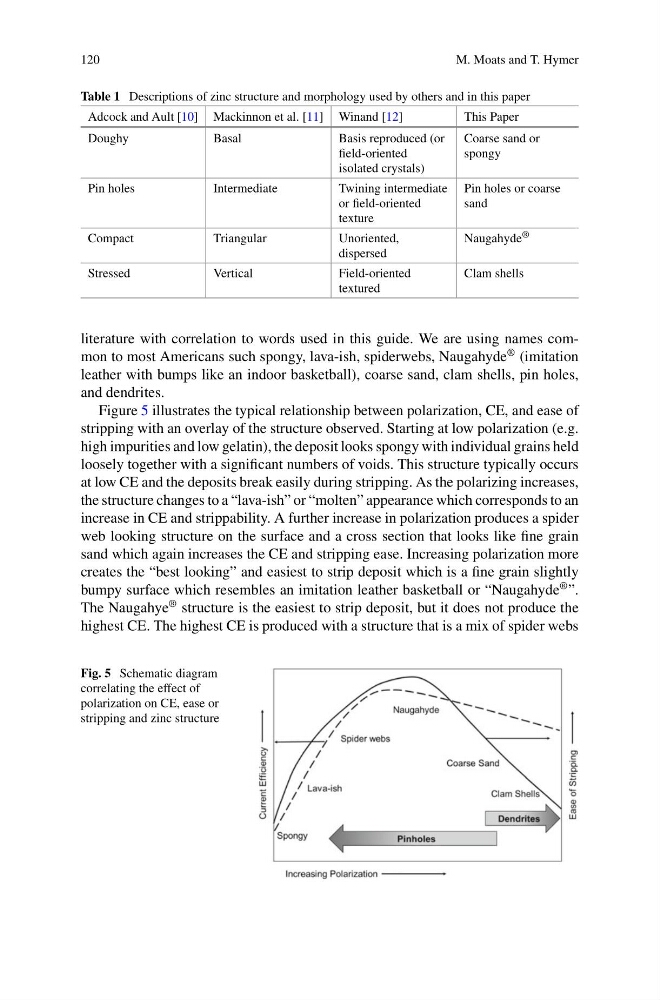
Figure 5 illustrates the typical relationship between polarization, CE, and ease of
stripping with an overlay of the structure observed. Starting at low polarization (e.g.
high impurities and low gelatin), the deposit looks spongy with individual grains held
loosely together with a significant numbers of voids. This structure typically occurs
at low CE and the deposits break easily during stripping. As the polarizing increases,
the structure changes to a “lava-ish” or “molten” appearance which corresponds to an
increase in CE and strippability. A further increase in polarization produces a spider
web looking structure on the surface and a cross section that looks like fine grain
sand which again increases the CE and stripping ease. Increasing polarization more
creates the “best looking” and easiest to strip deposit which is a fine grain slightly
bumpy surface which resembles an imitation leather basketball or “Naugahyde
® ”.
The Naugahye
® structure is the easiest to strip deposit, but it does not produce the
highest CE. The highest CE is produced with a structure that is a mix of spider webs
Fig. 5 Schematic diagram
correlating the effect of
polarization on CE, ease or
stripping and zinc structure
M. Moats and T. Hymer
Table 1 Descriptions of zinc structure and morphology used by others and in this paper
Adcock and Ault [10] Mackinnon et al. [11] Winand [12]
This Paper
Doughy
Basal
Basis reproduced (or
field-oriented
isolated crystals)
Coarse sand or
spongy
Pin holes
Intermediate
Twining intermediate
or field-oriented
texture
Pin holes or coarse
sand
Compact
Triangular
Unoriented,
dispersed
Naugahyde ®
Stressed
Vertical
Field-oriented
textured
Clam shells
literature with correlation to words used in this guide. We are using names common to most Americans such spongy, lava-ish, spiderwebs, Naugahyde
® (imitation
leather with bumps like an indoor basketball), coarse sand, clam shells, pin holes,
and dendrites.
Figure 5 illustrates the typical relationship between polarization, CE, and ease of
stripping with an overlay of the structure observed. Starting at low polarization (e.g.
high impurities and low gelatin), the deposit looks spongy with individual grains held
loosely together with a significant numbers of voids. This structure typically occurs
at low CE and the deposits break easily during stripping. As the polarizing increases,
the structure changes to a “lava-ish” or “molten” appearance which corresponds to an
increase in CE and strippability. A further increase in polarization produces a spider
web looking structure on the surface and a cross section that looks like fine grain
sand which again increases the CE and stripping ease. Increasing polarization more
creates the “best looking” and easiest to strip deposit which is a fine grain slightly
bumpy surface which resembles an imitation leather basketball or “Naugahyde
® ”.
The Naugahye
® structure is the easiest to strip deposit, but it does not produce the
highest CE. The highest CE is produced with a structure that is a mix of spider webs
Fig. 5 Schematic diagram
correlating the effect of
polarization on CE, ease or
stripping and zinc structure