

Production of SHG Zinc From 100% Recycled Materials
87
All construction was performed within the existing refinery, which yielded significant cost and schedule risk due to access issues and potential clashes with existing
equipment. The use of high-resolution 3D scanning, modular design, pre-fabrication,
and construction methods proved invaluable to minimize construction risk.
The project was approved in Dec 2017, with first Zn produced in April 2019,
yielding an overall project schedule of 16.5 months, versus the approved project
schedule of 15 months. The final project cost was 4.6% above the original budget,
well within the original estimate range of ±25%. A high level of piping construction
quality was achieved, evidenced by a thermoplastic weld failure rate of less than
0.1%, experienced during the restart of the facility.
Restart
The cell house rectifier power was achieved within three weeks of feeding WOX
to the leach circuit. The start-up proceeded without major process upsets in the
leach, SX and bleed treatment sections, and the impact of the various upgrades and
modifications were apparent in the early Key Process Indicators (KPI’s).
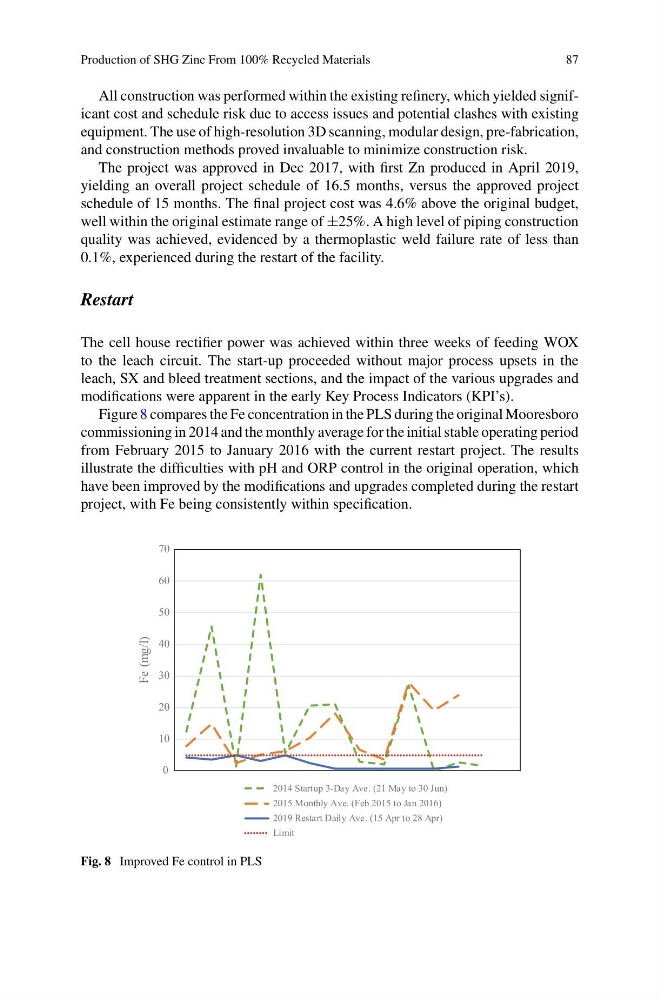
Figure 8 compares the Fe concentration in the PLS during the original Mooresboro
commissioning in 2014 and the monthly average for the initial stable operating period
from February 2015 to January 2016 with the current restart project. The results
illustrate the difficulties with pH and ORP control in the original operation, which
have been improved by the modifications and upgrades completed during the restart
project, with Fe being consistently within specification.
0
10
20
30
40
50
60
70
Fe (mg/l)
2014 Startup 3-Day Ave. (21 May to 30 Jun)
2015 Monthly Ave. (Feb 2015 to Jan 2016)
2019 Restart Daily Ave. (15 Apr to 28 Apr)
Limit
Fig. 8 Improved Fe control in PLS
87
All construction was performed within the existing refinery, which yielded significant cost and schedule risk due to access issues and potential clashes with existing
equipment. The use of high-resolution 3D scanning, modular design, pre-fabrication,
and construction methods proved invaluable to minimize construction risk.
The project was approved in Dec 2017, with first Zn produced in April 2019,
yielding an overall project schedule of 16.5 months, versus the approved project
schedule of 15 months. The final project cost was 4.6% above the original budget,
well within the original estimate range of ±25%. A high level of piping construction
quality was achieved, evidenced by a thermoplastic weld failure rate of less than
0.1%, experienced during the restart of the facility.
Restart
The cell house rectifier power was achieved within three weeks of feeding WOX
to the leach circuit. The start-up proceeded without major process upsets in the
leach, SX and bleed treatment sections, and the impact of the various upgrades and
modifications were apparent in the early Key Process Indicators (KPI’s).
Figure 8 compares the Fe concentration in the PLS during the original Mooresboro
commissioning in 2014 and the monthly average for the initial stable operating period
from February 2015 to January 2016 with the current restart project. The results
illustrate the difficulties with pH and ORP control in the original operation, which
have been improved by the modifications and upgrades completed during the restart
project, with Fe being consistently within specification.
0
10
20
30
40
50
60
70
Fe (mg/l)
2014 Startup 3-Day Ave. (21 May to 30 Jun)
2015 Monthly Ave. (Feb 2015 to Jan 2016)
2019 Restart Daily Ave. (15 Apr to 28 Apr)
Limit
Fig. 8 Improved Fe control in PLS