

86
6 Applications of Carbon Nanostructures Produced in Molten Salts
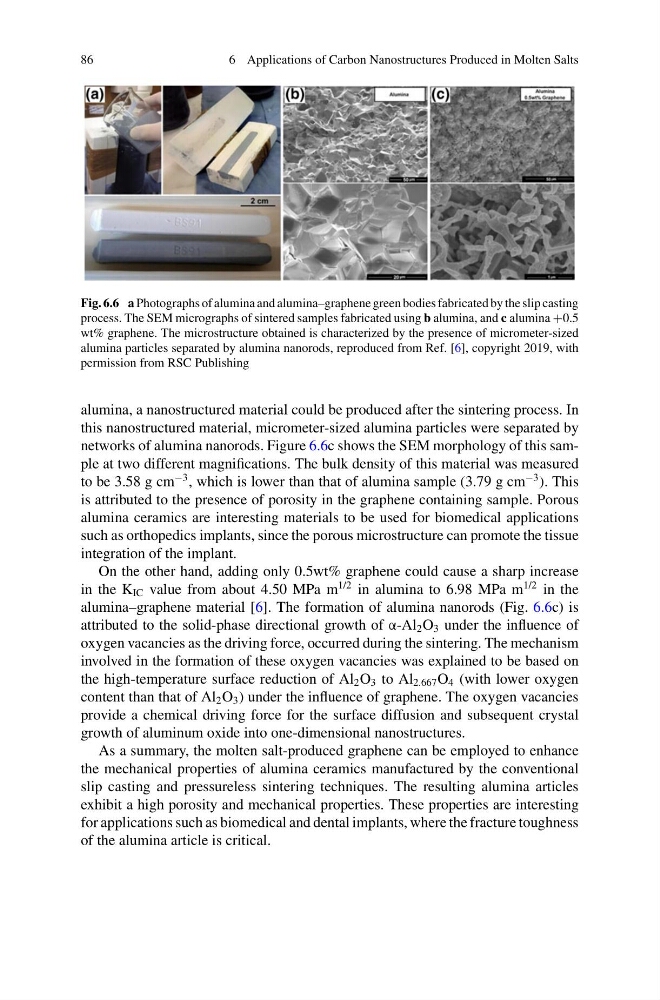
Fig. 6.6 a Photographs of alumina and alumina–graphene green bodies fabricated by the slip casting
process. The SEM micrographs of sintered samples fabricated using b alumina, and c alumina +0.5
wt% graphene. The microstructure obtained is characterized by the presence of micrometer-sized
alumina particles separated by alumina nanorods, reproduced from Ref. [6], copyright 2019, with
permission from RSC Publishing
alumina, a nanostructured material could be produced after the sintering process. In
this nanostructured material, micrometer-sized alumina particles were separated by
networks of alumina nanorods. Figure 6.6c shows the SEM morphology of this sample at two different magnifications. The bulk density of this material was measured
to be 3.58 g cm
−3 , which is lower than that of alumina sample (3.79 g cm
−3 ). This
is attributed to the presence of porosity in the graphene containing sample. Porous
alumina ceramics are interesting materials to be used for biomedical applications
such as orthopedics implants, since the porous microstructure can promote the tissue
integration of the implant.
On the other hand, adding only 0.5wt% graphene could cause a sharp increase
in the K IC value from about 4.50 MPa m
1/2 in alumina to 6.98 MPa m
1/2 in the
alumina–graphene material [6]. The formation of alumina nanorods (Fig. 6.6c) is
attributed to the solid-phase directional growth of α-Al 2 O 3 under the influence of
oxygen vacancies as the driving force, occurred during the sintering. The mechanism
involved in the formation of these oxygen vacancies was explained to be based on
the high-temperature surface reduction of Al 2 O 3 to Al 2.667 O 4 (with lower oxygen
content than that of Al 2 O 3 ) under the influence of graphene. The oxygen vacancies
provide a chemical driving force for the surface diffusion and subsequent crystal
growth of aluminum oxide into one-dimensional nanostructures.
As a summary, the molten salt-produced graphene can be employed to enhance
the mechanical properties of alumina ceramics manufactured by the conventional
slip casting and pressureless sintering techniques. The resulting alumina articles
exhibit a high porosity and mechanical properties. These properties are interesting
for applications such as biomedical and dental implants, where the fracture toughness
of the alumina article is critical.
6 Applications of Carbon Nanostructures Produced in Molten Salts
Fig. 6.6 a Photographs of alumina and alumina–graphene green bodies fabricated by the slip casting
process. The SEM micrographs of sintered samples fabricated using b alumina, and c alumina +0.5
wt% graphene. The microstructure obtained is characterized by the presence of micrometer-sized
alumina particles separated by alumina nanorods, reproduced from Ref. [6], copyright 2019, with
permission from RSC Publishing
alumina, a nanostructured material could be produced after the sintering process. In
this nanostructured material, micrometer-sized alumina particles were separated by
networks of alumina nanorods. Figure 6.6c shows the SEM morphology of this sample at two different magnifications. The bulk density of this material was measured
to be 3.58 g cm
−3 , which is lower than that of alumina sample (3.79 g cm
−3 ). This
is attributed to the presence of porosity in the graphene containing sample. Porous
alumina ceramics are interesting materials to be used for biomedical applications
such as orthopedics implants, since the porous microstructure can promote the tissue
integration of the implant.
On the other hand, adding only 0.5wt% graphene could cause a sharp increase
in the K IC value from about 4.50 MPa m
1/2 in alumina to 6.98 MPa m
1/2 in the
alumina–graphene material [6]. The formation of alumina nanorods (Fig. 6.6c) is
attributed to the solid-phase directional growth of α-Al 2 O 3 under the influence of
oxygen vacancies as the driving force, occurred during the sintering. The mechanism
involved in the formation of these oxygen vacancies was explained to be based on
the high-temperature surface reduction of Al 2 O 3 to Al 2.667 O 4 (with lower oxygen
content than that of Al 2 O 3 ) under the influence of graphene. The oxygen vacancies
provide a chemical driving force for the surface diffusion and subsequent crystal
growth of aluminum oxide into one-dimensional nanostructures.
As a summary, the molten salt-produced graphene can be employed to enhance
the mechanical properties of alumina ceramics manufactured by the conventional
slip casting and pressureless sintering techniques. The resulting alumina articles
exhibit a high porosity and mechanical properties. These properties are interesting
for applications such as biomedical and dental implants, where the fracture toughness
of the alumina article is critical.