

84
6 Applications of Carbon Nanostructures Produced in Molten Salts
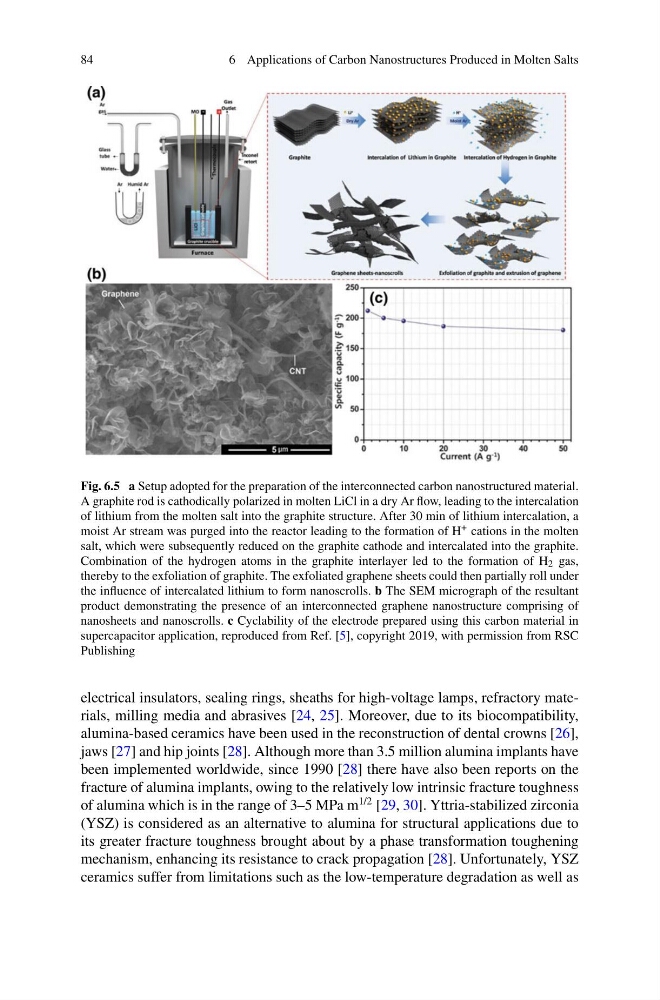
Fig. 6.5 a Setup adopted for the preparation of the interconnected carbon nanostructured material.
A graphite rod is cathodically polarized in molten LiCl in a dry Ar flow, leading to the intercalation
of lithium from the molten salt into the graphite structure. After 30 min of lithium intercalation, a
moist Ar stream was purged into the reactor leading to the formation of H + cations in the molten
salt, which were subsequently reduced on the graphite cathode and intercalated into the graphite.
Combination of the hydrogen atoms in the graphite interlayer led to the formation of H 2 gas,
thereby to the exfoliation of graphite. The exfoliated graphene sheets could then partially roll under
the influence of intercalated lithium to form nanoscrolls. b The SEM micrograph of the resultant
product demonstrating the presence of an interconnected graphene nanostructure comprising of
nanosheets and nanoscrolls. c Cyclability of the electrode prepared using this carbon material in
supercapacitor application, reproduced from Ref. [5], copyright 2019, with permission from RSC
Publishing
electrical insulators, sealing rings, sheaths for high-voltage lamps, refractory materials, milling media and abrasives [24, 25]. Moreover, due to its biocompatibility,
alumina-based ceramics have been used in the reconstruction of dental crowns [26],
jaws [27] and hip joints [28]. Although more than 3.5 million alumina implants have
been implemented worldwide, since 1990 [28] there have also been reports on the
fracture of alumina implants, owing to the relatively low intrinsic fracture toughness
of alumina which is in the range of 3–5 MPa m
1/2 [29, 30]. Yttria-stabilized zirconia
(YSZ) is considered as an alternative to alumina for structural applications due to
its greater fracture toughness brought about by a phase transformation toughening
mechanism, enhancing its resistance to crack propagation [28]. Unfortunately, YSZ
ceramics suffer from limitations such as the low-temperature degradation as well as
6 Applications of Carbon Nanostructures Produced in Molten Salts
Fig. 6.5 a Setup adopted for the preparation of the interconnected carbon nanostructured material.
A graphite rod is cathodically polarized in molten LiCl in a dry Ar flow, leading to the intercalation
of lithium from the molten salt into the graphite structure. After 30 min of lithium intercalation, a
moist Ar stream was purged into the reactor leading to the formation of H + cations in the molten
salt, which were subsequently reduced on the graphite cathode and intercalated into the graphite.
Combination of the hydrogen atoms in the graphite interlayer led to the formation of H 2 gas,
thereby to the exfoliation of graphite. The exfoliated graphene sheets could then partially roll under
the influence of intercalated lithium to form nanoscrolls. b The SEM micrograph of the resultant
product demonstrating the presence of an interconnected graphene nanostructure comprising of
nanosheets and nanoscrolls. c Cyclability of the electrode prepared using this carbon material in
supercapacitor application, reproduced from Ref. [5], copyright 2019, with permission from RSC
Publishing
electrical insulators, sealing rings, sheaths for high-voltage lamps, refractory materials, milling media and abrasives [24, 25]. Moreover, due to its biocompatibility,
alumina-based ceramics have been used in the reconstruction of dental crowns [26],
jaws [27] and hip joints [28]. Although more than 3.5 million alumina implants have
been implemented worldwide, since 1990 [28] there have also been reports on the
fracture of alumina implants, owing to the relatively low intrinsic fracture toughness
of alumina which is in the range of 3–5 MPa m
1/2 [29, 30]. Yttria-stabilized zirconia
(YSZ) is considered as an alternative to alumina for structural applications due to
its greater fracture toughness brought about by a phase transformation toughening
mechanism, enhancing its resistance to crack propagation [28]. Unfortunately, YSZ
ceramics suffer from limitations such as the low-temperature degradation as well as