

Eco-friendly Surface Modification …
537
+H
Hydrogen Abstraction
Chain Scission
Plasma
Plasma
O
OH
C
OH
O
Plasma
O 2
Plasma
Activation
CH 2 CHCOOH
CH 2 CHCOOH
CH 2 CHCOOH
Argon
Plasma
Grafting
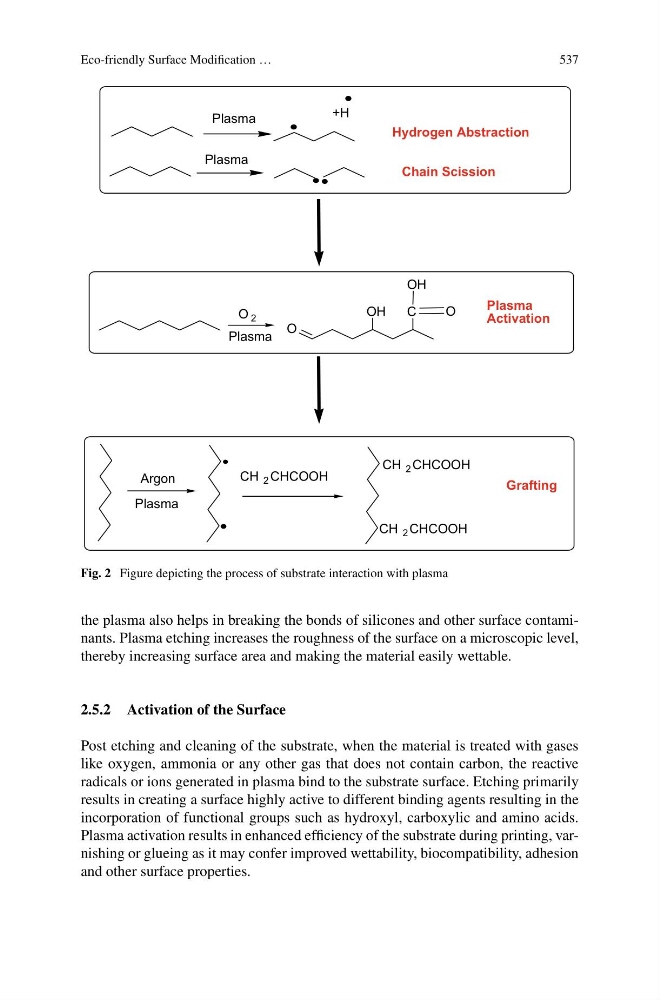
Fig. 2 Figure depicting the process of substrate interaction with plasma
the plasma also helps in breaking the bonds of silicones and other surface contaminants. Plasma etching increases the roughness of the surface on a microscopic level,
thereby increasing surface area and making the material easily wettable.
2.5.2 Activation of the Surface
Post etching and cleaning of the substrate, when the material is treated with gases
like oxygen, ammonia or any other gas that does not contain carbon, the reactive
radicals or ions generated in plasma bind to the substrate surface. Etching primarily
results in creating a surface highly active to different binding agents resulting in the
incorporation of functional groups such as hydroxyl, carboxylic and amino acids.
Plasma activation results in enhanced efficiency of the substrate during printing, varnishing or glueing as it may confer improved wettability, biocompatibility, adhesion
and other surface properties.
537
+H
Hydrogen Abstraction
Chain Scission
Plasma
Plasma
O
OH
C
OH
O
Plasma
O 2
Plasma
Activation
CH 2 CHCOOH
CH 2 CHCOOH
CH 2 CHCOOH
Argon
Plasma
Grafting
Fig. 2 Figure depicting the process of substrate interaction with plasma
the plasma also helps in breaking the bonds of silicones and other surface contaminants. Plasma etching increases the roughness of the surface on a microscopic level,
thereby increasing surface area and making the material easily wettable.
2.5.2 Activation of the Surface
Post etching and cleaning of the substrate, when the material is treated with gases
like oxygen, ammonia or any other gas that does not contain carbon, the reactive
radicals or ions generated in plasma bind to the substrate surface. Etching primarily
results in creating a surface highly active to different binding agents resulting in the
incorporation of functional groups such as hydroxyl, carboxylic and amino acids.
Plasma activation results in enhanced efficiency of the substrate during printing, varnishing or glueing as it may confer improved wettability, biocompatibility, adhesion
and other surface properties.