

Magnetic Nanoparticles: Green and Environment Friendly …
485
FeNO 2
Fe 2 SO 4
OH
HO
HO
HO
HO
OH
OH
OH
OH
OH
OH
Fe 3 O 4
MNPs
Fe 3 O 4
MNPs
SiO 2
+
H 2 O, NH 4 OH (25%)
50-60
o
C, 1 hr
H 2 O ))) 10-15 mins
NH 4 OH, TEOS, rt, 6hrs
Fe 3 O 4 @SiO 2
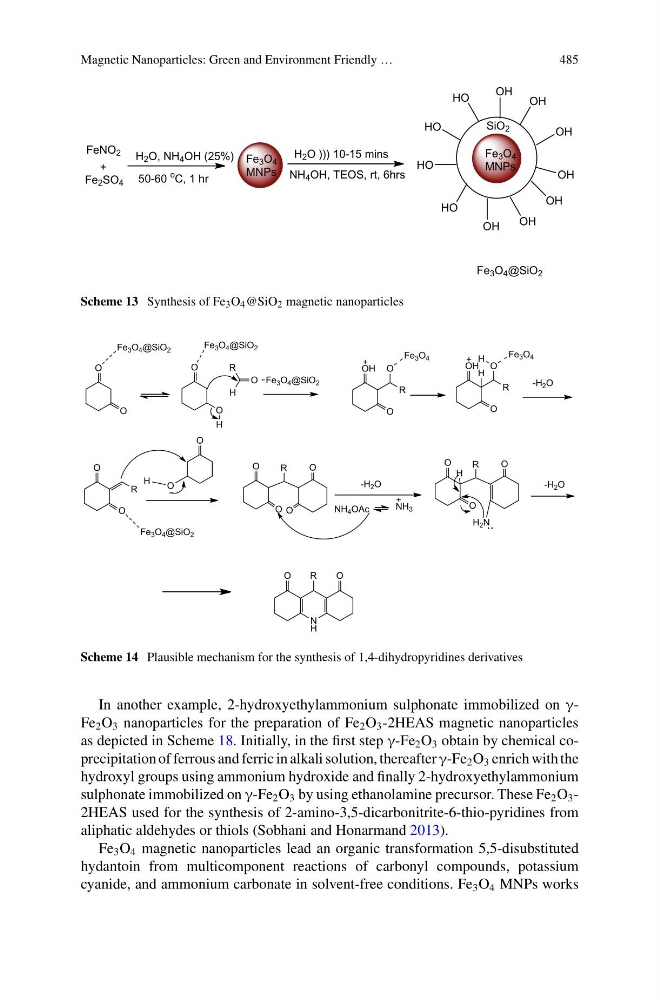
Scheme 13 Synthesis of Fe 3 O 4 @SiO 2 magnetic nanoparticles
O
O
Fe 3 O 4 @SiO 2
O
O
Fe 3 O 4 @SiO 2
O
R
H
Fe 3 O 4 @SiO 2
H
OH
O
R
O
Fe 3 O 4
OH
O
R
O
Fe 3 O 4
H
H
O
O
R
Fe 3 O 4 @SiO 2
O
O
H
O
O
O
O
R
-H 2 O
-H 2 O
O
O
O
H 2 N
R
H
-H 2 O
NH 4 OAc
NH 3
N
H
O
R
O
Scheme 14 Plausible mechanism for the synthesis of 1,4-dihydropyridines derivatives
In another example, 2-hydroxyethylammonium sulphonate immobilized on γFe 2 O 3 nanoparticles for the preparation of Fe 2 O 3 -2HEAS magnetic nanoparticles
as depicted in Scheme 18. Initially, in the first step γ-Fe 2 O 3 obtain by chemical coprecipitation of ferrous and ferric in alkali solution, thereafter γ-Fe 2 O 3 enrich with the
hydroxyl groups using ammonium hydroxide and finally 2-hydroxyethylammonium
sulphonate immobilized on γ-Fe 2 O 3 by using ethanolamine precursor. These Fe 2 O 3 -
2HEAS used for the synthesis of 2-amino-3,5-dicarbonitrite-6-thio-pyridines from
aliphatic aldehydes or thiols (Sobhani and Honarmand 2013).
Fe 3 O 4 magnetic nanoparticles lead an organic transformation 5,5-disubstituted
hydantoin from multicomponent reactions of carbonyl compounds, potassium
cyanide, and ammonium carbonate in solvent-free conditions. Fe 3 O 4 MNPs works
485
FeNO 2
Fe 2 SO 4
OH
HO
HO
HO
HO
OH
OH
OH
OH
OH
OH
Fe 3 O 4
MNPs
Fe 3 O 4
MNPs
SiO 2
+
H 2 O, NH 4 OH (25%)
50-60
o
C, 1 hr
H 2 O ))) 10-15 mins
NH 4 OH, TEOS, rt, 6hrs
Fe 3 O 4 @SiO 2
Scheme 13 Synthesis of Fe 3 O 4 @SiO 2 magnetic nanoparticles
O
O
Fe 3 O 4 @SiO 2
O
O
Fe 3 O 4 @SiO 2
O
R
H
Fe 3 O 4 @SiO 2
H
OH
O
R
O
Fe 3 O 4
OH
O
R
O
Fe 3 O 4
H
H
O
O
R
Fe 3 O 4 @SiO 2
O
O
H
O
O
O
O
R
-H 2 O
-H 2 O
O
O
O
H 2 N
R
H
-H 2 O
NH 4 OAc
NH 3
N
H
O
R
O
Scheme 14 Plausible mechanism for the synthesis of 1,4-dihydropyridines derivatives
In another example, 2-hydroxyethylammonium sulphonate immobilized on γFe 2 O 3 nanoparticles for the preparation of Fe 2 O 3 -2HEAS magnetic nanoparticles
as depicted in Scheme 18. Initially, in the first step γ-Fe 2 O 3 obtain by chemical coprecipitation of ferrous and ferric in alkali solution, thereafter γ-Fe 2 O 3 enrich with the
hydroxyl groups using ammonium hydroxide and finally 2-hydroxyethylammonium
sulphonate immobilized on γ-Fe 2 O 3 by using ethanolamine precursor. These Fe 2 O 3 -
2HEAS used for the synthesis of 2-amino-3,5-dicarbonitrite-6-thio-pyridines from
aliphatic aldehydes or thiols (Sobhani and Honarmand 2013).
Fe 3 O 4 magnetic nanoparticles lead an organic transformation 5,5-disubstituted
hydantoin from multicomponent reactions of carbonyl compounds, potassium
cyanide, and ammonium carbonate in solvent-free conditions. Fe 3 O 4 MNPs works