

Interaction of Nanoparticles with Reservoir Fluids and Rocks …
323
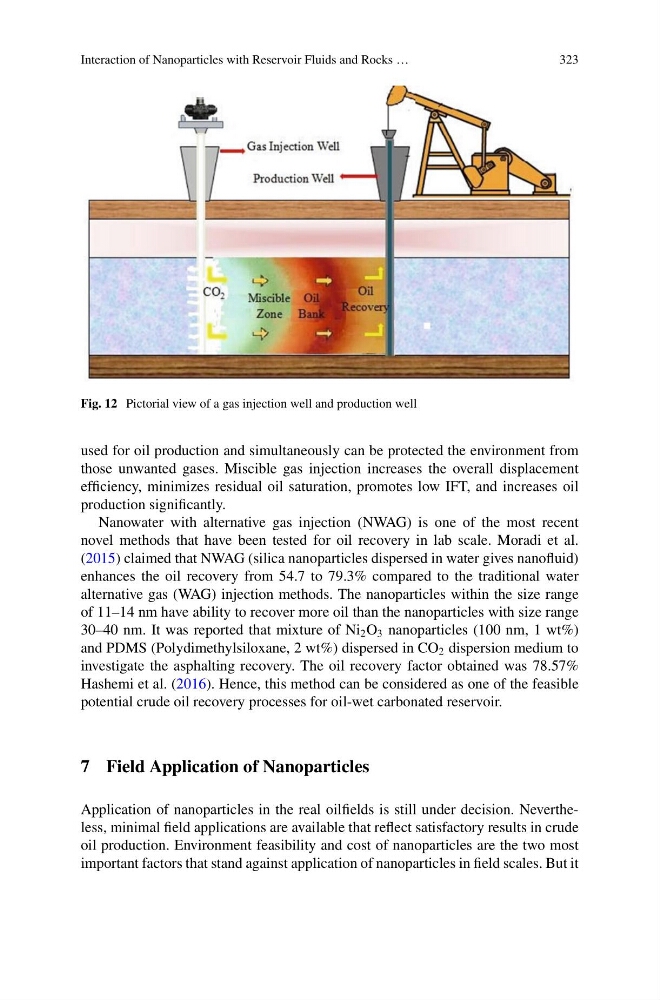
Fig. 12 Pictorial view of a gas injection well and production well
used for oil production and simultaneously can be protected the environment from
those unwanted gases. Miscible gas injection increases the overall displacement
efficiency, minimizes residual oil saturation, promotes low IFT, and increases oil
production significantly.
Nanowater with alternative gas injection (NWAG) is one of the most recent
novel methods that have been tested for oil recovery in lab scale. Moradi et al.
(2015) claimed that NWAG (silica nanoparticles dispersed in water gives nanofluid)
enhances the oil recovery from 54.7 to 79.3% compared to the traditional water
alternative gas (WAG) injection methods. The nanoparticles within the size range
of 11–14 nm have ability to recover more oil than the nanoparticles with size range
30–40 nm. It was reported that mixture of Ni 2 O 3 nanoparticles (100 nm, 1 wt%)
and PDMS (Polydimethylsiloxane, 2 wt%) dispersed in CO 2 dispersion medium to
investigate the asphalting recovery. The oil recovery factor obtained was 78.57%
Hashemi et al. (2016). Hence, this method can be considered as one of the feasible
potential crude oil recovery processes for oil-wet carbonated reservoir.
7 Field Application of Nanoparticles
Application of nanoparticles in the real oilfields is still under decision. Nevertheless, minimal field applications are available that reflect satisfactory results in crude
oil production. Environment feasibility and cost of nanoparticles are the two most
important factors that stand against application of nanoparticles in field scales. But it
323
Fig. 12 Pictorial view of a gas injection well and production well
used for oil production and simultaneously can be protected the environment from
those unwanted gases. Miscible gas injection increases the overall displacement
efficiency, minimizes residual oil saturation, promotes low IFT, and increases oil
production significantly.
Nanowater with alternative gas injection (NWAG) is one of the most recent
novel methods that have been tested for oil recovery in lab scale. Moradi et al.
(2015) claimed that NWAG (silica nanoparticles dispersed in water gives nanofluid)
enhances the oil recovery from 54.7 to 79.3% compared to the traditional water
alternative gas (WAG) injection methods. The nanoparticles within the size range
of 11–14 nm have ability to recover more oil than the nanoparticles with size range
30–40 nm. It was reported that mixture of Ni 2 O 3 nanoparticles (100 nm, 1 wt%)
and PDMS (Polydimethylsiloxane, 2 wt%) dispersed in CO 2 dispersion medium to
investigate the asphalting recovery. The oil recovery factor obtained was 78.57%
Hashemi et al. (2016). Hence, this method can be considered as one of the feasible
potential crude oil recovery processes for oil-wet carbonated reservoir.
7 Field Application of Nanoparticles
Application of nanoparticles in the real oilfields is still under decision. Nevertheless, minimal field applications are available that reflect satisfactory results in crude
oil production. Environment feasibility and cost of nanoparticles are the two most
important factors that stand against application of nanoparticles in field scales. But it