

Synthesis and Characterization of Nanofluids …
11
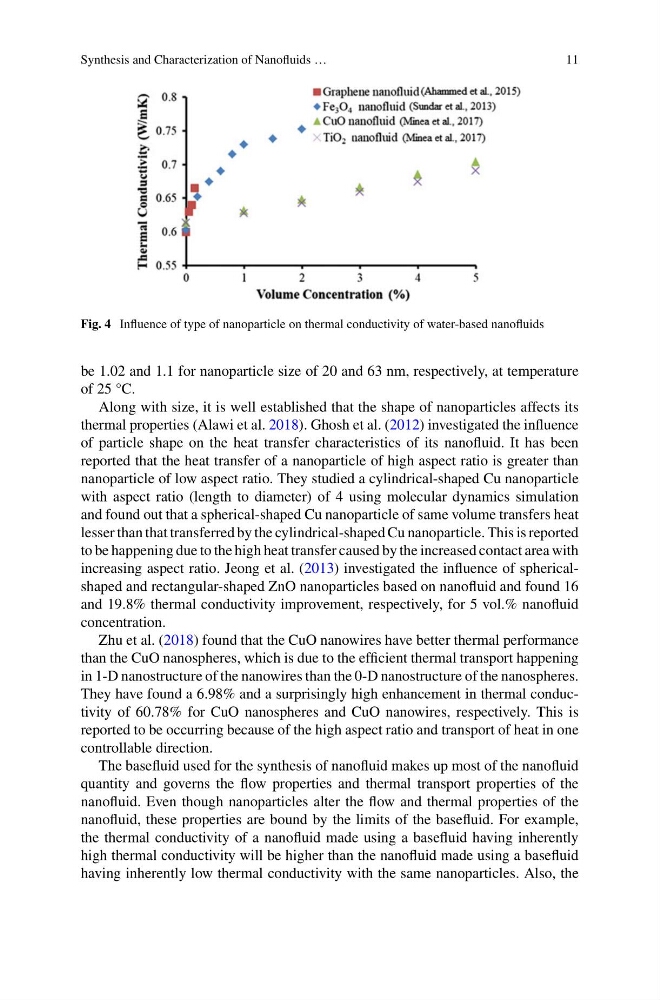
Fig. 4 Influence of type of nanoparticle on thermal conductivity of water-based nanofluids
be 1.02 and 1.1 for nanoparticle size of 20 and 63 nm, respectively, at temperature
of 25 °C.
Along with size, it is well established that the shape of nanoparticles affects its
thermal properties (Alawi et al. 2018). Ghosh et al. (2012) investigated the influence
of particle shape on the heat transfer characteristics of its nanofluid. It has been
reported that the heat transfer of a nanoparticle of high aspect ratio is greater than
nanoparticle of low aspect ratio. They studied a cylindrical-shaped Cu nanoparticle
with aspect ratio (length to diameter) of 4 using molecular dynamics simulation
and found out that a spherical-shaped Cu nanoparticle of same volume transfers heat
lesser than that transferred by the cylindrical-shaped Cu nanoparticle. This is reported
to be happening due to the high heat transfer caused by the increased contact area with
increasing aspect ratio. Jeong et al. (2013) investigated the influence of sphericalshaped and rectangular-shaped ZnO nanoparticles based on nanofluid and found 16
and 19.8% thermal conductivity improvement, respectively, for 5 vol.% nanofluid
concentration.
Zhu et al. (2018) found that the CuO nanowires have better thermal performance
than the CuO nanospheres, which is due to the efficient thermal transport happening
in 1-D nanostructure of the nanowires than the 0-D nanostructure of the nanospheres.
They have found a 6.98% and a surprisingly high enhancement in thermal conductivity of 60.78% for CuO nanospheres and CuO nanowires, respectively. This is
reported to be occurring because of the high aspect ratio and transport of heat in one
controllable direction.
The basefluid used for the synthesis of nanofluid makes up most of the nanofluid
quantity and governs the flow properties and thermal transport properties of the
nanofluid. Even though nanoparticles alter the flow and thermal properties of the
nanofluid, these properties are bound by the limits of the basefluid. For example,
the thermal conductivity of a nanofluid made using a basefluid having inherently
high thermal conductivity will be higher than the nanofluid made using a basefluid
having inherently low thermal conductivity with the same nanoparticles. Also, the
11
Fig. 4 Influence of type of nanoparticle on thermal conductivity of water-based nanofluids
be 1.02 and 1.1 for nanoparticle size of 20 and 63 nm, respectively, at temperature
of 25 °C.
Along with size, it is well established that the shape of nanoparticles affects its
thermal properties (Alawi et al. 2018). Ghosh et al. (2012) investigated the influence
of particle shape on the heat transfer characteristics of its nanofluid. It has been
reported that the heat transfer of a nanoparticle of high aspect ratio is greater than
nanoparticle of low aspect ratio. They studied a cylindrical-shaped Cu nanoparticle
with aspect ratio (length to diameter) of 4 using molecular dynamics simulation
and found out that a spherical-shaped Cu nanoparticle of same volume transfers heat
lesser than that transferred by the cylindrical-shaped Cu nanoparticle. This is reported
to be happening due to the high heat transfer caused by the increased contact area with
increasing aspect ratio. Jeong et al. (2013) investigated the influence of sphericalshaped and rectangular-shaped ZnO nanoparticles based on nanofluid and found 16
and 19.8% thermal conductivity improvement, respectively, for 5 vol.% nanofluid
concentration.
Zhu et al. (2018) found that the CuO nanowires have better thermal performance
than the CuO nanospheres, which is due to the efficient thermal transport happening
in 1-D nanostructure of the nanowires than the 0-D nanostructure of the nanospheres.
They have found a 6.98% and a surprisingly high enhancement in thermal conductivity of 60.78% for CuO nanospheres and CuO nanowires, respectively. This is
reported to be occurring because of the high aspect ratio and transport of heat in one
controllable direction.
The basefluid used for the synthesis of nanofluid makes up most of the nanofluid
quantity and governs the flow properties and thermal transport properties of the
nanofluid. Even though nanoparticles alter the flow and thermal properties of the
nanofluid, these properties are bound by the limits of the basefluid. For example,
the thermal conductivity of a nanofluid made using a basefluid having inherently
high thermal conductivity will be higher than the nanofluid made using a basefluid
having inherently low thermal conductivity with the same nanoparticles. Also, the