

148
S. Nair and J. V. Gohel
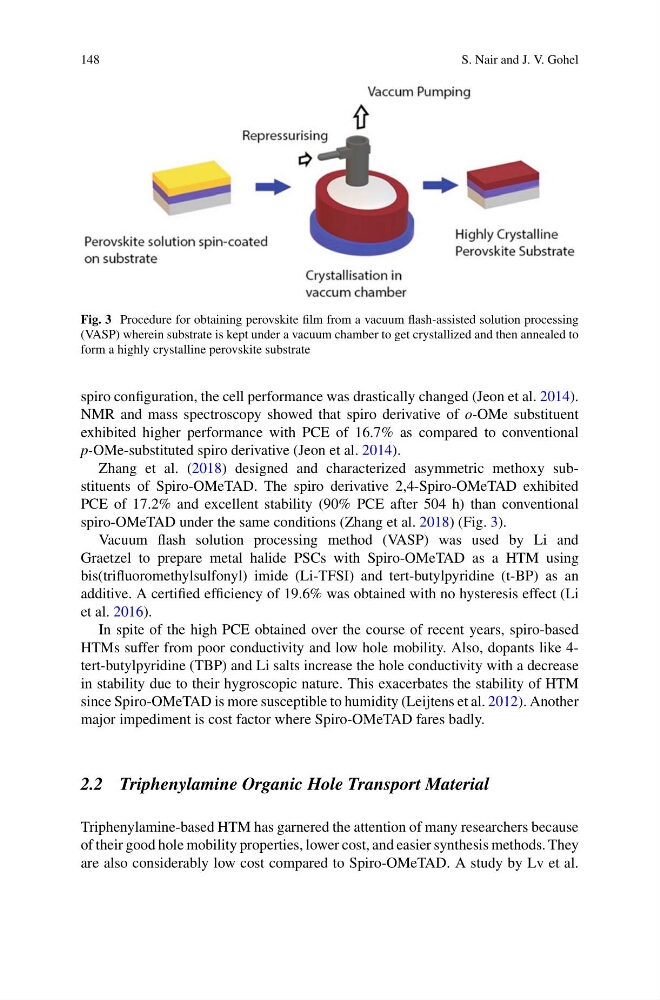
Fig. 3 Procedure for obtaining perovskite film from a vacuum flash-assisted solution processing
(VASP) wherein substrate is kept under a vacuum chamber to get crystallized and then annealed to
form a highly crystalline perovskite substrate
spiro configuration, the cell performance was drastically changed (Jeon et al. 2014).
NMR and mass spectroscopy showed that spiro derivative of o-OMe substituent
exhibited higher performance with PCE of 16.7% as compared to conventional
p-OMe-substituted spiro derivative (Jeon et al. 2014).
Zhang et al. (2018) designed and characterized asymmetric methoxy substituents of Spiro-OMeTAD. The spiro derivative 2,4-Spiro-OMeTAD exhibited
PCE of 17.2% and excellent stability (90% PCE after 504 h) than conventional
spiro-OMeTAD under the same conditions (Zhang et al. 2018) (Fig. 3).
Vacuum flash solution processing method (VASP) was used by Li and
Graetzel to prepare metal halide PSCs with Spiro-OMeTAD as a HTM using
bis(trifluoromethylsulfonyl) imide (Li-TFSI) and tert-butylpyridine (t-BP) as an
additive. A certified efficiency of 19.6% was obtained with no hysteresis effect (Li
et al. 2016).
In spite of the high PCE obtained over the course of recent years, spiro-based
HTMs suffer from poor conductivity and low hole mobility. Also, dopants like 4tert-butylpyridine (TBP) and Li salts increase the hole conductivity with a decrease
in stability due to their hygroscopic nature. This exacerbates the stability of HTM
since Spiro-OMeTAD is more susceptible to humidity (Leijtens et al. 2012). Another
major impediment is cost factor where Spiro-OMeTAD fares badly.
2.2 Triphenylamine Organic Hole Transport Material
Triphenylamine-based HTM has garnered the attention of many researchers because
of their good hole mobility properties, lower cost, and easier synthesis methods. They
are also considerably low cost compared to Spiro-OMeTAD. A study by Lv et al.
S. Nair and J. V. Gohel
Fig. 3 Procedure for obtaining perovskite film from a vacuum flash-assisted solution processing
(VASP) wherein substrate is kept under a vacuum chamber to get crystallized and then annealed to
form a highly crystalline perovskite substrate
spiro configuration, the cell performance was drastically changed (Jeon et al. 2014).
NMR and mass spectroscopy showed that spiro derivative of o-OMe substituent
exhibited higher performance with PCE of 16.7% as compared to conventional
p-OMe-substituted spiro derivative (Jeon et al. 2014).
Zhang et al. (2018) designed and characterized asymmetric methoxy substituents of Spiro-OMeTAD. The spiro derivative 2,4-Spiro-OMeTAD exhibited
PCE of 17.2% and excellent stability (90% PCE after 504 h) than conventional
spiro-OMeTAD under the same conditions (Zhang et al. 2018) (Fig. 3).
Vacuum flash solution processing method (VASP) was used by Li and
Graetzel to prepare metal halide PSCs with Spiro-OMeTAD as a HTM using
bis(trifluoromethylsulfonyl) imide (Li-TFSI) and tert-butylpyridine (t-BP) as an
additive. A certified efficiency of 19.6% was obtained with no hysteresis effect (Li
et al. 2016).
In spite of the high PCE obtained over the course of recent years, spiro-based
HTMs suffer from poor conductivity and low hole mobility. Also, dopants like 4tert-butylpyridine (TBP) and Li salts increase the hole conductivity with a decrease
in stability due to their hygroscopic nature. This exacerbates the stability of HTM
since Spiro-OMeTAD is more susceptible to humidity (Leijtens et al. 2012). Another
major impediment is cost factor where Spiro-OMeTAD fares badly.
2.2 Triphenylamine Organic Hole Transport Material
Triphenylamine-based HTM has garnered the attention of many researchers because
of their good hole mobility properties, lower cost, and easier synthesis methods. They
are also considerably low cost compared to Spiro-OMeTAD. A study by Lv et al.