

96
A. Bagaria and S. Ramakumar
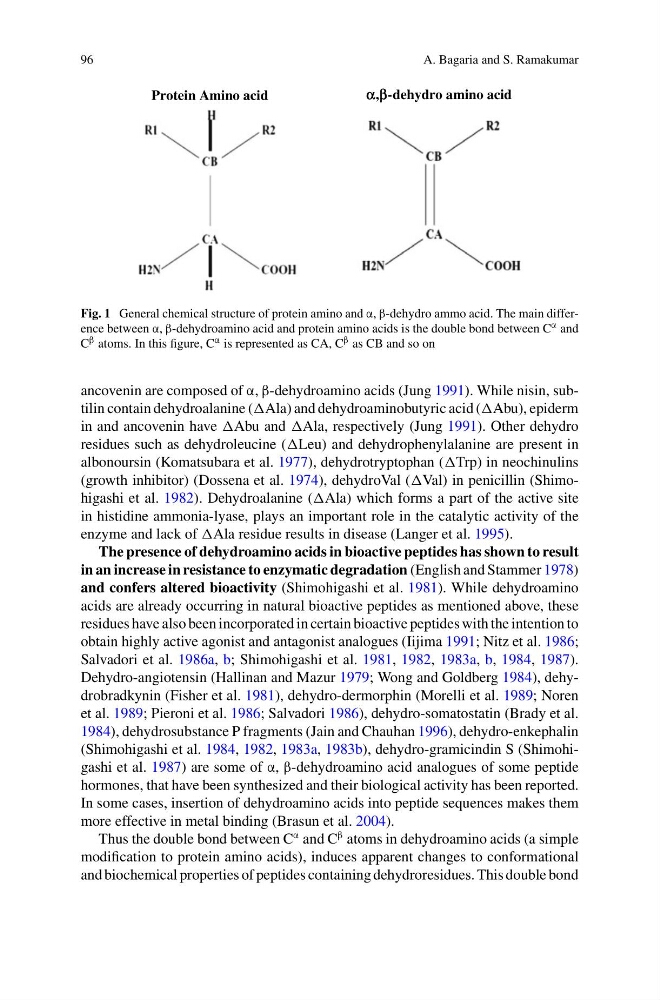
Protein Amino acid
α α,β dehydro amino acid
-
Fig. 1 General chemical structure of protein amino and α, β-dehydro ammo acid. The main difference between α, β-dehydroamino acid and protein amino acids is the double bond between C α and
C β atoms. In this figure, C α is represented as CA, C β as CB and so on
ancovenin are composed of α, β-dehydroamino acids (Jung 1991). While nisin, subtilin contain dehydroalanine (Ala) and dehydroaminobutyric acid (Abu), epiderm
in and ancovenin have Abu and Ala, respectively (Jung 1991). Other dehydro
residues such as dehydroleucine (Leu) and dehydrophenylalanine are present in
albonoursin (Komatsubara et al. 1977), dehydrotryptophan (Trp) in neochinulins
(growth inhibitor) (Dossena et al. 1974), dehydroVal ( in penicillin (Shimohigashi et al. 1982). Dehydroalanine (Ala) which forms a part of the active site
in histidine ammonia-lyase, plays an important role in the catalytic activity of the
enzyme and lack of Ala residue results in disease (Langer et al. 1995).
The presence of dehydroamino acids in bioactive peptides has shown to result
in an increase in resistance to enzymatic degradation (English and Stammer 1978)
and confers altered bioactivity (Shimohigashi et al. 1981). While dehydroamino
acids are already occurring in natural bioactive peptides as mentioned above, these
residues have also been incorporated in certain bioactive peptides with the intention to
obtain highly active agonist and antagonist analogues (Iijima 1991; Nitz et al. 1986;
Salvadori et al. 1986a, b; Shimohigashi et al. 1981, 1982, 1983a, b, 1984, 1987).
Dehydro-angiotensin (Hallinan and Mazur 1979; Wong and Goldberg 1984), dehydrobradkynin (Fisher et al. 1981), dehydro-dermorphin (Morelli et al. 1989; Noren
et al. 1989; Pieroni et al. 1986; Salvadori 1986), dehydro-somatostatin (Brady et al.
1984), dehydrosubstance P fragments (Jain and Chauhan 1996), dehydro-enkephalin
(Shimohigashi et al. 1984, 1982, 1983a, 1983b), dehydro-gramicindin S (Shimohigashi et al. 1987) are some of α, β-dehydroamino acid analogues of some peptide
hormones, that have been synthesized and their biological activity has been reported.
In some cases, insertion of dehydroamino acids into peptide sequences makes them
more effective in metal binding (Brasun et al. 2004).
Thus the double bond between C
α and C
β atoms in dehydroamino acids (a simple
modification to protein amino acids), induces apparent changes to conformational
and biochemical properties of peptides containing dehydroresidues. This double bond
A. Bagaria and S. Ramakumar
Protein Amino acid
α α,β dehydro amino acid
-
Fig. 1 General chemical structure of protein amino and α, β-dehydro ammo acid. The main difference between α, β-dehydroamino acid and protein amino acids is the double bond between C α and
C β atoms. In this figure, C α is represented as CA, C β as CB and so on
ancovenin are composed of α, β-dehydroamino acids (Jung 1991). While nisin, subtilin contain dehydroalanine (Ala) and dehydroaminobutyric acid (Abu), epiderm
in and ancovenin have Abu and Ala, respectively (Jung 1991). Other dehydro
residues such as dehydroleucine (Leu) and dehydrophenylalanine are present in
albonoursin (Komatsubara et al. 1977), dehydrotryptophan (Trp) in neochinulins
(growth inhibitor) (Dossena et al. 1974), dehydroVal ( in penicillin (Shimohigashi et al. 1982). Dehydroalanine (Ala) which forms a part of the active site
in histidine ammonia-lyase, plays an important role in the catalytic activity of the
enzyme and lack of Ala residue results in disease (Langer et al. 1995).
The presence of dehydroamino acids in bioactive peptides has shown to result
in an increase in resistance to enzymatic degradation (English and Stammer 1978)
and confers altered bioactivity (Shimohigashi et al. 1981). While dehydroamino
acids are already occurring in natural bioactive peptides as mentioned above, these
residues have also been incorporated in certain bioactive peptides with the intention to
obtain highly active agonist and antagonist analogues (Iijima 1991; Nitz et al. 1986;
Salvadori et al. 1986a, b; Shimohigashi et al. 1981, 1982, 1983a, b, 1984, 1987).
Dehydro-angiotensin (Hallinan and Mazur 1979; Wong and Goldberg 1984), dehydrobradkynin (Fisher et al. 1981), dehydro-dermorphin (Morelli et al. 1989; Noren
et al. 1989; Pieroni et al. 1986; Salvadori 1986), dehydro-somatostatin (Brady et al.
1984), dehydrosubstance P fragments (Jain and Chauhan 1996), dehydro-enkephalin
(Shimohigashi et al. 1984, 1982, 1983a, 1983b), dehydro-gramicindin S (Shimohigashi et al. 1987) are some of α, β-dehydroamino acid analogues of some peptide
hormones, that have been synthesized and their biological activity has been reported.
In some cases, insertion of dehydroamino acids into peptide sequences makes them
more effective in metal binding (Brasun et al. 2004).
Thus the double bond between C
α and C
β atoms in dehydroamino acids (a simple
modification to protein amino acids), induces apparent changes to conformational
and biochemical properties of peptides containing dehydroresidues. This double bond