

82
C. Balasubramanian
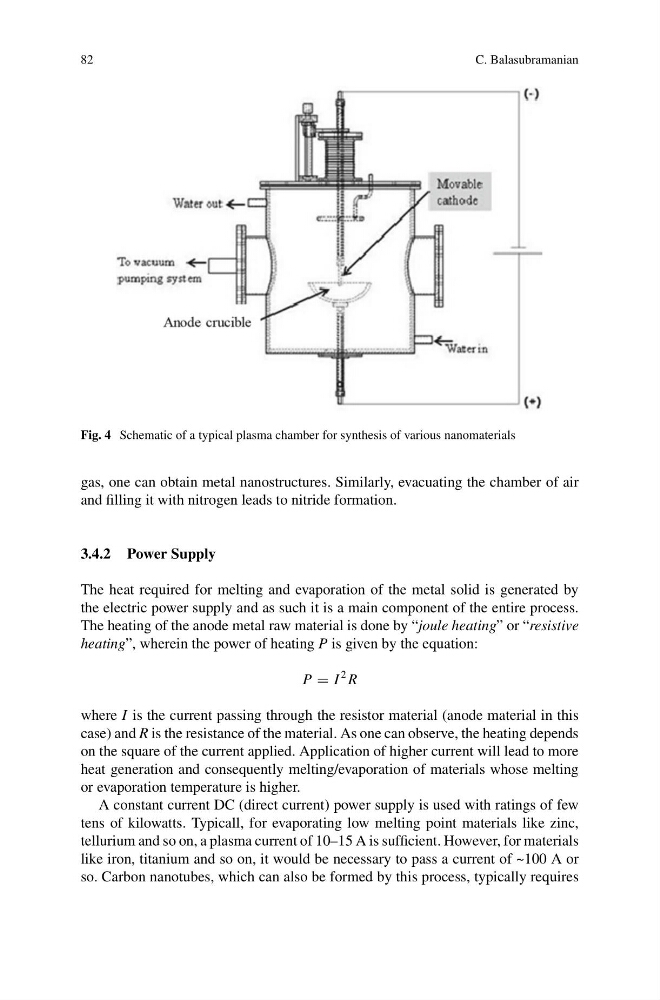
Fig. 4 Schematic of a typical plasma chamber for synthesis of various nanomaterials
gas, one can obtain metal nanostructures. Similarly, evacuating the chamber of air
and filling it with nitrogen leads to nitride formation.
3.4.2 Power Supply
The heat required for melting and evaporation of the metal solid is generated by
the electric power supply and as such it is a main component of the entire process.
The heating of the anode metal raw material is done by “joule heating” or “resistive
heating”, wherein the power of heating P is given by the equation:
P = I
2 R
where I is the current passing through the resistor material (anode material in this
case) and R is the resistance of the material. As one can observe, the heating depends
on the square of the current applied. Application of higher current will lead to more
heat generation and consequently melting/evaporation of materials whose melting
or evaporation temperature is higher.
A constant current DC (direct current) power supply is used with ratings of few
tens of kilowatts. Typicall, for evaporating low melting point materials like zinc,
tellurium and so on, a plasma current of 10–15 A is sufficient. However, for materials
like iron, titanium and so on, it would be necessary to pass a current of ~100 A or
so. Carbon nanotubes, which can also be formed by this process, typically requires
C. Balasubramanian
Fig. 4 Schematic of a typical plasma chamber for synthesis of various nanomaterials
gas, one can obtain metal nanostructures. Similarly, evacuating the chamber of air
and filling it with nitrogen leads to nitride formation.
3.4.2 Power Supply
The heat required for melting and evaporation of the metal solid is generated by
the electric power supply and as such it is a main component of the entire process.
The heating of the anode metal raw material is done by “joule heating” or “resistive
heating”, wherein the power of heating P is given by the equation:
P = I
2 R
where I is the current passing through the resistor material (anode material in this
case) and R is the resistance of the material. As one can observe, the heating depends
on the square of the current applied. Application of higher current will lead to more
heat generation and consequently melting/evaporation of materials whose melting
or evaporation temperature is higher.
A constant current DC (direct current) power supply is used with ratings of few
tens of kilowatts. Typicall, for evaporating low melting point materials like zinc,
tellurium and so on, a plasma current of 10–15 A is sufficient. However, for materials
like iron, titanium and so on, it would be necessary to pass a current of ~100 A or
so. Carbon nanotubes, which can also be formed by this process, typically requires