

Setting the Stage: Complex Systems, Emergence and Evolution
15
Ideologies surrounding cellular automata models gave birth to concepts
of agent-based modeling. Reynolds, in 1985, introduced agent-based models
as a driving force for scientific computing, particularly using powerful parallel computers. The computer graphics expert produced the boids example
which depicted flocking of birds. Later, Langton coined the term artificial life
to describe similar simulations [201]. These allow simulations of large agent
populations to be executed in controlled environments, examining affects of
various rules on agent interactions.
Agent-based models encourage bottom-up approaches, allowing research to
focus on individual elements interacting with each other, rather than looking
at complete scenarios. Initially, pattern in models was proved using differential
equations with common examples being found in economic modeling, where
mathematical formulas are still being used to prove behavior of ideas. Miller
and Page [131] and Epstein [56] have favored agent-based approaches by saying
that research should be intensified to focus into agents rather than whole
systems, realistically allowing humans to be modeled as agents rather than
differential equations.
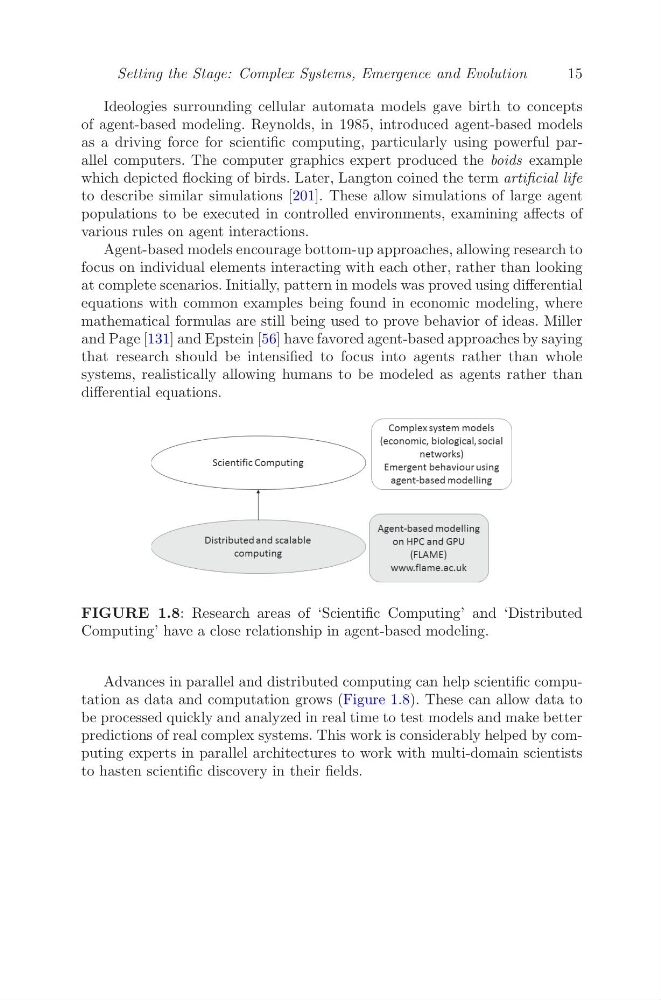
FIGURE 1.8: Research areas of ‘Scientific Computing’ and ‘Distributed
Computing’ have a close relationship in agent-based modeling.
Advances in parallel and distributed computing can help scientific computation as data and computation grows (Figure 1.8). These can allow data to
be processed quickly and analyzed in real time to test models and make better
predictions of real complex systems. This work is considerably helped by computing experts in parallel architectures to work with multi-domain scientists
to hasten scientific discovery in their fields.
15
Ideologies surrounding cellular automata models gave birth to concepts
of agent-based modeling. Reynolds, in 1985, introduced agent-based models
as a driving force for scientific computing, particularly using powerful parallel computers. The computer graphics expert produced the boids example
which depicted flocking of birds. Later, Langton coined the term artificial life
to describe similar simulations [201]. These allow simulations of large agent
populations to be executed in controlled environments, examining affects of
various rules on agent interactions.
Agent-based models encourage bottom-up approaches, allowing research to
focus on individual elements interacting with each other, rather than looking
at complete scenarios. Initially, pattern in models was proved using differential
equations with common examples being found in economic modeling, where
mathematical formulas are still being used to prove behavior of ideas. Miller
and Page [131] and Epstein [56] have favored agent-based approaches by saying
that research should be intensified to focus into agents rather than whole
systems, realistically allowing humans to be modeled as agents rather than
differential equations.
FIGURE 1.8: Research areas of ‘Scientific Computing’ and ‘Distributed
Computing’ have a close relationship in agent-based modeling.
Advances in parallel and distributed computing can help scientific computation as data and computation grows (Figure 1.8). These can allow data to
be processed quickly and analyzed in real time to test models and make better
predictions of real complex systems. This work is considerably helped by computing experts in parallel architectures to work with multi-domain scientists
to hasten scientific discovery in their fields.