

2
X-Machines for Agent-Based Modeling: FLAME Perspectives
" T h e w h o l e "
e m e r g e n t , g l o b a l s t r u c t u r e
" P a r t s "
L o c a l i n t e r a c t i o n
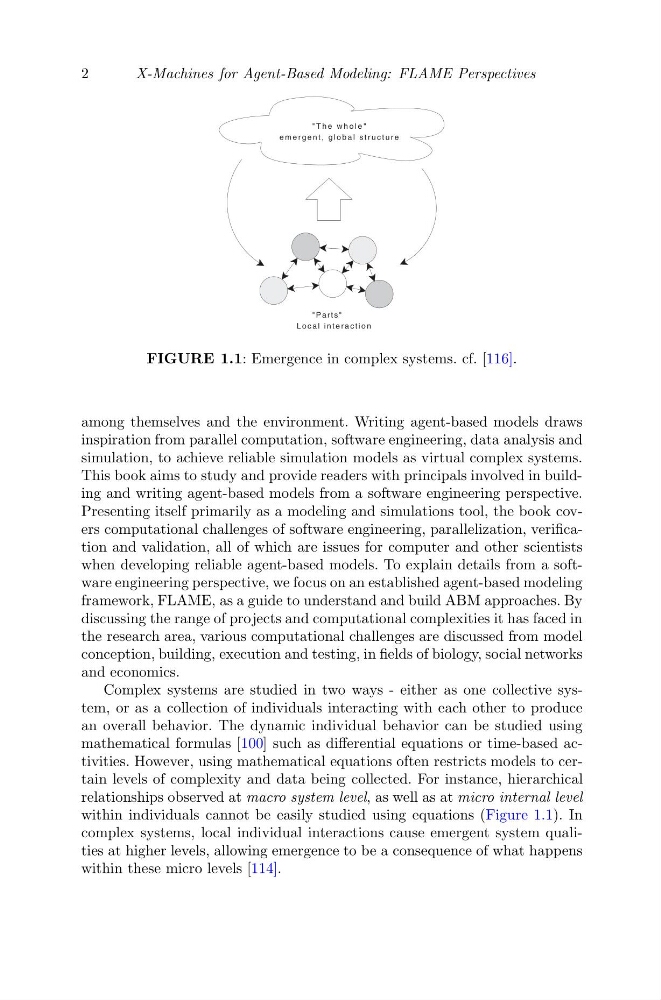
FIGURE 1.1: Emergence in complex systems. cf. [116].
among themselves and the environment. Writing agent-based models draws
inspiration from parallel computation, software engineering, data analysis and
simulation, to achieve reliable simulation models as virtual complex systems.
This book aims to study and provide readers with principals involved in building and writing agent-based models from a software engineering perspective.
Presenting itself primarily as a modeling and simulations tool, the book covers computational challenges of software engineering, parallelization, verification and validation, all of which are issues for computer and other scientists
when developing reliable agent-based models. To explain details from a software engineering perspective, we focus on an established agent-based modeling
framework, FLAME, as a guide to understand and build ABM approaches. By
discussing the range of projects and computational complexities it has faced in
the research area, various computational challenges are discussed from model
conception, building, execution and testing, in fields of biology, social networks
and economics.
Complex systems are studied in two ways - either as one collective system, or as a collection of individuals interacting with each other to produce
an overall behavior. The dynamic individual behavior can be studied using
mathematical formulas [100] such as differential equations or time-based activities. However, using mathematical equations often restricts models to certain levels of complexity and data being collected. For instance, hierarchical
relationships observed at macro system level, as well as at micro internal level
within individuals cannot be easily studied using equations (Figure 1.1). In
complex systems, local individual interactions cause emergent system qualities at higher levels, allowing emergence to be a consequence of what happens
within these micro levels [114].
X-Machines for Agent-Based Modeling: FLAME Perspectives
" T h e w h o l e "
e m e r g e n t , g l o b a l s t r u c t u r e
" P a r t s "
L o c a l i n t e r a c t i o n
FIGURE 1.1: Emergence in complex systems. cf. [116].
among themselves and the environment. Writing agent-based models draws
inspiration from parallel computation, software engineering, data analysis and
simulation, to achieve reliable simulation models as virtual complex systems.
This book aims to study and provide readers with principals involved in building and writing agent-based models from a software engineering perspective.
Presenting itself primarily as a modeling and simulations tool, the book covers computational challenges of software engineering, parallelization, verification and validation, all of which are issues for computer and other scientists
when developing reliable agent-based models. To explain details from a software engineering perspective, we focus on an established agent-based modeling
framework, FLAME, as a guide to understand and build ABM approaches. By
discussing the range of projects and computational complexities it has faced in
the research area, various computational challenges are discussed from model
conception, building, execution and testing, in fields of biology, social networks
and economics.
Complex systems are studied in two ways - either as one collective system, or as a collection of individuals interacting with each other to produce
an overall behavior. The dynamic individual behavior can be studied using
mathematical formulas [100] such as differential equations or time-based activities. However, using mathematical equations often restricts models to certain levels of complexity and data being collected. For instance, hierarchical
relationships observed at macro system level, as well as at micro internal level
within individuals cannot be easily studied using equations (Figure 1.1). In
complex systems, local individual interactions cause emergent system qualities at higher levels, allowing emergence to be a consequence of what happens
within these micro levels [114].