

Agents in Biology
225
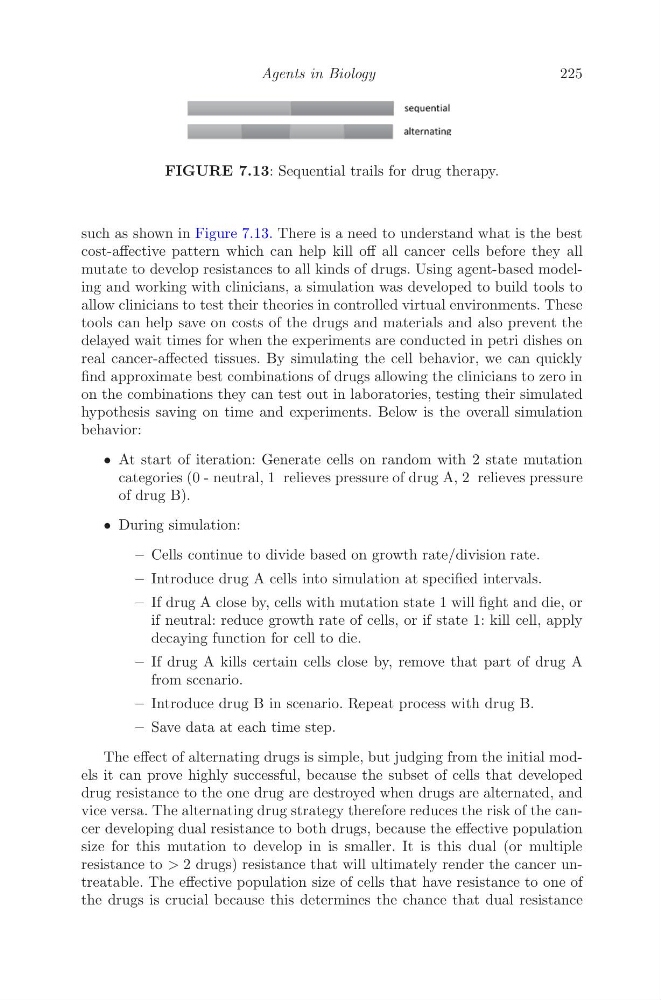
FIGURE 7.13: Sequential trails for drug therapy.
such as shown in Figure 7.13. There is a need to understand what is the best
cost-affective pattern which can help kill off all cancer cells before they all
mutate to develop resistances to all kinds of drugs. Using agent-based modeling and working with clinicians, a simulation was developed to build tools to
allow clinicians to test their theories in controlled virtual environments. These
tools can help save on costs of the drugs and materials and also prevent the
delayed wait times for when the experiments are conducted in petri dishes on
real cancer-affected tissues. By simulating the cell behavior, we can quickly
find approximate best combinations of drugs allowing the clinicians to zero in
on the combinations they can test out in laboratories, testing their simulated
hypothesis saving on time and experiments. Below is the overall simulation
behavior:
• At start of iteration: Generate cells on random with 2 state mutation
categories (0 - neutral, 1 relieves pressure of drug A, 2 relieves pressure
of drug B).
• During simulation:
– Cells continue to divide based on growth rate/division rate.
– Introduce drug A cells into simulation at specified intervals.
– If drug A close by, cells with mutation state 1 will fight and die, or
if neutral: reduce growth rate of cells, or if state 1: kill cell, apply
decaying function for cell to die.
– If drug A kills certain cells close by, remove that part of drug A
from scenario.
– Introduce drug B in scenario. Repeat process with drug B.
– Save data at each time step.
The effect of alternating drugs is simple, but judging from the initial models it can prove highly successful, because the subset of cells that developed
drug resistance to the one drug are destroyed when drugs are alternated, and
vice versa. The alternating drug strategy therefore reduces the risk of the cancer developing dual resistance to both drugs, because the effective population
size for this mutation to develop in is smaller. It is this dual (or multiple
resistance to > 2 drugs) resistance that will ultimately render the cancer untreatable. The effective population size of cells that have resistance to one of
the drugs is crucial because this determines the chance that dual resistance
225
FIGURE 7.13: Sequential trails for drug therapy.
such as shown in Figure 7.13. There is a need to understand what is the best
cost-affective pattern which can help kill off all cancer cells before they all
mutate to develop resistances to all kinds of drugs. Using agent-based modeling and working with clinicians, a simulation was developed to build tools to
allow clinicians to test their theories in controlled virtual environments. These
tools can help save on costs of the drugs and materials and also prevent the
delayed wait times for when the experiments are conducted in petri dishes on
real cancer-affected tissues. By simulating the cell behavior, we can quickly
find approximate best combinations of drugs allowing the clinicians to zero in
on the combinations they can test out in laboratories, testing their simulated
hypothesis saving on time and experiments. Below is the overall simulation
behavior:
• At start of iteration: Generate cells on random with 2 state mutation
categories (0 - neutral, 1 relieves pressure of drug A, 2 relieves pressure
of drug B).
• During simulation:
– Cells continue to divide based on growth rate/division rate.
– Introduce drug A cells into simulation at specified intervals.
– If drug A close by, cells with mutation state 1 will fight and die, or
if neutral: reduce growth rate of cells, or if state 1: kill cell, apply
decaying function for cell to die.
– If drug A kills certain cells close by, remove that part of drug A
from scenario.
– Introduce drug B in scenario. Repeat process with drug B.
– Save data at each time step.
The effect of alternating drugs is simple, but judging from the initial models it can prove highly successful, because the subset of cells that developed
drug resistance to the one drug are destroyed when drugs are alternated, and
vice versa. The alternating drug strategy therefore reduces the risk of the cancer developing dual resistance to both drugs, because the effective population
size for this mutation to develop in is smaller. It is this dual (or multiple
resistance to > 2 drugs) resistance that will ultimately render the cancer untreatable. The effective population size of cells that have resistance to one of
the drugs is crucial because this determines the chance that dual resistance