

Agents in Social Science
89
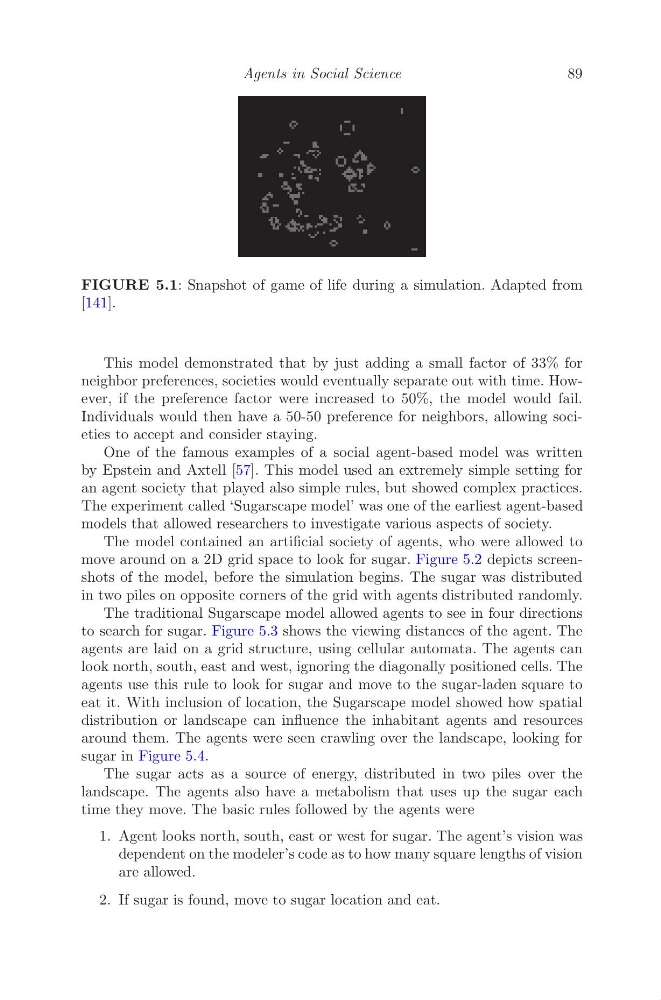
FIGURE 5.1: Snapshot of game of life during a simulation. Adapted from
[141].
This model demonstrated that by just adding a small factor of 33% for
neighbor preferences, societies would eventually separate out with time. However, if the preference factor were increased to 50%, the model would fail.
Individuals would then have a 50-50 preference for neighbors, allowing societies to accept and consider staying.
One of the famous examples of a social agent-based model was written
by Epstein and Axtell [57]. This model used an extremely simple setting for
an agent society that played also simple rules, but showed complex practices.
The experiment called ‘Sugarscape model’ was one of the earliest agent-based
models that allowed researchers to investigate various aspects of society.
The model contained an artificial society of agents, who were allowed to
move around on a 2D grid space to look for sugar. Figure 5.2 depicts screenshots of the model, before the simulation begins. The sugar was distributed
in two piles on opposite corners of the grid with agents distributed randomly.
The traditional Sugarscape model allowed agents to see in four directions
to search for sugar. Figure 5.3 shows the viewing distances of the agent. The
agents are laid on a grid structure, using cellular automata. The agents can
look north, south, east and west, ignoring the diagonally positioned cells. The
agents use this rule to look for sugar and move to the sugar-laden square to
eat it. With inclusion of location, the Sugarscape model showed how spatial
distribution or landscape can influence the inhabitant agents and resources
around them. The agents were seen crawling over the landscape, looking for
sugar in Figure 5.4.
The sugar acts as a source of energy, distributed in two piles over the
landscape. The agents also have a metabolism that uses up the sugar each
time they move. The basic rules followed by the agents were
1. Agent looks north, south, east or west for sugar. The agent’s vision was
dependent on the modeler’s code as to how many square lengths of vision
are allowed.
2. If sugar is found, move to sugar location and eat.
89
FIGURE 5.1: Snapshot of game of life during a simulation. Adapted from
[141].
This model demonstrated that by just adding a small factor of 33% for
neighbor preferences, societies would eventually separate out with time. However, if the preference factor were increased to 50%, the model would fail.
Individuals would then have a 50-50 preference for neighbors, allowing societies to accept and consider staying.
One of the famous examples of a social agent-based model was written
by Epstein and Axtell [57]. This model used an extremely simple setting for
an agent society that played also simple rules, but showed complex practices.
The experiment called ‘Sugarscape model’ was one of the earliest agent-based
models that allowed researchers to investigate various aspects of society.
The model contained an artificial society of agents, who were allowed to
move around on a 2D grid space to look for sugar. Figure 5.2 depicts screenshots of the model, before the simulation begins. The sugar was distributed
in two piles on opposite corners of the grid with agents distributed randomly.
The traditional Sugarscape model allowed agents to see in four directions
to search for sugar. Figure 5.3 shows the viewing distances of the agent. The
agents are laid on a grid structure, using cellular automata. The agents can
look north, south, east and west, ignoring the diagonally positioned cells. The
agents use this rule to look for sugar and move to the sugar-laden square to
eat it. With inclusion of location, the Sugarscape model showed how spatial
distribution or landscape can influence the inhabitant agents and resources
around them. The agents were seen crawling over the landscape, looking for
sugar in Figure 5.4.
The sugar acts as a source of energy, distributed in two piles over the
landscape. The agents also have a metabolism that uses up the sugar each
time they move. The basic rules followed by the agents were
1. Agent looks north, south, east or west for sugar. The agent’s vision was
dependent on the modeler’s code as to how many square lengths of vision
are allowed.
2. If sugar is found, move to sugar location and eat.