

Data Structures and Workflows for ICME
39
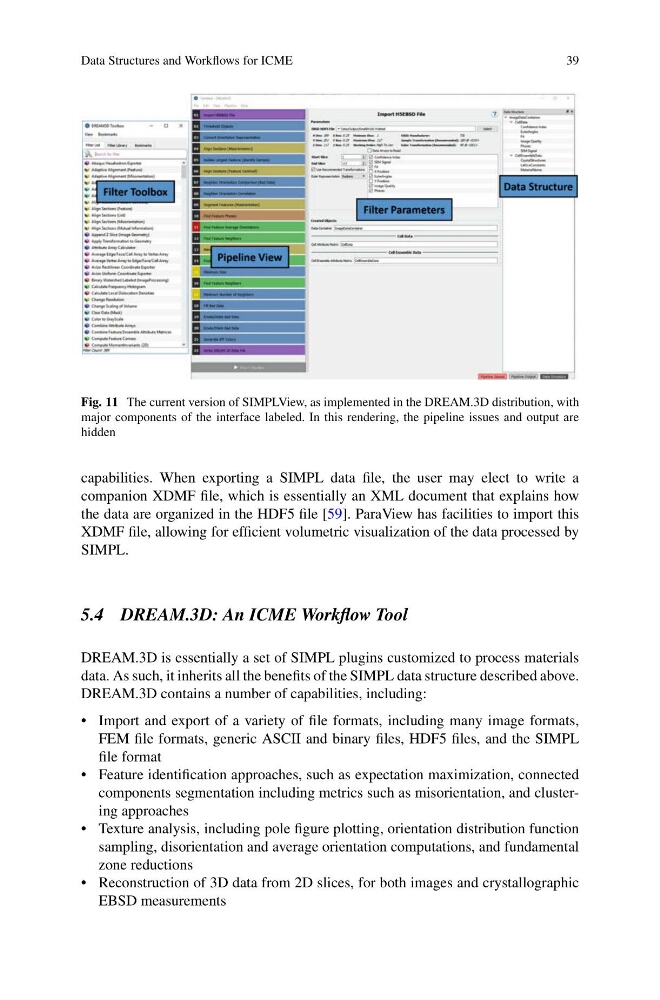
Fig. 11 The current version of SIMPLView, as implemented in the DREAM.3D distribution, with
major components of the interface labeled. In this rendering, the pipeline issues and output are
hidden
capabilities. When exporting a SIMPL data file, the user may elect to write a
companion XDMF file, which is essentially an XML document that explains how
the data are organized in the HDF5 file [59]. ParaView has facilities to import this
XDMF file, allowing for efficient volumetric visualization of the data processed by
SIMPL.
5.4 DREAM.3D: An ICME Workflow Tool
DREAM.3D is essentially a set of SIMPL plugins customized to process materials
data. As such, it inherits all the benefits of the SIMPL data structure described above.
DREAM.3D contains a number of capabilities, including:
• Import and export of a variety of file formats, including many image formats,
FEM file formats, generic ASCII and binary files, HDF5 files, and the SIMPL
file format
• Feature identification approaches, such as expectation maximization, connected
components segmentation including metrics such as misorientation, and clustering approaches
• Texture analysis, including pole figure plotting, orientation distribution function
sampling, disorientation and average orientation computations, and fundamental
zone reductions
• Reconstruction of 3D data from 2D slices, for both images and crystallographic
EBSD measurements
39
Fig. 11 The current version of SIMPLView, as implemented in the DREAM.3D distribution, with
major components of the interface labeled. In this rendering, the pipeline issues and output are
hidden
capabilities. When exporting a SIMPL data file, the user may elect to write a
companion XDMF file, which is essentially an XML document that explains how
the data are organized in the HDF5 file [59]. ParaView has facilities to import this
XDMF file, allowing for efficient volumetric visualization of the data processed by
SIMPL.
5.4 DREAM.3D: An ICME Workflow Tool
DREAM.3D is essentially a set of SIMPL plugins customized to process materials
data. As such, it inherits all the benefits of the SIMPL data structure described above.
DREAM.3D contains a number of capabilities, including:
• Import and export of a variety of file formats, including many image formats,
FEM file formats, generic ASCII and binary files, HDF5 files, and the SIMPL
file format
• Feature identification approaches, such as expectation maximization, connected
components segmentation including metrics such as misorientation, and clustering approaches
• Texture analysis, including pole figure plotting, orientation distribution function
sampling, disorientation and average orientation computations, and fundamental
zone reductions
• Reconstruction of 3D data from 2D slices, for both images and crystallographic
EBSD measurements