

388
M. Gonzales and N. N. Thadhani
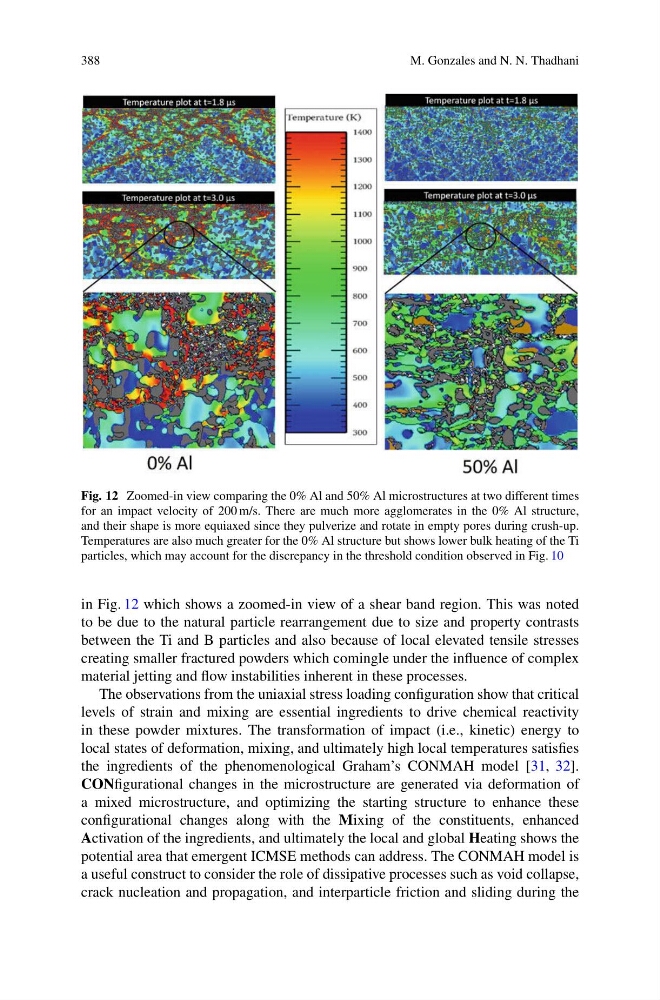
Fig. 12 Zoomed-in view comparing the 0% Al and 50% Al microstructures at two different times
for an impact velocity of 200 m/s. There are much more agglomerates in the 0% Al structure,
and their shape is more equiaxed since they pulverize and rotate in empty pores during crush-up.
Temperatures are also much greater for the 0% Al structure but shows lower bulk heating of the Ti
particles, which may account for the discrepancy in the threshold condition observed in Fig. 10
in Fig. 12 which shows a zoomed-in view of a shear band region. This was noted
to be due to the natural particle rearrangement due to size and property contrasts
between the Ti and B particles and also because of local elevated tensile stresses
creating smaller fractured powders which comingle under the influence of complex
material jetting and flow instabilities inherent in these processes.
The observations from the uniaxial stress loading configuration show that critical
levels of strain and mixing are essential ingredients to drive chemical reactivity
in these powder mixtures. The transformation of impact (i.e., kinetic) energy to
local states of deformation, mixing, and ultimately high local temperatures satisfies
the ingredients of the phenomenological Graham’s CONMAH model [31, 32].
CONfigurational changes in the microstructure are generated via deformation of
a mixed microstructure, and optimizing the starting structure to enhance these
configurational changes along with the Mixing of the constituents, enhanced
Activation of the ingredients, and ultimately the local and global Heating shows the
potential area that emergent ICMSE methods can address. The CONMAH model is
a useful construct to consider the role of dissipative processes such as void collapse,
crack nucleation and propagation, and interparticle friction and sliding during the
M. Gonzales and N. N. Thadhani
Fig. 12 Zoomed-in view comparing the 0% Al and 50% Al microstructures at two different times
for an impact velocity of 200 m/s. There are much more agglomerates in the 0% Al structure,
and their shape is more equiaxed since they pulverize and rotate in empty pores during crush-up.
Temperatures are also much greater for the 0% Al structure but shows lower bulk heating of the Ti
particles, which may account for the discrepancy in the threshold condition observed in Fig. 10
in Fig. 12 which shows a zoomed-in view of a shear band region. This was noted
to be due to the natural particle rearrangement due to size and property contrasts
between the Ti and B particles and also because of local elevated tensile stresses
creating smaller fractured powders which comingle under the influence of complex
material jetting and flow instabilities inherent in these processes.
The observations from the uniaxial stress loading configuration show that critical
levels of strain and mixing are essential ingredients to drive chemical reactivity
in these powder mixtures. The transformation of impact (i.e., kinetic) energy to
local states of deformation, mixing, and ultimately high local temperatures satisfies
the ingredients of the phenomenological Graham’s CONMAH model [31, 32].
CONfigurational changes in the microstructure are generated via deformation of
a mixed microstructure, and optimizing the starting structure to enhance these
configurational changes along with the Mixing of the constituents, enhanced
Activation of the ingredients, and ultimately the local and global Heating shows the
potential area that emergent ICMSE methods can address. The CONMAH model is
a useful construct to consider the role of dissipative processes such as void collapse,
crack nucleation and propagation, and interparticle friction and sliding during the