

Multiscale Modeling of Epoxies and Epoxy-Based Composites
289
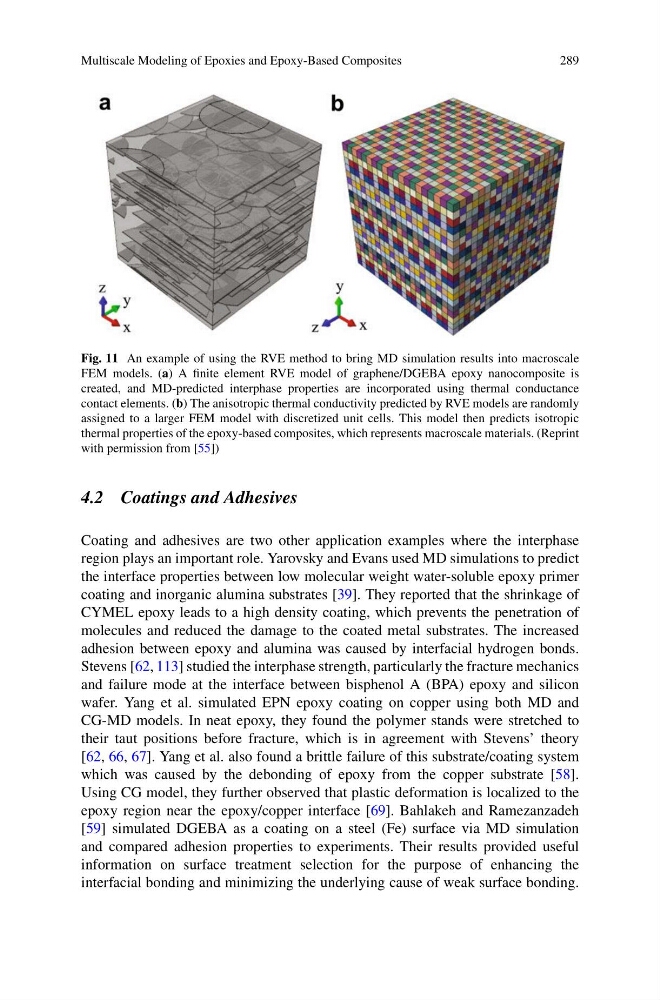
Fig. 11 An example of using the RVE method to bring MD simulation results into macroscale
FEM models. (a) A finite element RVE model of graphene/DGEBA epoxy nanocomposite is
created, and MD-predicted interphase properties are incorporated using thermal conductance
contact elements. (b) The anisotropic thermal conductivity predicted by RVE models are randomly
assigned to a larger FEM model with discretized unit cells. This model then predicts isotropic
thermal properties of the epoxy-based composites, which represents macroscale materials. (Reprint
with permission from [55])
4.2 Coatings and Adhesives
Coating and adhesives are two other application examples where the interphase
region plays an important role. Yarovsky and Evans used MD simulations to predict
the interface properties between low molecular weight water-soluble epoxy primer
coating and inorganic alumina substrates [39]. They reported that the shrinkage of
CYMEL epoxy leads to a high density coating, which prevents the penetration of
molecules and reduced the damage to the coated metal substrates. The increased
adhesion between epoxy and alumina was caused by interfacial hydrogen bonds.
Stevens [62, 113] studied the interphase strength, particularly the fracture mechanics
and failure mode at the interface between bisphenol A (BPA) epoxy and silicon
wafer. Yang et al. simulated EPN epoxy coating on copper using both MD and
CG-MD models. In neat epoxy, they found the polymer stands were stretched to
their taut positions before fracture, which is in agreement with Stevens’ theory
[62, 66, 67]. Yang et al. also found a brittle failure of this substrate/coating system
which was caused by the debonding of epoxy from the copper substrate [58].
Using CG model, they further observed that plastic deformation is localized to the
epoxy region near the epoxy/copper interface [69]. Bahlakeh and Ramezanzadeh
[59] simulated DGEBA as a coating on a steel (Fe) surface via MD simulation
and compared adhesion properties to experiments. Their results provided useful
information on surface treatment selection for the purpose of enhancing the
interfacial bonding and minimizing the underlying cause of weak surface bonding.
289
Fig. 11 An example of using the RVE method to bring MD simulation results into macroscale
FEM models. (a) A finite element RVE model of graphene/DGEBA epoxy nanocomposite is
created, and MD-predicted interphase properties are incorporated using thermal conductance
contact elements. (b) The anisotropic thermal conductivity predicted by RVE models are randomly
assigned to a larger FEM model with discretized unit cells. This model then predicts isotropic
thermal properties of the epoxy-based composites, which represents macroscale materials. (Reprint
with permission from [55])
4.2 Coatings and Adhesives
Coating and adhesives are two other application examples where the interphase
region plays an important role. Yarovsky and Evans used MD simulations to predict
the interface properties between low molecular weight water-soluble epoxy primer
coating and inorganic alumina substrates [39]. They reported that the shrinkage of
CYMEL epoxy leads to a high density coating, which prevents the penetration of
molecules and reduced the damage to the coated metal substrates. The increased
adhesion between epoxy and alumina was caused by interfacial hydrogen bonds.
Stevens [62, 113] studied the interphase strength, particularly the fracture mechanics
and failure mode at the interface between bisphenol A (BPA) epoxy and silicon
wafer. Yang et al. simulated EPN epoxy coating on copper using both MD and
CG-MD models. In neat epoxy, they found the polymer stands were stretched to
their taut positions before fracture, which is in agreement with Stevens’ theory
[62, 66, 67]. Yang et al. also found a brittle failure of this substrate/coating system
which was caused by the debonding of epoxy from the copper substrate [58].
Using CG model, they further observed that plastic deformation is localized to the
epoxy region near the epoxy/copper interface [69]. Bahlakeh and Ramezanzadeh
[59] simulated DGEBA as a coating on a steel (Fe) surface via MD simulation
and compared adhesion properties to experiments. Their results provided useful
information on surface treatment selection for the purpose of enhancing the
interfacial bonding and minimizing the underlying cause of weak surface bonding.