

286
X. Wu and J. A. El-Awady
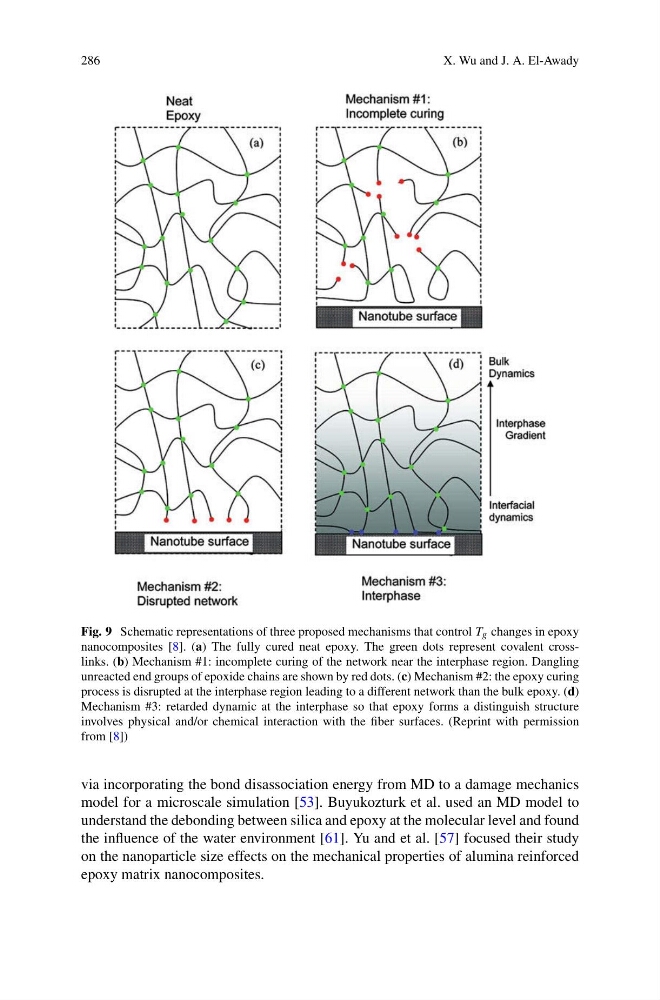
Fig. 9 Schematic representations of three proposed mechanisms that control T g changes in epoxy
nanocomposites [8]. (a) The fully cured neat epoxy. The green dots represent covalent crosslinks. (b) Mechanism #1: incomplete curing of the network near the interphase region. Dangling
unreacted end groups of epoxide chains are shown by red dots. (c) Mechanism #2: the epoxy curing
process is disrupted at the interphase region leading to a different network than the bulk epoxy. (d)
Mechanism #3: retarded dynamic at the interphase so that epoxy forms a distinguish structure
involves physical and/or chemical interaction with the fiber surfaces. (Reprint with permission
from [8])
via incorporating the bond disassociation energy from MD to a damage mechanics
model for a microscale simulation [53]. Buyukozturk et al. used an MD model to
understand the debonding between silica and epoxy at the molecular level and found
the influence of the water environment [61]. Yu and et al. [57] focused their study
on the nanoparticle size effects on the mechanical properties of alumina reinforced
epoxy matrix nanocomposites.
X. Wu and J. A. El-Awady
Fig. 9 Schematic representations of three proposed mechanisms that control T g changes in epoxy
nanocomposites [8]. (a) The fully cured neat epoxy. The green dots represent covalent crosslinks. (b) Mechanism #1: incomplete curing of the network near the interphase region. Dangling
unreacted end groups of epoxide chains are shown by red dots. (c) Mechanism #2: the epoxy curing
process is disrupted at the interphase region leading to a different network than the bulk epoxy. (d)
Mechanism #3: retarded dynamic at the interphase so that epoxy forms a distinguish structure
involves physical and/or chemical interaction with the fiber surfaces. (Reprint with permission
from [8])
via incorporating the bond disassociation energy from MD to a damage mechanics
model for a microscale simulation [53]. Buyukozturk et al. used an MD model to
understand the debonding between silica and epoxy at the molecular level and found
the influence of the water environment [61]. Yu and et al. [57] focused their study
on the nanoparticle size effects on the mechanical properties of alumina reinforced
epoxy matrix nanocomposites.