

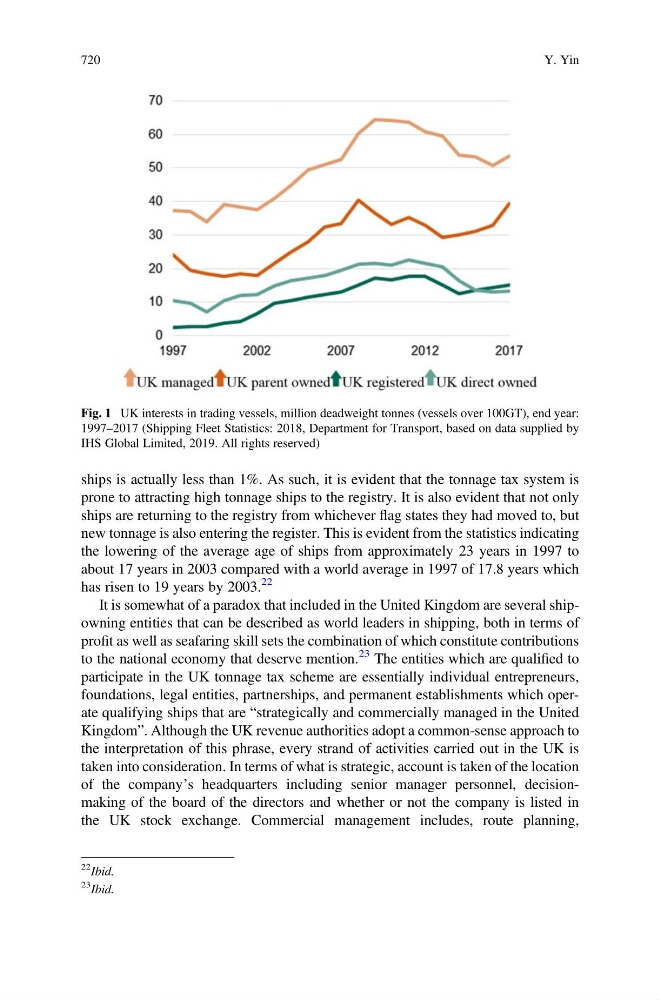
ships is actually less than 1%. As such, it is evident that the tonnage tax system is
prone to attracting high tonnage ships to the registry. It is also evident that not only
ships are returning to the registry from whichever flag states they had moved to, but
new tonnage is also entering the register. This is evident from the statistics indicating
the lowering of the average age of ships from approximately 23 years in 1997 to
about 17 years in 2003 compared with a world average in 1997 of 17.8 years which
has risen to 19 years by 2003.
22
It is somewhat of a paradox that included in the United Kingdom are several shipowning entities that can be described as world leaders in shipping, both in terms of
profit as well as seafaring skill sets the combination of which constitute contributions
to the national economy that deserve mention.
23 The entities which are qualified to
participate in the UK tonnage tax scheme are essentially individual entrepreneurs,
foundations, legal entities, partnerships, and permanent establishments which operate qualifying ships that are “strategically and commercially managed in the United
Kingdom”. Although the UK revenue authorities adopt a common-sense approach to
the interpretation of this phrase, every strand of activities carried out in the UK is
taken into consideration. In terms of what is strategic, account is taken of the location
of the company’s headquarters including senior manager personnel, decisionmaking of the board of the directors and whether or not the company is listed in
the UK stock exchange. Commercial management includes, route planning,
Fig. 1 UK interests in trading vessels, million deadweight tonnes (vessels over 100GT), end year:
1997–2017 (Shipping Fleet Statistics: 2018, Department for Transport, based on data supplied by
IHS Global Limited, 2019. All rights reserved)
22 Ibid.
23 Ibid.
720
Y. Yin