

inimical to all interests involved, and on the other hand, obligations under other
treaties and multilateral initiatives are taking precedence, eroding away or, at times,
even conflicting with the rights and freedoms available under UNCLOS. Here, it
must be cautioned that the arguments presented in this chapter are only indicative of
trends which should be of concern to both, the States and shipping industry but
neither should all examples be considered as definitive violations, nor as tending to
be equally serious in the extent of their derogation from the regime of coastal State
control over foreign ships taking passage in their territorial seas.
Traditionally, security interests were a key driver for coastal State derogation
from the regime of innocent passage under UNCLOS. The evolving field of environmental law and measures directed at preserving and protecting the environment
have been yet another motivation in recent years, although they appear to be
impinging on passage of ships in territorial waters in a much subtler way. However,
when it comes to policy on dealing with alien migrants at sea, securitized approach
appears to be swamping the more desirable, protection centered vision.
As such, innocent passage has been termed the most restrictive among the three
possible passage regimes under UNCLOS
118 and, Agyebeng
119 has rightly argued
PASSAGE THROUGH
TERRITORIAL WATERS
Action
•Threat
•Refuge
•Temporary
suspensions
•Economic
•Safety
•Environmental
•Crew
•PCASP
•Warship
•Autonomous ship
•Refugees
•Health, Safety,
Environment
•Security
Temporal
Spatial
Cargo
Social
Inherent
EFFECT OF
IMPEDING
OR
PASSAGE
LIKELY
TO BE
TREATED
NOTINNOCENT
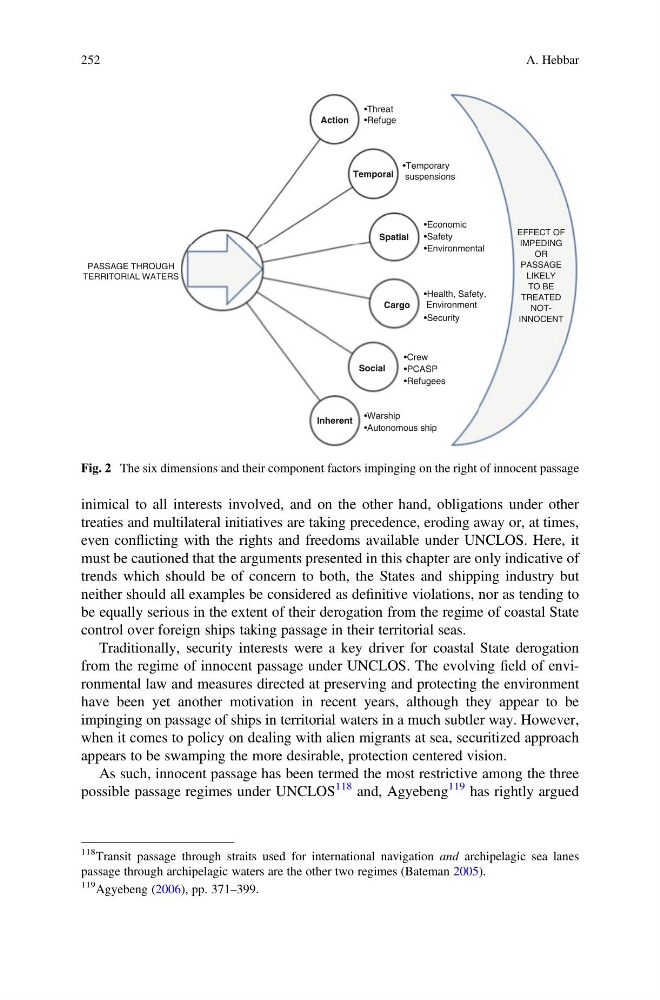
Fig. 2 The six dimensions and their component factors impinging on the right of innocent passage
118 Transit passage through straits used for international navigation and archipelagic sea lanes
passage through archipelagic waters are the other two regimes (Bateman 2005).
119 Agyebeng (2006), pp. 371–399.
252
A. Hebbar
treaties and multilateral initiatives are taking precedence, eroding away or, at times,
even conflicting with the rights and freedoms available under UNCLOS. Here, it
must be cautioned that the arguments presented in this chapter are only indicative of
trends which should be of concern to both, the States and shipping industry but
neither should all examples be considered as definitive violations, nor as tending to
be equally serious in the extent of their derogation from the regime of coastal State
control over foreign ships taking passage in their territorial seas.
Traditionally, security interests were a key driver for coastal State derogation
from the regime of innocent passage under UNCLOS. The evolving field of environmental law and measures directed at preserving and protecting the environment
have been yet another motivation in recent years, although they appear to be
impinging on passage of ships in territorial waters in a much subtler way. However,
when it comes to policy on dealing with alien migrants at sea, securitized approach
appears to be swamping the more desirable, protection centered vision.
As such, innocent passage has been termed the most restrictive among the three
possible passage regimes under UNCLOS
118 and, Agyebeng
119 has rightly argued
PASSAGE THROUGH
TERRITORIAL WATERS
Action
•Threat
•Refuge
•Temporary
suspensions
•Economic
•Safety
•Environmental
•Crew
•PCASP
•Warship
•Autonomous ship
•Refugees
•Health, Safety,
Environment
•Security
Temporal
Spatial
Cargo
Social
Inherent
EFFECT OF
IMPEDING
OR
PASSAGE
LIKELY
TO BE
TREATED
NOTINNOCENT
Fig. 2 The six dimensions and their component factors impinging on the right of innocent passage
118 Transit passage through straits used for international navigation and archipelagic sea lanes
passage through archipelagic waters are the other two regimes (Bateman 2005).
119 Agyebeng (2006), pp. 371–399.
252
A. Hebbar