

129
3 Attachment to Place in Ecological Law
Kimmerer writes that “[f]or the sake of the peoples and the land, the urgent work of
the Second Man may be to set aside the ways of the colonist and become indigenous
to place” (Kimmerer 2013, p. 207). But, she explains, inviting settler societies to
become indigenous to place does not mean letting them “take what little is left”
(Kimmerer 2013, p. 211). It is instead an invitation to “give your gifts and meet your
responsibilities [and] to live as if your children’s future matters, to take care of the
land as if our lives and the lives of all our relatives depend on it” (Kimmerer 2013,
p. 215). Indigenization and attachment to place according to Kimmerer are a way to
fend off “Windigo thinking”—the worldview of a mythical Anishinaabe monster
driven entirely by self-interest and an insatiable appetite for excess. Kimmerer associates Windigo thinking with humanity’s current dominant commitment to “progress” and development founded on infinite economic growth, privatization,
commodification and invariably a detachment from place. Braiding Sweetgrass
teaches that attachment to place, founded on respect for all life and deep appreciation of a reciprocal relationship with the Earth and its life community, is key to a
more hopeful vision of humans embedded within the community of life of which
they are members. “Gratitude is a powerful antidote to Windigo psychosis”
(Kimmerer 2013, p. 377).
This notion of attachment to place must be central to any conception of ecological law. Yet, the previous section reveals that Windigo psychosis is deeply entrenched
in human society across the globe. Shifting to ecological law that fosters attachment
and reattachment to place in a way that avoids perpetuating the power dynamics of
domination and colonialism is a monumental task and perhaps nearly unimaginable.
Ultimately, this shift will entail a radical rethinking of centuries old worldviews and
the institutions and societies founded on them that see humans as separate from and
superior to all other life. Nonetheless, the vision of ecological law is ultimately
positive and life affirming, and seeds of its emergence can already be found. Indeed,
contrary to the papal bulls noted above, Pope Francis’s encyclical Laudato Si’ provides such an opening by calling into question modern anthropocentrism and
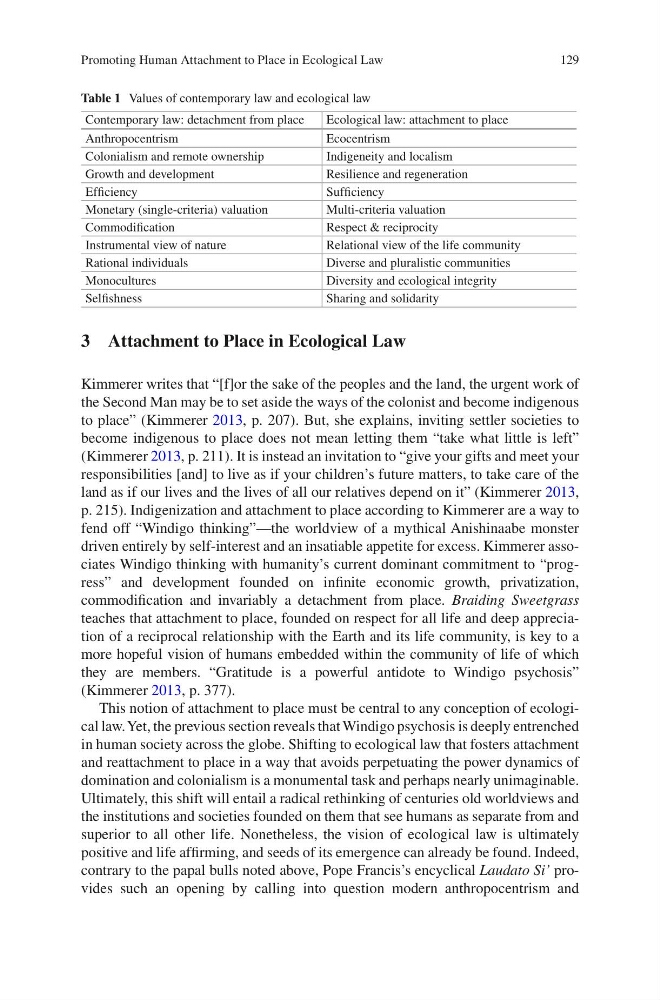
Table 1 Values of contemporary law and ecological law
Contemporary law: detachment from place
Ecological law: attachment to place
Anthropocentrism
Ecocentrism
Colonialism and remote ownership
Indigeneity and localism
Growth and development
Resilience and regeneration
Efficiency
Sufficiency
Monetary (single-criteria) valuation
Multi-criteria valuation
Commodification
Respect & reciprocity
Instrumental view of nature
Relational view of the life community
Rational individuals
Diverse and pluralistic communities
Monocultures
Diversity and ecological integrity
Selfishness
Sharing and solidarity
Promoting Human Attachment to Place in Ecological Law
3 Attachment to Place in Ecological Law
Kimmerer writes that “[f]or the sake of the peoples and the land, the urgent work of
the Second Man may be to set aside the ways of the colonist and become indigenous
to place” (Kimmerer 2013, p. 207). But, she explains, inviting settler societies to
become indigenous to place does not mean letting them “take what little is left”
(Kimmerer 2013, p. 211). It is instead an invitation to “give your gifts and meet your
responsibilities [and] to live as if your children’s future matters, to take care of the
land as if our lives and the lives of all our relatives depend on it” (Kimmerer 2013,
p. 215). Indigenization and attachment to place according to Kimmerer are a way to
fend off “Windigo thinking”—the worldview of a mythical Anishinaabe monster
driven entirely by self-interest and an insatiable appetite for excess. Kimmerer associates Windigo thinking with humanity’s current dominant commitment to “progress” and development founded on infinite economic growth, privatization,
commodification and invariably a detachment from place. Braiding Sweetgrass
teaches that attachment to place, founded on respect for all life and deep appreciation of a reciprocal relationship with the Earth and its life community, is key to a
more hopeful vision of humans embedded within the community of life of which
they are members. “Gratitude is a powerful antidote to Windigo psychosis”
(Kimmerer 2013, p. 377).
This notion of attachment to place must be central to any conception of ecological law. Yet, the previous section reveals that Windigo psychosis is deeply entrenched
in human society across the globe. Shifting to ecological law that fosters attachment
and reattachment to place in a way that avoids perpetuating the power dynamics of
domination and colonialism is a monumental task and perhaps nearly unimaginable.
Ultimately, this shift will entail a radical rethinking of centuries old worldviews and
the institutions and societies founded on them that see humans as separate from and
superior to all other life. Nonetheless, the vision of ecological law is ultimately
positive and life affirming, and seeds of its emergence can already be found. Indeed,
contrary to the papal bulls noted above, Pope Francis’s encyclical Laudato Si’ provides such an opening by calling into question modern anthropocentrism and
Table 1 Values of contemporary law and ecological law
Contemporary law: detachment from place
Ecological law: attachment to place
Anthropocentrism
Ecocentrism
Colonialism and remote ownership
Indigeneity and localism
Growth and development
Resilience and regeneration
Efficiency
Sufficiency
Monetary (single-criteria) valuation
Multi-criteria valuation
Commodification
Respect & reciprocity
Instrumental view of nature
Relational view of the life community
Rational individuals
Diverse and pluralistic communities
Monocultures
Diversity and ecological integrity
Selfishness
Sharing and solidarity
Promoting Human Attachment to Place in Ecological Law