

71
in Kenyir and Kuala Koh is carried out in a sustainable manner according to their
traditional knowledge.
Acknowledgements The study is supported by the Trans-disciplinary Research Grant
(TRGS/2015/59373). The authors wish to thank the Forestry Department, Wildlife and National
Parks Department, Forestry Department, Terengganu State Park Management Council,
KETENGAH and JAKOA for permission and cooperation to conduct this study in the forests and
Orang Asli villages.
References
Abdullah, M. T., Abdullah, M. F., Bartholomew, C. V., & Jani, R. (2016). Kelestarian masyarakat
Orang Asli Terengganu. Kuala Terengganu: Penerbit Universiti Malaysia Terengganu.
Abdul-Hamid, M. I., & Gan Christopher, E. C. (2012). Valuing orang asli dependency on forest: A
Malaysian case. International Journal of Ecology and Development, 23, 1–24.
Amjad, M. S., Qaeem, M. F., Ahmad, I., Khan, S. U., Chaudhari, S. K., Zahid Malik, N.,
Shaheen, H., & Khan, A. M. (2017). Descriptive study of plant resources in the context of the
ethnomedicinal relevance of indigenous flora: A case study from Toli Peer National Park, Azad
Jammu and Kashmir, Pakistan. PLoS One, 12(2), e0171896. https://doi.org/10.1371/journal.
pone.0171896.
Gomes, A. G. (2004). Orang Asli of Malaysia. IAAS Newsletter, 35, 10.
JAKOA. (2009). Laporan Tahunan 2009, Jabatan Kemajuan Orang Asli (JAKOA). Kuala Lumpur:
Jabatan Jabatan Kemajuan Orang Asli.
JAKOA. (2015). Laporan Tahunan 2015, Jabatan Kemajuan Orang Asli (JAKOA). Kuala Lumpur:
Jabatan Jabatan Kemajuan Orang Asli.
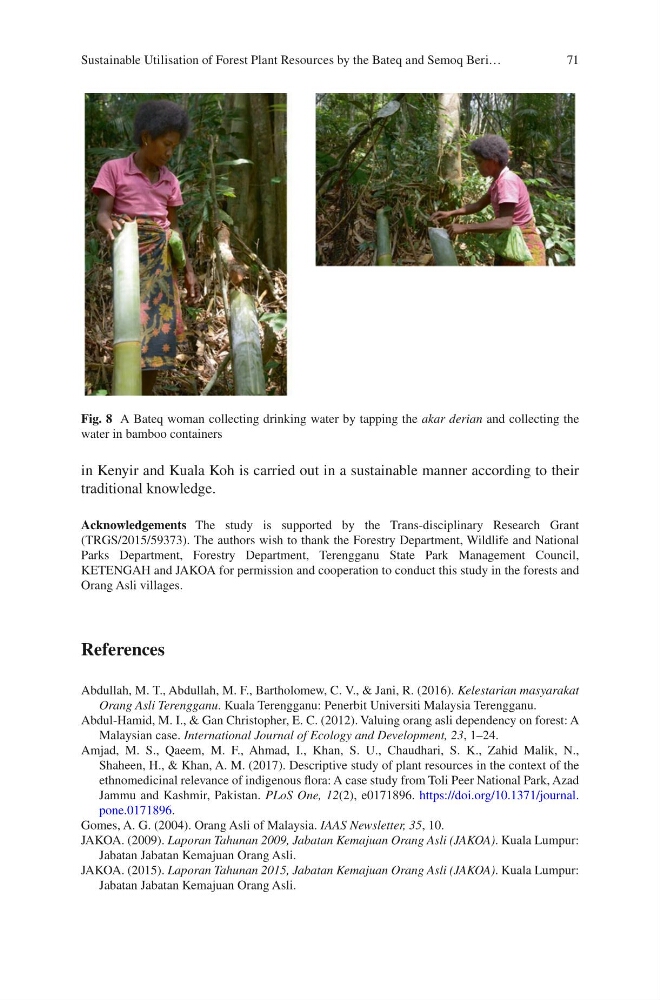
Fig. 8 A Bateq woman collecting drinking water by tapping the akar derian and collecting the
water in bamboo containers
Sustainable Utilisation of Forest Plant Resources by the Bateq and Semoq Beri…
in Kenyir and Kuala Koh is carried out in a sustainable manner according to their
traditional knowledge.
Acknowledgements The study is supported by the Trans-disciplinary Research Grant
(TRGS/2015/59373). The authors wish to thank the Forestry Department, Wildlife and National
Parks Department, Forestry Department, Terengganu State Park Management Council,
KETENGAH and JAKOA for permission and cooperation to conduct this study in the forests and
Orang Asli villages.
References
Abdullah, M. T., Abdullah, M. F., Bartholomew, C. V., & Jani, R. (2016). Kelestarian masyarakat
Orang Asli Terengganu. Kuala Terengganu: Penerbit Universiti Malaysia Terengganu.
Abdul-Hamid, M. I., & Gan Christopher, E. C. (2012). Valuing orang asli dependency on forest: A
Malaysian case. International Journal of Ecology and Development, 23, 1–24.
Amjad, M. S., Qaeem, M. F., Ahmad, I., Khan, S. U., Chaudhari, S. K., Zahid Malik, N.,
Shaheen, H., & Khan, A. M. (2017). Descriptive study of plant resources in the context of the
ethnomedicinal relevance of indigenous flora: A case study from Toli Peer National Park, Azad
Jammu and Kashmir, Pakistan. PLoS One, 12(2), e0171896. https://doi.org/10.1371/journal.
pone.0171896.
Gomes, A. G. (2004). Orang Asli of Malaysia. IAAS Newsletter, 35, 10.
JAKOA. (2009). Laporan Tahunan 2009, Jabatan Kemajuan Orang Asli (JAKOA). Kuala Lumpur:
Jabatan Jabatan Kemajuan Orang Asli.
JAKOA. (2015). Laporan Tahunan 2015, Jabatan Kemajuan Orang Asli (JAKOA). Kuala Lumpur:
Jabatan Jabatan Kemajuan Orang Asli.
Fig. 8 A Bateq woman collecting drinking water by tapping the akar derian and collecting the
water in bamboo containers
Sustainable Utilisation of Forest Plant Resources by the Bateq and Semoq Beri…