

113
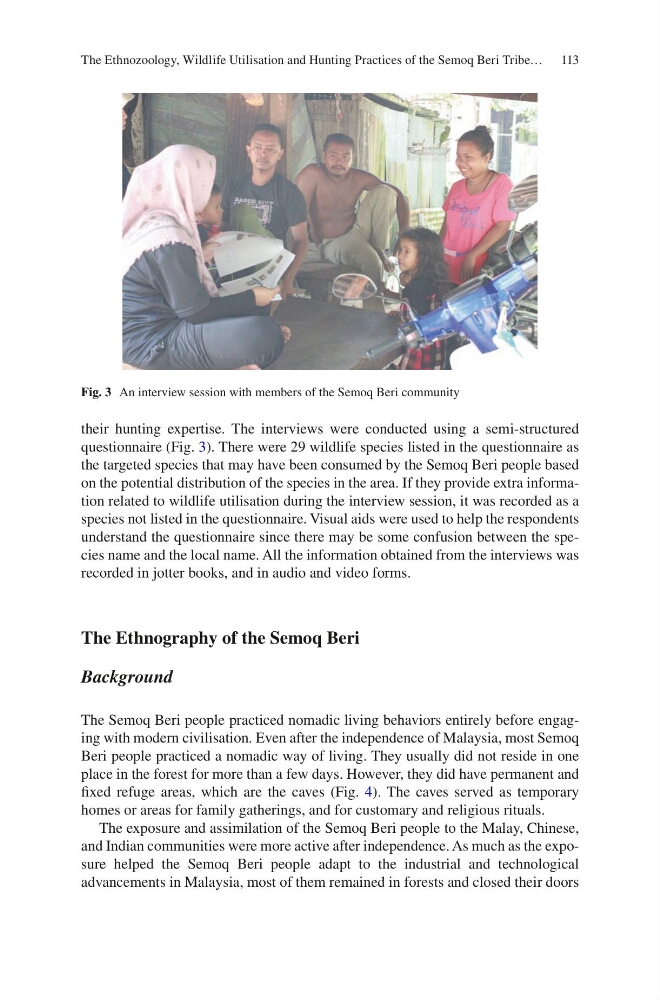
their hunting expertise. The interviews were conducted using a semi-structured
questionnaire (Fig. 3). There were 29 wildlife species listed in the questionnaire as
the targeted species that may have been consumed by the Semoq Beri people based
on the potential distribution of the species in the area. If they provide extra information related to wildlife utilisation during the interview session, it was recorded as a
species not listed in the questionnaire. Visual aids were used to help the respondents
understand the questionnaire since there may be some confusion between the species name and the local name. All the information obtained from the interviews was
recorded in jotter books, and in audio and video forms.
The Ethnography of the Semoq Beri
Background
The Semoq Beri people practiced nomadic living behaviors entirely before engaging with modern civilisation. Even after the independence of Malaysia, most Semoq
Beri people practiced a nomadic way of living. They usually did not reside in one
place in the forest for more than a few days. However, they did have permanent and
fixed refuge areas, which are the caves (Fig. 4). The caves served as temporary
homes or areas for family gatherings, and for customary and religious rituals.
The exposure and assimilation of the Semoq Beri people to the Malay, Chinese,
and Indian communities were more active after independence. As much as the exposure helped the Semoq Beri people adapt to the industrial and technological
advancements in Malaysia, most of them remained in forests and closed their doors
Fig. 3 An interview session with members of the Semoq Beri community
The Ethnozoology, Wildlife Utilisation and Hunting Practices of the Semoq Beri Tribe…
their hunting expertise. The interviews were conducted using a semi-structured
questionnaire (Fig. 3). There were 29 wildlife species listed in the questionnaire as
the targeted species that may have been consumed by the Semoq Beri people based
on the potential distribution of the species in the area. If they provide extra information related to wildlife utilisation during the interview session, it was recorded as a
species not listed in the questionnaire. Visual aids were used to help the respondents
understand the questionnaire since there may be some confusion between the species name and the local name. All the information obtained from the interviews was
recorded in jotter books, and in audio and video forms.
The Ethnography of the Semoq Beri
Background
The Semoq Beri people practiced nomadic living behaviors entirely before engaging with modern civilisation. Even after the independence of Malaysia, most Semoq
Beri people practiced a nomadic way of living. They usually did not reside in one
place in the forest for more than a few days. However, they did have permanent and
fixed refuge areas, which are the caves (Fig. 4). The caves served as temporary
homes or areas for family gatherings, and for customary and religious rituals.
The exposure and assimilation of the Semoq Beri people to the Malay, Chinese,
and Indian communities were more active after independence. As much as the exposure helped the Semoq Beri people adapt to the industrial and technological
advancements in Malaysia, most of them remained in forests and closed their doors
Fig. 3 An interview session with members of the Semoq Beri community
The Ethnozoology, Wildlife Utilisation and Hunting Practices of the Semoq Beri Tribe…