

99
estimated population of the village was 533 people, comprising 104 families (JAKOA
2015). Kampung Sungai Berua had undergone major developments resulting from
the construction of two new roads. One of the roads connected Kampung Tapah to
Tasik Kenyir via Kampung Sungai Berua, while the other was from Kuala Berang to
Gua Musang in the neighbouring state of Kelantan. The Orang Asli village is located
just by the side of the road from Kampung Tapah to Tasik Kenyir, making the village
easily accessible. Therefore, there was frequent interaction between the villagers and
outsiders, such as government officials, middlemen and local traders.
Data Collection
Data was collected during a seven-month period (August 2015 to February 2016).
An official approval for the study was obtained from the Orang Asli Development
Department (JAKOA). Next, permission was obtained from the village head, or Tok
Batin, to interview the villagers. Primary and secondary data were both collected.
The secondary data were obtained from various resources, including books, journals and documented reports. The collection of primary data involved field surveys,
in-depth interviews and participatory observations. Face-to-face interviews were
conducted with hunters and traditional medicine practitioners in the village on
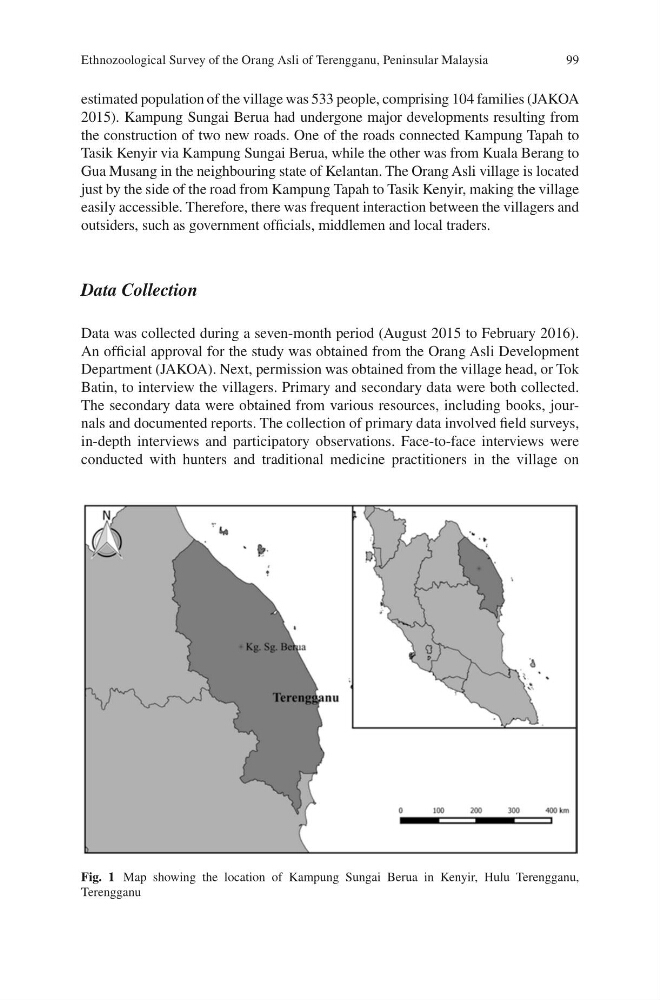
Fig. 1 Map showing the location of Kampung Sungai Berua in Kenyir, Hulu Terengganu,
Terengganu
Ethnozoological Survey of the Orang Asli of Terengganu, Peninsular Malaysia
estimated population of the village was 533 people, comprising 104 families (JAKOA
2015). Kampung Sungai Berua had undergone major developments resulting from
the construction of two new roads. One of the roads connected Kampung Tapah to
Tasik Kenyir via Kampung Sungai Berua, while the other was from Kuala Berang to
Gua Musang in the neighbouring state of Kelantan. The Orang Asli village is located
just by the side of the road from Kampung Tapah to Tasik Kenyir, making the village
easily accessible. Therefore, there was frequent interaction between the villagers and
outsiders, such as government officials, middlemen and local traders.
Data Collection
Data was collected during a seven-month period (August 2015 to February 2016).
An official approval for the study was obtained from the Orang Asli Development
Department (JAKOA). Next, permission was obtained from the village head, or Tok
Batin, to interview the villagers. Primary and secondary data were both collected.
The secondary data were obtained from various resources, including books, journals and documented reports. The collection of primary data involved field surveys,
in-depth interviews and participatory observations. Face-to-face interviews were
conducted with hunters and traditional medicine practitioners in the village on
Fig. 1 Map showing the location of Kampung Sungai Berua in Kenyir, Hulu Terengganu,
Terengganu
Ethnozoological Survey of the Orang Asli of Terengganu, Peninsular Malaysia