

Algorithmic Automation of Leisure from a Sustainable …
23
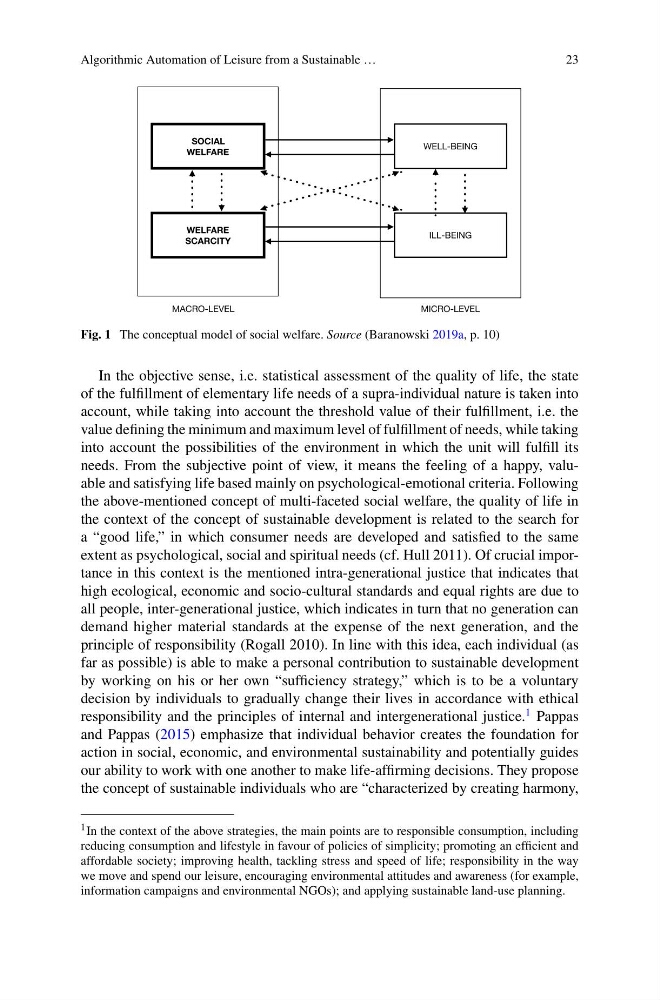
Fig. 1 The conceptual model of social welfare. Source (Baranowski 2019a, p. 10)
In the objective sense, i.e. statistical assessment of the quality of life, the state
of the fulfillment of elementary life needs of a supra-individual nature is taken into
account, while taking into account the threshold value of their fulfillment, i.e. the
value defining the minimum and maximum level of fulfillment of needs, while taking
into account the possibilities of the environment in which the unit will fulfill its
needs. From the subjective point of view, it means the feeling of a happy, valuable and satisfying life based mainly on psychological-emotional criteria. Following
the above-mentioned concept of multi-faceted social welfare, the quality of life in
the context of the concept of sustainable development is related to the search for
a “good life,” in which consumer needs are developed and satisfied to the same
extent as psychological, social and spiritual needs (cf. Hull 2011). Of crucial importance in this context is the mentioned intra-generational justice that indicates that
high ecological, economic and socio-cultural standards and equal rights are due to
all people, inter-generational justice, which indicates in turn that no generation can
demand higher material standards at the expense of the next generation, and the
principle of responsibility (Rogall 2010). In line with this idea, each individual (as
far as possible) is able to make a personal contribution to sustainable development
by working on his or her own “sufficiency strategy,” which is to be a voluntary
decision by individuals to gradually change their lives in accordance with ethical
responsibility and the principles of internal and intergenerational justice.
1 Pappas
and Pappas (2015) emphasize that individual behavior creates the foundation for
action in social, economic, and environmental sustainability and potentially guides
our ability to work with one another to make life-affirming decisions. They propose
the concept of sustainable individuals who are “characterized by creating harmony,
1 In the context of the above strategies, the main points are to responsible consumption, including
reducing consumption and lifestyle in favour of policies of simplicity; promoting an efficient and
affordable society; improving health, tackling stress and speed of life; responsibility in the way
we move and spend our leisure, encouraging environmental attitudes and awareness (for example,
information campaigns and environmental NGOs); and applying sustainable land-use planning.
23
Fig. 1 The conceptual model of social welfare. Source (Baranowski 2019a, p. 10)
In the objective sense, i.e. statistical assessment of the quality of life, the state
of the fulfillment of elementary life needs of a supra-individual nature is taken into
account, while taking into account the threshold value of their fulfillment, i.e. the
value defining the minimum and maximum level of fulfillment of needs, while taking
into account the possibilities of the environment in which the unit will fulfill its
needs. From the subjective point of view, it means the feeling of a happy, valuable and satisfying life based mainly on psychological-emotional criteria. Following
the above-mentioned concept of multi-faceted social welfare, the quality of life in
the context of the concept of sustainable development is related to the search for
a “good life,” in which consumer needs are developed and satisfied to the same
extent as psychological, social and spiritual needs (cf. Hull 2011). Of crucial importance in this context is the mentioned intra-generational justice that indicates that
high ecological, economic and socio-cultural standards and equal rights are due to
all people, inter-generational justice, which indicates in turn that no generation can
demand higher material standards at the expense of the next generation, and the
principle of responsibility (Rogall 2010). In line with this idea, each individual (as
far as possible) is able to make a personal contribution to sustainable development
by working on his or her own “sufficiency strategy,” which is to be a voluntary
decision by individuals to gradually change their lives in accordance with ethical
responsibility and the principles of internal and intergenerational justice.
1 Pappas
and Pappas (2015) emphasize that individual behavior creates the foundation for
action in social, economic, and environmental sustainability and potentially guides
our ability to work with one another to make life-affirming decisions. They propose
the concept of sustainable individuals who are “characterized by creating harmony,
1 In the context of the above strategies, the main points are to responsible consumption, including
reducing consumption and lifestyle in favour of policies of simplicity; promoting an efficient and
affordable society; improving health, tackling stress and speed of life; responsibility in the way
we move and spend our leisure, encouraging environmental attitudes and awareness (for example,
information campaigns and environmental NGOs); and applying sustainable land-use planning.