

Ecotourism as a Core of Sustainability in Tourism
233
ecotourist
nature-based or
cultural tourist
adventure or
active tourist
mass tourist
knowledge/educaƟon need
acƟvity need
self-fulfilment/
excitaƟon need
involvement
responsibility
sightseeing need
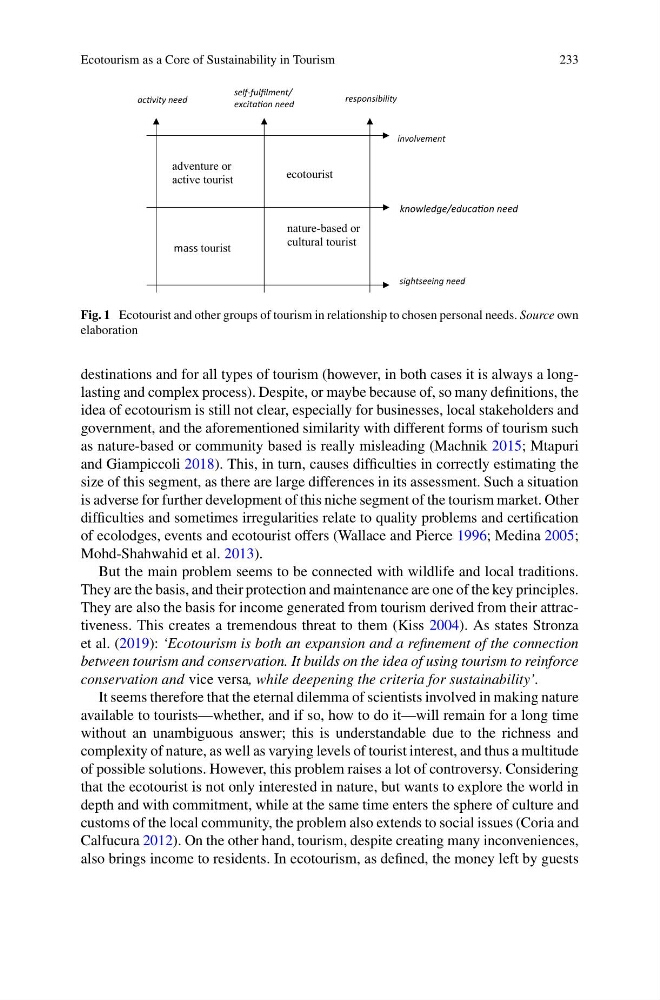
Fig. 1 Ecotourist and other groups of tourism in relationship to chosen personal needs. Source own
elaboration
destinations and for all types of tourism (however, in both cases it is always a longlasting and complex process). Despite, or maybe because of, so many definitions, the
idea of ecotourism is still not clear, especially for businesses, local stakeholders and
government, and the aforementioned similarity with different forms of tourism such
as nature-based or community based is really misleading (Machnik 2015; Mtapuri
and Giampiccoli 2018). This, in turn, causes difficulties in correctly estimating the
size of this segment, as there are large differences in its assessment. Such a situation
is adverse for further development of this niche segment of the tourism market. Other
difficulties and sometimes irregularities relate to quality problems and certification
of ecolodges, events and ecotourist offers (Wallace and Pierce 1996; Medina 2005;
Mohd-Shahwahid et al. 2013).
But the main problem seems to be connected with wildlife and local traditions.
They are the basis, and their protection and maintenance are one of the key principles.
They are also the basis for income generated from tourism derived from their attractiveness. This creates a tremendous threat to them (Kiss 2004). As states Stronza
et al. (2019): ‘Ecotourism is both an expansion and a refinement of the connection
between tourism and conservation. It builds on the idea of using tourism to reinforce
conservation and vice versa, while deepening the criteria for sustainability’.
It seems therefore that the eternal dilemma of scientists involved in making nature
available to tourists—whether, and if so, how to do it—will remain for a long time
without an unambiguous answer; this is understandable due to the richness and
complexity of nature, as well as varying levels of tourist interest, and thus a multitude
of possible solutions. However, this problem raises a lot of controversy. Considering
that the ecotourist is not only interested in nature, but wants to explore the world in
depth and with commitment, while at the same time enters the sphere of culture and
customs of the local community, the problem also extends to social issues (Coria and
Calfucura 2012). On the other hand, tourism, despite creating many inconveniences,
also brings income to residents. In ecotourism, as defined, the money left by guests
233
ecotourist
nature-based or
cultural tourist
adventure or
active tourist
mass tourist
knowledge/educaƟon need
acƟvity need
self-fulfilment/
excitaƟon need
involvement
responsibility
sightseeing need
Fig. 1 Ecotourist and other groups of tourism in relationship to chosen personal needs. Source own
elaboration
destinations and for all types of tourism (however, in both cases it is always a longlasting and complex process). Despite, or maybe because of, so many definitions, the
idea of ecotourism is still not clear, especially for businesses, local stakeholders and
government, and the aforementioned similarity with different forms of tourism such
as nature-based or community based is really misleading (Machnik 2015; Mtapuri
and Giampiccoli 2018). This, in turn, causes difficulties in correctly estimating the
size of this segment, as there are large differences in its assessment. Such a situation
is adverse for further development of this niche segment of the tourism market. Other
difficulties and sometimes irregularities relate to quality problems and certification
of ecolodges, events and ecotourist offers (Wallace and Pierce 1996; Medina 2005;
Mohd-Shahwahid et al. 2013).
But the main problem seems to be connected with wildlife and local traditions.
They are the basis, and their protection and maintenance are one of the key principles.
They are also the basis for income generated from tourism derived from their attractiveness. This creates a tremendous threat to them (Kiss 2004). As states Stronza
et al. (2019): ‘Ecotourism is both an expansion and a refinement of the connection
between tourism and conservation. It builds on the idea of using tourism to reinforce
conservation and vice versa, while deepening the criteria for sustainability’.
It seems therefore that the eternal dilemma of scientists involved in making nature
available to tourists—whether, and if so, how to do it—will remain for a long time
without an unambiguous answer; this is understandable due to the richness and
complexity of nature, as well as varying levels of tourist interest, and thus a multitude
of possible solutions. However, this problem raises a lot of controversy. Considering
that the ecotourist is not only interested in nature, but wants to explore the world in
depth and with commitment, while at the same time enters the sphere of culture and
customs of the local community, the problem also extends to social issues (Coria and
Calfucura 2012). On the other hand, tourism, despite creating many inconveniences,
also brings income to residents. In ecotourism, as defined, the money left by guests