

Glamping and the Development of Sustainable …
207
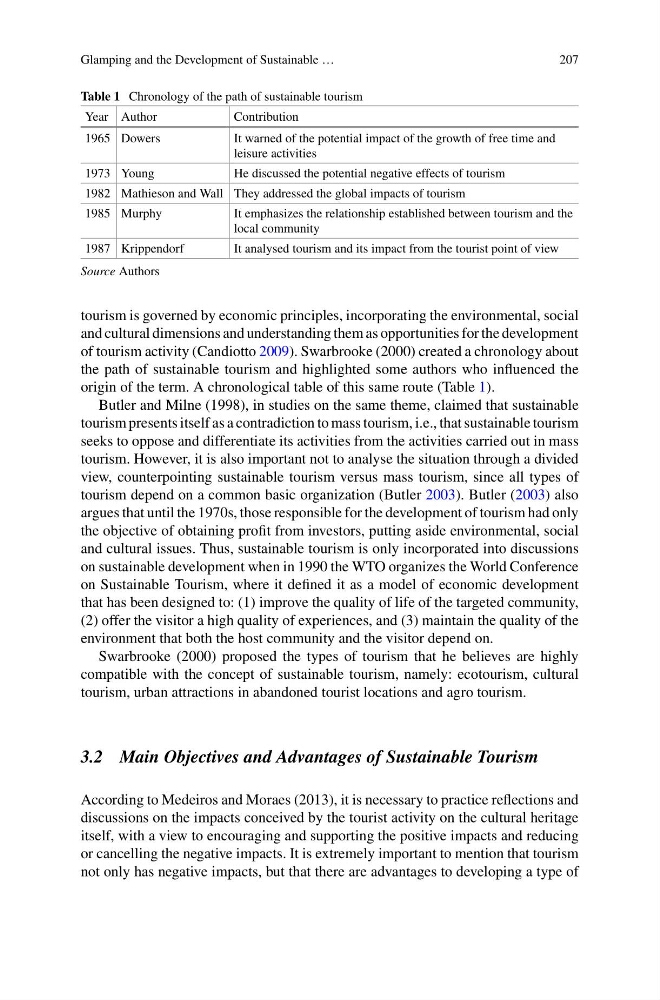
Table 1 Chronology of the path of sustainable tourism
Year Author
Contribution
1965 Dowers
It warned of the potential impact of the growth of free time and
leisure activities
1973 Young
He discussed the potential negative effects of tourism
1982 Mathieson and Wall They addressed the global impacts of tourism
1985 Murphy
It emphasizes the relationship established between tourism and the
local community
1987 Krippendorf
It analysed tourism and its impact from the tourist point of view
Source Authors
tourism is governed by economic principles, incorporating the environmental, social
and cultural dimensions and understanding them as opportunities for the development
of tourism activity (Candiotto 2009). Swarbrooke (2000) created a chronology about
the path of sustainable tourism and highlighted some authors who influenced the
origin of the term. A chronological table of this same route (Table 1).
Butler and Milne (1998), in studies on the same theme, claimed that sustainable
tourism presents itself as a contradiction to mass tourism, i.e., that sustainable tourism
seeks to oppose and differentiate its activities from the activities carried out in mass
tourism. However, it is also important not to analyse the situation through a divided
view, counterpointing sustainable tourism versus mass tourism, since all types of
tourism depend on a common basic organization (Butler 2003). Butler (2003) also
argues that until the 1970s, those responsible for the development of tourism had only
the objective of obtaining profit from investors, putting aside environmental, social
and cultural issues. Thus, sustainable tourism is only incorporated into discussions
on sustainable development when in 1990 the WTO organizes the World Conference
on Sustainable Tourism, where it defined it as a model of economic development
that has been designed to: (1) improve the quality of life of the targeted community,
(2) offer the visitor a high quality of experiences, and (3) maintain the quality of the
environment that both the host community and the visitor depend on.
Swarbrooke (2000) proposed the types of tourism that he believes are highly
compatible with the concept of sustainable tourism, namely: ecotourism, cultural
tourism, urban attractions in abandoned tourist locations and agro tourism.
3.2 Main Objectives and Advantages of Sustainable Tourism
According to Medeiros and Moraes (2013), it is necessary to practice reflections and
discussions on the impacts conceived by the tourist activity on the cultural heritage
itself, with a view to encouraging and supporting the positive impacts and reducing
or cancelling the negative impacts. It is extremely important to mention that tourism
not only has negative impacts, but that there are advantages to developing a type of
207
Table 1 Chronology of the path of sustainable tourism
Year Author
Contribution
1965 Dowers
It warned of the potential impact of the growth of free time and
leisure activities
1973 Young
He discussed the potential negative effects of tourism
1982 Mathieson and Wall They addressed the global impacts of tourism
1985 Murphy
It emphasizes the relationship established between tourism and the
local community
1987 Krippendorf
It analysed tourism and its impact from the tourist point of view
Source Authors
tourism is governed by economic principles, incorporating the environmental, social
and cultural dimensions and understanding them as opportunities for the development
of tourism activity (Candiotto 2009). Swarbrooke (2000) created a chronology about
the path of sustainable tourism and highlighted some authors who influenced the
origin of the term. A chronological table of this same route (Table 1).
Butler and Milne (1998), in studies on the same theme, claimed that sustainable
tourism presents itself as a contradiction to mass tourism, i.e., that sustainable tourism
seeks to oppose and differentiate its activities from the activities carried out in mass
tourism. However, it is also important not to analyse the situation through a divided
view, counterpointing sustainable tourism versus mass tourism, since all types of
tourism depend on a common basic organization (Butler 2003). Butler (2003) also
argues that until the 1970s, those responsible for the development of tourism had only
the objective of obtaining profit from investors, putting aside environmental, social
and cultural issues. Thus, sustainable tourism is only incorporated into discussions
on sustainable development when in 1990 the WTO organizes the World Conference
on Sustainable Tourism, where it defined it as a model of economic development
that has been designed to: (1) improve the quality of life of the targeted community,
(2) offer the visitor a high quality of experiences, and (3) maintain the quality of the
environment that both the host community and the visitor depend on.
Swarbrooke (2000) proposed the types of tourism that he believes are highly
compatible with the concept of sustainable tourism, namely: ecotourism, cultural
tourism, urban attractions in abandoned tourist locations and agro tourism.
3.2 Main Objectives and Advantages of Sustainable Tourism
According to Medeiros and Moraes (2013), it is necessary to practice reflections and
discussions on the impacts conceived by the tourist activity on the cultural heritage
itself, with a view to encouraging and supporting the positive impacts and reducing
or cancelling the negative impacts. It is extremely important to mention that tourism
not only has negative impacts, but that there are advantages to developing a type of