

Sustainable Development of Rural Tourist Settlements in Serbia …
179
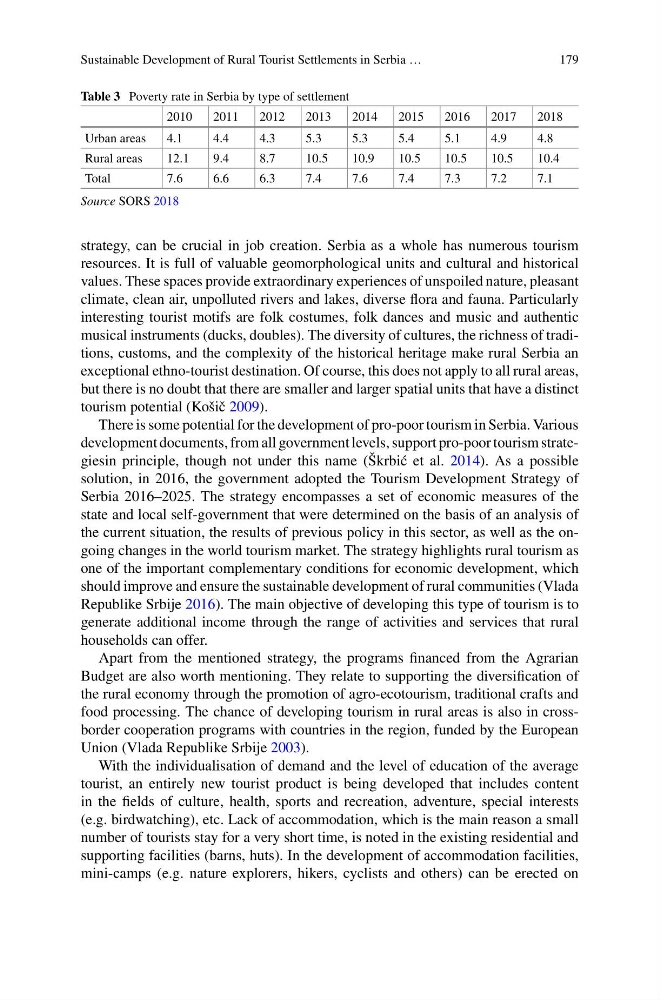
Table 3 Poverty rate in Serbia by type of settlement
2010
2011
2012
2013
2014
2015
2016
2017
2018
Urban areas
4.1
4.4
4.3
5.3
5.3
5.4
5.1
4.9
4.8
Rural areas
12.1
9.4
8.7
10.5
10.9
10.5
10.5
10.5
10.4
Total
7.6
6.6
6.3
7.4
7.6
7.4
7.3
7.2
7.1
Source SORS 2018
strategy, can be crucial in job creation. Serbia as a whole has numerous tourism
resources. It is full of valuable geomorphological units and cultural and historical
values. These spaces provide extraordinary experiences of unspoiled nature, pleasant
climate, clean air, unpolluted rivers and lakes, diverse flora and fauna. Particularly
interesting tourist motifs are folk costumes, folk dances and music and authentic
musical instruments (ducks, doubles). The diversity of cultures, the richness of traditions, customs, and the complexity of the historical heritage make rural Serbia an
exceptional ethno-tourist destination. Of course, this does not apply to all rural areas,
but there is no doubt that there are smaller and larger spatial units that have a distinct
tourism potential (Košiˇ c 2009).
There is some potential for the development of pro-poor tourism in Serbia. Various
development documents, from all government levels, support pro-poor tourism strategiesin principle, though not under this name (Škrbi´ c et al. 2014). As a possible
solution, in 2016, the government adopted the Tourism Development Strategy of
Serbia 2016–2025. The strategy encompasses a set of economic measures of the
state and local self-government that were determined on the basis of an analysis of
the current situation, the results of previous policy in this sector, as well as the ongoing changes in the world tourism market. The strategy highlights rural tourism as
one of the important complementary conditions for economic development, which
should improve and ensure the sustainable development of rural communities (Vlada
Republike Srbije 2016). The main objective of developing this type of tourism is to
generate additional income through the range of activities and services that rural
households can offer.
Apart from the mentioned strategy, the programs financed from the Agrarian
Budget are also worth mentioning. They relate to supporting the diversification of
the rural economy through the promotion of agro-ecotourism, traditional crafts and
food processing. The chance of developing tourism in rural areas is also in crossborder cooperation programs with countries in the region, funded by the European
Union (Vlada Republike Srbije 2003).
With the individualisation of demand and the level of education of the average
tourist, an entirely new tourist product is being developed that includes content
in the fields of culture, health, sports and recreation, adventure, special interests
(e.g. birdwatching), etc. Lack of accommodation, which is the main reason a small
number of tourists stay for a very short time, is noted in the existing residential and
supporting facilities (barns, huts). In the development of accommodation facilities,
mini-camps (e.g. nature explorers, hikers, cyclists and others) can be erected on
179
Table 3 Poverty rate in Serbia by type of settlement
2010
2011
2012
2013
2014
2015
2016
2017
2018
Urban areas
4.1
4.4
4.3
5.3
5.3
5.4
5.1
4.9
4.8
Rural areas
12.1
9.4
8.7
10.5
10.9
10.5
10.5
10.5
10.4
Total
7.6
6.6
6.3
7.4
7.6
7.4
7.3
7.2
7.1
Source SORS 2018
strategy, can be crucial in job creation. Serbia as a whole has numerous tourism
resources. It is full of valuable geomorphological units and cultural and historical
values. These spaces provide extraordinary experiences of unspoiled nature, pleasant
climate, clean air, unpolluted rivers and lakes, diverse flora and fauna. Particularly
interesting tourist motifs are folk costumes, folk dances and music and authentic
musical instruments (ducks, doubles). The diversity of cultures, the richness of traditions, customs, and the complexity of the historical heritage make rural Serbia an
exceptional ethno-tourist destination. Of course, this does not apply to all rural areas,
but there is no doubt that there are smaller and larger spatial units that have a distinct
tourism potential (Košiˇ c 2009).
There is some potential for the development of pro-poor tourism in Serbia. Various
development documents, from all government levels, support pro-poor tourism strategiesin principle, though not under this name (Škrbi´ c et al. 2014). As a possible
solution, in 2016, the government adopted the Tourism Development Strategy of
Serbia 2016–2025. The strategy encompasses a set of economic measures of the
state and local self-government that were determined on the basis of an analysis of
the current situation, the results of previous policy in this sector, as well as the ongoing changes in the world tourism market. The strategy highlights rural tourism as
one of the important complementary conditions for economic development, which
should improve and ensure the sustainable development of rural communities (Vlada
Republike Srbije 2016). The main objective of developing this type of tourism is to
generate additional income through the range of activities and services that rural
households can offer.
Apart from the mentioned strategy, the programs financed from the Agrarian
Budget are also worth mentioning. They relate to supporting the diversification of
the rural economy through the promotion of agro-ecotourism, traditional crafts and
food processing. The chance of developing tourism in rural areas is also in crossborder cooperation programs with countries in the region, funded by the European
Union (Vlada Republike Srbije 2003).
With the individualisation of demand and the level of education of the average
tourist, an entirely new tourist product is being developed that includes content
in the fields of culture, health, sports and recreation, adventure, special interests
(e.g. birdwatching), etc. Lack of accommodation, which is the main reason a small
number of tourists stay for a very short time, is noted in the existing residential and
supporting facilities (barns, huts). In the development of accommodation facilities,
mini-camps (e.g. nature explorers, hikers, cyclists and others) can be erected on