

Rural Tourism and Its Contribution to Sustainable …
163
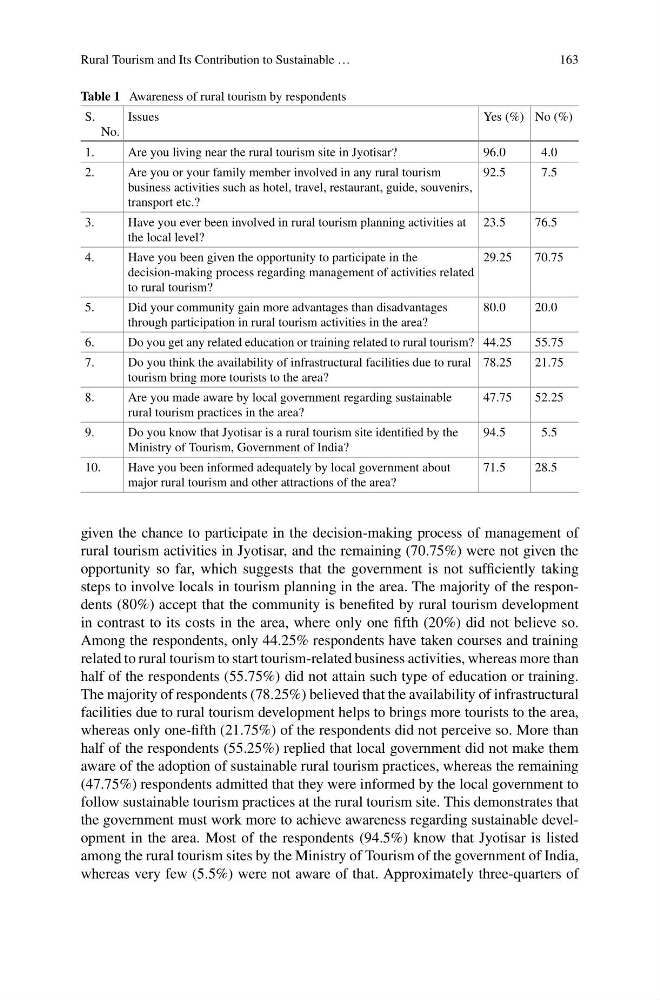
Table 1 Awareness of rural tourism by respondents
S.
No.
Issues
Yes (%) No (%)
1.
Are you living near the rural tourism site in Jyotisar?
96.0
4.0
2.
Are you or your family member involved in any rural tourism
business activities such as hotel, travel, restaurant, guide, souvenirs,
transport etc.?
92.5
7.5
3.
Have you ever been involved in rural tourism planning activities at
the local level?
23.5
76.5
4.
Have you been given the opportunity to participate in the
decision-making process regarding management of activities related
to rural tourism?
29.25
70.75
5.
Did your community gain more advantages than disadvantages
through participation in rural tourism activities in the area?
80.0
20.0
6.
Do you get any related education or training related to rural tourism? 44.25
55.75
7.
Do you think the availability of infrastructural facilities due to rural
tourism bring more tourists to the area?
78.25
21.75
8.
Are you made aware by local government regarding sustainable
rural tourism practices in the area?
47.75
52.25
9.
Do you know that Jyotisar is a rural tourism site identified by the
Ministry of Tourism, Government of India?
94.5
5.5
10.
Have you been informed adequately by local government about
major rural tourism and other attractions of the area?
71.5
28.5
given the chance to participate in the decision-making process of management of
rural tourism activities in Jyotisar, and the remaining (70.75%) were not given the
opportunity so far, which suggests that the government is not sufficiently taking
steps to involve locals in tourism planning in the area. The majority of the respondents (80%) accept that the community is benefited by rural tourism development
in contrast to its costs in the area, where only one fifth (20%) did not believe so.
Among the respondents, only 44.25% respondents have taken courses and training
related to rural tourism to start tourism-related business activities, whereas more than
half of the respondents (55.75%) did not attain such type of education or training.
The majority of respondents (78.25%) believed that the availability of infrastructural
facilities due to rural tourism development helps to brings more tourists to the area,
whereas only one-fifth (21.75%) of the respondents did not perceive so. More than
half of the respondents (55.25%) replied that local government did not make them
aware of the adoption of sustainable rural tourism practices, whereas the remaining
(47.75%) respondents admitted that they were informed by the local government to
follow sustainable tourism practices at the rural tourism site. This demonstrates that
the government must work more to achieve awareness regarding sustainable development in the area. Most of the respondents (94.5%) know that Jyotisar is listed
among the rural tourism sites by the Ministry of Tourism of the government of India,
whereas very few (5.5%) were not aware of that. Approximately three-quarters of
163
Table 1 Awareness of rural tourism by respondents
S.
No.
Issues
Yes (%) No (%)
1.
Are you living near the rural tourism site in Jyotisar?
96.0
4.0
2.
Are you or your family member involved in any rural tourism
business activities such as hotel, travel, restaurant, guide, souvenirs,
transport etc.?
92.5
7.5
3.
Have you ever been involved in rural tourism planning activities at
the local level?
23.5
76.5
4.
Have you been given the opportunity to participate in the
decision-making process regarding management of activities related
to rural tourism?
29.25
70.75
5.
Did your community gain more advantages than disadvantages
through participation in rural tourism activities in the area?
80.0
20.0
6.
Do you get any related education or training related to rural tourism? 44.25
55.75
7.
Do you think the availability of infrastructural facilities due to rural
tourism bring more tourists to the area?
78.25
21.75
8.
Are you made aware by local government regarding sustainable
rural tourism practices in the area?
47.75
52.25
9.
Do you know that Jyotisar is a rural tourism site identified by the
Ministry of Tourism, Government of India?
94.5
5.5
10.
Have you been informed adequately by local government about
major rural tourism and other attractions of the area?
71.5
28.5
given the chance to participate in the decision-making process of management of
rural tourism activities in Jyotisar, and the remaining (70.75%) were not given the
opportunity so far, which suggests that the government is not sufficiently taking
steps to involve locals in tourism planning in the area. The majority of the respondents (80%) accept that the community is benefited by rural tourism development
in contrast to its costs in the area, where only one fifth (20%) did not believe so.
Among the respondents, only 44.25% respondents have taken courses and training
related to rural tourism to start tourism-related business activities, whereas more than
half of the respondents (55.75%) did not attain such type of education or training.
The majority of respondents (78.25%) believed that the availability of infrastructural
facilities due to rural tourism development helps to brings more tourists to the area,
whereas only one-fifth (21.75%) of the respondents did not perceive so. More than
half of the respondents (55.25%) replied that local government did not make them
aware of the adoption of sustainable rural tourism practices, whereas the remaining
(47.75%) respondents admitted that they were informed by the local government to
follow sustainable tourism practices at the rural tourism site. This demonstrates that
the government must work more to achieve awareness regarding sustainable development in the area. Most of the respondents (94.5%) know that Jyotisar is listed
among the rural tourism sites by the Ministry of Tourism of the government of India,
whereas very few (5.5%) were not aware of that. Approximately three-quarters of