

Selected Determinants of Recreational and Tourist Activity of the Inhabitants …
105
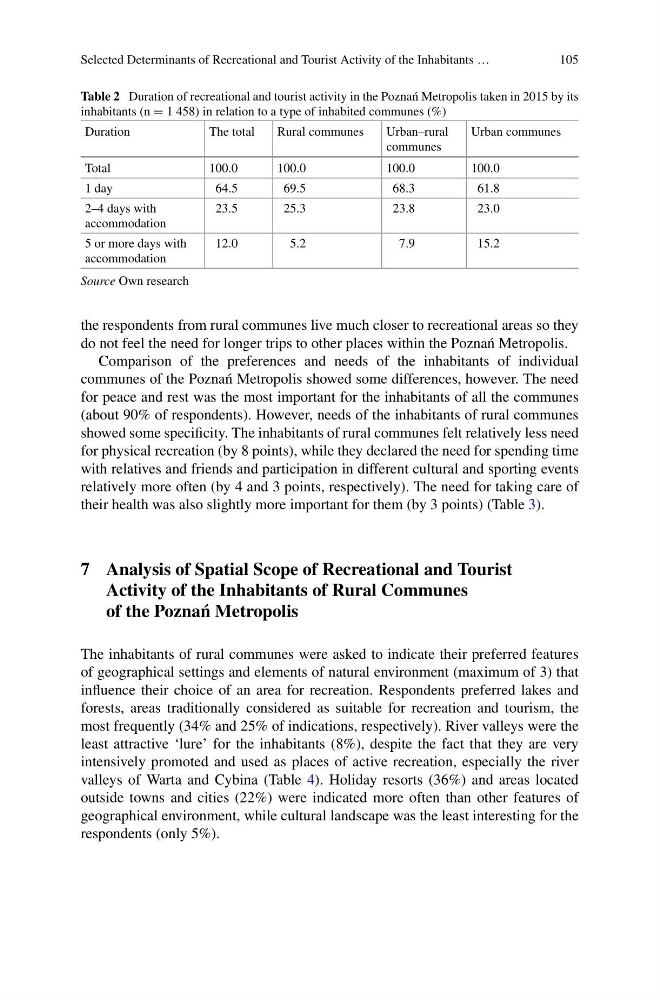
Table 2 Duration of recreational and tourist activity in the Pozna´ n Metropolis taken in 2015 by its
inhabitants (n = 1 458) in relation to a type of inhabited communes (%)
Duration
The total
Rural communes
Urban–rural
communes
Urban communes
Total
100.0
100.0
100.0
100.0
1 day
64.5
69.5
68.3
61.8
2–4 days with
accommodation
23.5
25.3
23.8
23.0
5 or more days with
accommodation
12.0
5.2
7.9
15.2
Source Own research
the respondents from rural communes live much closer to recreational areas so they
do not feel the need for longer trips to other places within the Pozna´ n Metropolis.
Comparison of the preferences and needs of the inhabitants of individual
communes of the Pozna´ n Metropolis showed some differences, however. The need
for peace and rest was the most important for the inhabitants of all the communes
(about 90% of respondents). However, needs of the inhabitants of rural communes
showed some specificity. The inhabitants of rural communes felt relatively less need
for physical recreation (by 8 points), while they declared the need for spending time
with relatives and friends and participation in different cultural and sporting events
relatively more often (by 4 and 3 points, respectively). The need for taking care of
their health was also slightly more important for them (by 3 points) (Table 3).
7 Analysis of Spatial Scope of Recreational and Tourist
Activity of the Inhabitants of Rural Communes
of the Pozna ´
n Metropolis
The inhabitants of rural communes were asked to indicate their preferred features
of geographical settings and elements of natural environment (maximum of 3) that
influence their choice of an area for recreation. Respondents preferred lakes and
forests, areas traditionally considered as suitable for recreation and tourism, the
most frequently (34% and 25% of indications, respectively). River valleys were the
least attractive ‘lure’ for the inhabitants (8%), despite the fact that they are very
intensively promoted and used as places of active recreation, especially the river
valleys of Warta and Cybina (Table 4). Holiday resorts (36%) and areas located
outside towns and cities (22%) were indicated more often than other features of
geographical environment, while cultural landscape was the least interesting for the
respondents (only 5%).
105
Table 2 Duration of recreational and tourist activity in the Pozna´ n Metropolis taken in 2015 by its
inhabitants (n = 1 458) in relation to a type of inhabited communes (%)
Duration
The total
Rural communes
Urban–rural
communes
Urban communes
Total
100.0
100.0
100.0
100.0
1 day
64.5
69.5
68.3
61.8
2–4 days with
accommodation
23.5
25.3
23.8
23.0
5 or more days with
accommodation
12.0
5.2
7.9
15.2
Source Own research
the respondents from rural communes live much closer to recreational areas so they
do not feel the need for longer trips to other places within the Pozna´ n Metropolis.
Comparison of the preferences and needs of the inhabitants of individual
communes of the Pozna´ n Metropolis showed some differences, however. The need
for peace and rest was the most important for the inhabitants of all the communes
(about 90% of respondents). However, needs of the inhabitants of rural communes
showed some specificity. The inhabitants of rural communes felt relatively less need
for physical recreation (by 8 points), while they declared the need for spending time
with relatives and friends and participation in different cultural and sporting events
relatively more often (by 4 and 3 points, respectively). The need for taking care of
their health was also slightly more important for them (by 3 points) (Table 3).
7 Analysis of Spatial Scope of Recreational and Tourist
Activity of the Inhabitants of Rural Communes
of the Pozna ´
n Metropolis
The inhabitants of rural communes were asked to indicate their preferred features
of geographical settings and elements of natural environment (maximum of 3) that
influence their choice of an area for recreation. Respondents preferred lakes and
forests, areas traditionally considered as suitable for recreation and tourism, the
most frequently (34% and 25% of indications, respectively). River valleys were the
least attractive ‘lure’ for the inhabitants (8%), despite the fact that they are very
intensively promoted and used as places of active recreation, especially the river
valleys of Warta and Cybina (Table 4). Holiday resorts (36%) and areas located
outside towns and cities (22%) were indicated more often than other features of
geographical environment, while cultural landscape was the least interesting for the
respondents (only 5%).