

28 Introduction
of 120 broadband stations, distributed over 61 countries and
largely based on existing networks, will aid in discrimination
and replace malfunctioning primary stations.
Further reading
The seismological topics introduced in this chapter are discussed elsewhere
in the text, so references are given in the appropriate sections. Many other
references exist for the topics of societal interest discussed here.
Popular accounts of issues related to earthquakes include Gere and Shah
(1984), Bolt (1999), and Brumbaugh (1999). Introductory treatments
dealing with earthquakes and volcanoes from the point of view of the geology and hazards include Alexander (1993), Kovach (1995), and Sieh and
LeVay (1998). The World Wide Web contains a wealth of general earthquake information; sites to start at include http://www.scec.org, http://
www.seismosoc.org, http://www.iris.edu, and http://earthquake.usgs.gov.
Specific issues related to volcano prediction studies at Mammoth Lakes
are discussed by Sieh and LeVay (1998) and Hill (1998). For discussions
of paleoseismology and geological effects of earthquakes, see Keller and
Pinter (1996) and Yeats et al. (1997). The role of seismology in the plate
tectonic revolution is discussed by Cox (1973) and Menard (1986); the
general idea of scientific revolutions as “paradigm shifts” is given by Kuhn
(1962).
Issues of assessing probabilities and uncertainties are discussed by
Ekeland (1993); Henrion and Fischoff (1986) analyze the history of measurements of physical constants. Probabilistic seismic hazard analysis is discussed by Reiter (1990), Hanks and Cornell (1994), and Hanks (1997).
The US Geological Survey National Seismic Hazard maps are described
by Frankel et al. (1996), and a global hazard map is described by Shedlock
et al. (2000). Uncertainties in earthquake probabilities for California are
discussed by Savage (1991). Real-time seismology applications to earthquake risk mitigation are discussed by Kanamori et al. (1997). Sarewitz
et al. (2000) discuss general issues of prediction and policy for the earth
sciences, including earthquake prediction. Geschwind (2001) reviews the
history of seismic risk mitigation and earthquake prediction policies in the
USA.
A considerable volume of scientific literature addresses earthquake prediction, often arguing whether either a specific approach or any method
can predict earthquakes. Turcotte (1991) gives a general review of many
aspects of the topic, and Geller (1997) summarizes the history of earthquake prediction efforts, including that at Parkfield and the Palmdale
Bulge. Geller et al. (1997) and Evans (1997) argue that earthquakes are
unpredictable; Lomnitz (1994), Wyss et al. (1997), and Sykes et al. (1999)
argue the other side. The Parkfield earthquake prediction experiment
is summarized by Roeloffs and Langbein (1994); Davis et al. (1989) and
Savage (1993) discuss the limitations of the statistical approach used. The
controversy over the seismic gap hypothesis is discussed by Stein (1992);
Kagan and Jackson (1991) and Jackson and Kagan (1993) argue against
the hypothesis, and Nishenko and Sykes (1993) argue for it.
Earthquake engineering is discussed by Bray (1995), Chopra (1995),
Krinitzsky et al. (1993), and Wiegel (1970). A good World Wide Web site
to start at is http://www.eeri.org, which also provides an introduction to
earthquake insurance. Issues in natural disaster insurance are discussed by
Michaels et al. (1997).
Bolt (1976), Sykes and Davis (1987), Richards and Zavales (1990),
and Lay (1992) discuss seismic verification of nuclear testing. More
description of the Comprehensive Test Ban Treaty can be found at
http://pws.ctbto.org.
An important part of this effort is the International Monitoring System (IMS), whose aim is to detect, locate, and identify nuclear detonations that occur underground, underwater,
or above ground. To do this, the IMS will combine seismological, hydroacoustic, and infrasound networks. Underwater
nuclear tests create sound waves that travel efficiently through
the ocean (Section 2.5.8), so a network of hydroacoustic
stations will be established, with some sites using underwater
hydrophones and others on islands to observe seismic phases
that are generated when the oceanic acoustic waves reach
land. Nuclear tests in the atmosphere will be detected by the
infrasonic (frequencies less than 20 Hz, below the human
hearing range) sound waves they generate. The IMS infrasound
network will consist of small arrays of microphones that can
determine the direction in which the infrasonic waves are
traveling, so detection at multiple stations will identify the
source of the waves.
Because most clandestine tests would likely occur underground, seismic stations will be a vital part of the IMS. The IMS
seismic network will have 50 primary stations with threecomponent broadband seismometers. About half of these sites
will be augmented with local arrays of short-period verticalcomponent sensors. Data will be telemetered in real time, so
that there is no delay in monitoring. An auxiliary network
Western US
earthquake
Nevada
nuclear test
6.0
5.5
5.0
4.5
4.0
4.5
5.0
5.5
6.0
m b
10
18
10
17
10
16
10
15
Moment (N–m)
M S
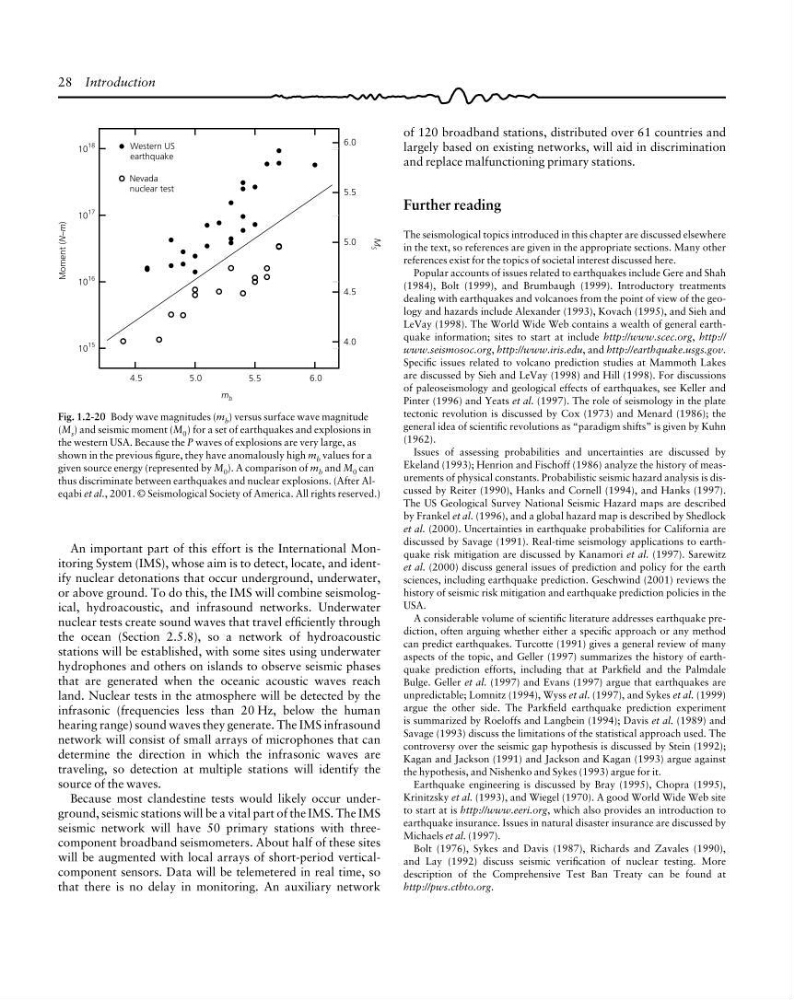
Fig. 1.2-20 Body wave magnitudes (m b ) versus surface wave magnitude
(M s ) and seismic moment (M 0 ) for a set of earthquakes and explosions in
the western USA. Because the P waves of explosions are very large, as
shown in the previous figure, they have anomalously high m b values for a
given source energy (represented by M 0 ). A comparison of m b and M 0 can
thus discriminate between earthquakes and nuclear explosions. (After Aleqabi et al., 2001. © Seismological Society of America. All rights reserved.)
of 120 broadband stations, distributed over 61 countries and
largely based on existing networks, will aid in discrimination
and replace malfunctioning primary stations.
Further reading
The seismological topics introduced in this chapter are discussed elsewhere
in the text, so references are given in the appropriate sections. Many other
references exist for the topics of societal interest discussed here.
Popular accounts of issues related to earthquakes include Gere and Shah
(1984), Bolt (1999), and Brumbaugh (1999). Introductory treatments
dealing with earthquakes and volcanoes from the point of view of the geology and hazards include Alexander (1993), Kovach (1995), and Sieh and
LeVay (1998). The World Wide Web contains a wealth of general earthquake information; sites to start at include http://www.scec.org, http://
www.seismosoc.org, http://www.iris.edu, and http://earthquake.usgs.gov.
Specific issues related to volcano prediction studies at Mammoth Lakes
are discussed by Sieh and LeVay (1998) and Hill (1998). For discussions
of paleoseismology and geological effects of earthquakes, see Keller and
Pinter (1996) and Yeats et al. (1997). The role of seismology in the plate
tectonic revolution is discussed by Cox (1973) and Menard (1986); the
general idea of scientific revolutions as “paradigm shifts” is given by Kuhn
(1962).
Issues of assessing probabilities and uncertainties are discussed by
Ekeland (1993); Henrion and Fischoff (1986) analyze the history of measurements of physical constants. Probabilistic seismic hazard analysis is discussed by Reiter (1990), Hanks and Cornell (1994), and Hanks (1997).
The US Geological Survey National Seismic Hazard maps are described
by Frankel et al. (1996), and a global hazard map is described by Shedlock
et al. (2000). Uncertainties in earthquake probabilities for California are
discussed by Savage (1991). Real-time seismology applications to earthquake risk mitigation are discussed by Kanamori et al. (1997). Sarewitz
et al. (2000) discuss general issues of prediction and policy for the earth
sciences, including earthquake prediction. Geschwind (2001) reviews the
history of seismic risk mitigation and earthquake prediction policies in the
USA.
A considerable volume of scientific literature addresses earthquake prediction, often arguing whether either a specific approach or any method
can predict earthquakes. Turcotte (1991) gives a general review of many
aspects of the topic, and Geller (1997) summarizes the history of earthquake prediction efforts, including that at Parkfield and the Palmdale
Bulge. Geller et al. (1997) and Evans (1997) argue that earthquakes are
unpredictable; Lomnitz (1994), Wyss et al. (1997), and Sykes et al. (1999)
argue the other side. The Parkfield earthquake prediction experiment
is summarized by Roeloffs and Langbein (1994); Davis et al. (1989) and
Savage (1993) discuss the limitations of the statistical approach used. The
controversy over the seismic gap hypothesis is discussed by Stein (1992);
Kagan and Jackson (1991) and Jackson and Kagan (1993) argue against
the hypothesis, and Nishenko and Sykes (1993) argue for it.
Earthquake engineering is discussed by Bray (1995), Chopra (1995),
Krinitzsky et al. (1993), and Wiegel (1970). A good World Wide Web site
to start at is http://www.eeri.org, which also provides an introduction to
earthquake insurance. Issues in natural disaster insurance are discussed by
Michaels et al. (1997).
Bolt (1976), Sykes and Davis (1987), Richards and Zavales (1990),
and Lay (1992) discuss seismic verification of nuclear testing. More
description of the Comprehensive Test Ban Treaty can be found at
http://pws.ctbto.org.
An important part of this effort is the International Monitoring System (IMS), whose aim is to detect, locate, and identify nuclear detonations that occur underground, underwater,
or above ground. To do this, the IMS will combine seismological, hydroacoustic, and infrasound networks. Underwater
nuclear tests create sound waves that travel efficiently through
the ocean (Section 2.5.8), so a network of hydroacoustic
stations will be established, with some sites using underwater
hydrophones and others on islands to observe seismic phases
that are generated when the oceanic acoustic waves reach
land. Nuclear tests in the atmosphere will be detected by the
infrasonic (frequencies less than 20 Hz, below the human
hearing range) sound waves they generate. The IMS infrasound
network will consist of small arrays of microphones that can
determine the direction in which the infrasonic waves are
traveling, so detection at multiple stations will identify the
source of the waves.
Because most clandestine tests would likely occur underground, seismic stations will be a vital part of the IMS. The IMS
seismic network will have 50 primary stations with threecomponent broadband seismometers. About half of these sites
will be augmented with local arrays of short-period verticalcomponent sensors. Data will be telemetered in real time, so
that there is no delay in monitoring. An auxiliary network
Western US
earthquake
Nevada
nuclear test
6.0
5.5
5.0
4.5
4.0
4.5
5.0
5.5
6.0
m b
10
18
10
17
10
16
10
15
Moment (N–m)
M S
Fig. 1.2-20 Body wave magnitudes (m b ) versus surface wave magnitude
(M s ) and seismic moment (M 0 ) for a set of earthquakes and explosions in
the western USA. Because the P waves of explosions are very large, as
shown in the previous figure, they have anomalously high m b values for a
given source energy (represented by M 0 ). A comparison of m b and M 0 can
thus discriminate between earthquakes and nuclear explosions. (After Aleqabi et al., 2001. © Seismological Society of America. All rights reserved.)