

148
P. S. Kumar et al.
Source: [20]
1.
Mining raw
materials
Iron ore concentrate
/Pellets/Sinter
Lime/calcined
dolimite
Cokes
3.
Iron ore
reduction
4.
Air
separation
5.
Ferroalloy
production
6.
Steel
production
(Iron) ore
Limestone/
Dolomite
Coal
2.
Processing
Beneficiation
Calcination
Coking
Steel
Energy
Process
Product
Process
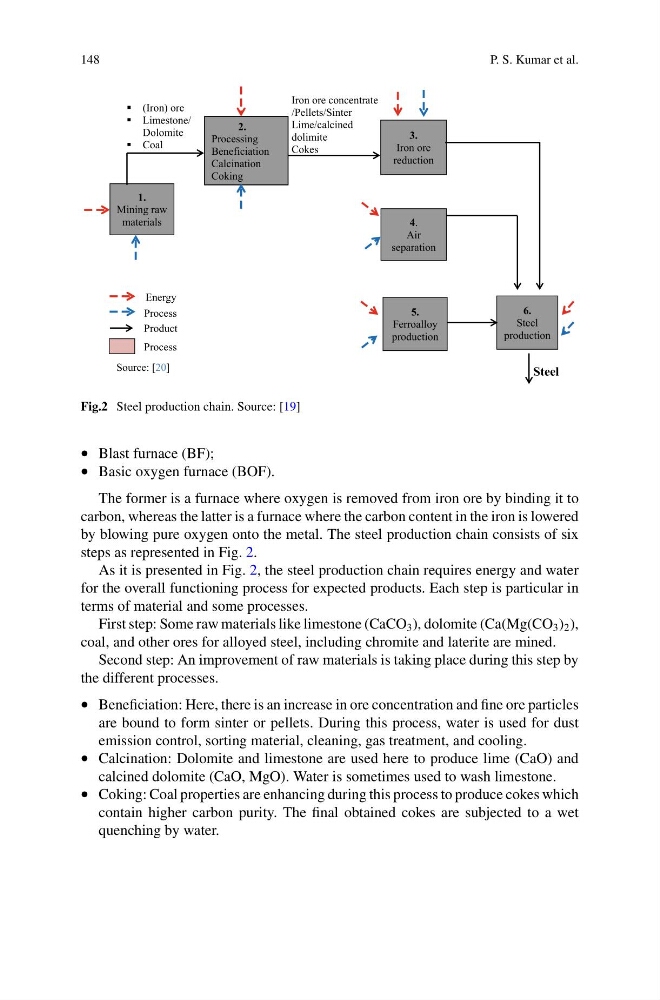
Fig.2 Steel production chain. Source: [19]
• Blast furnace (BF);
• Basic oxygen furnace (BOF).
The former is a furnace where oxygen is removed from iron ore by binding it to
carbon, whereas the latter is a furnace where the carbon content in the iron is lowered
by blowing pure oxygen onto the metal. The steel production chain consists of six
steps as represented in Fig. 2.
As it is presented in Fig. 2, the steel production chain requires energy and water
for the overall functioning process for expected products. Each step is particular in
terms of material and some processes.
First step: Some raw materials like limestone (CaCO 3 ), dolomite (Ca(Mg(CO 3 ) 2 ),
coal, and other ores for alloyed steel, including chromite and laterite are mined.
Second step: An improvement of raw materials is taking place during this step by
the different processes.
• Beneficiation: Here, there is an increase in ore concentration and fine ore particles
are bound to form sinter or pellets. During this process, water is used for dust
emission control, sorting material, cleaning, gas treatment, and cooling.
• Calcination: Dolomite and limestone are used here to produce lime (CaO) and
calcined dolomite (CaO, MgO). Water is sometimes used to wash limestone.
• Coking: Coal properties are enhancing during this process to produce cokes which
contain higher carbon purity. The final obtained cokes are subjected to a wet
quenching by water.
P. S. Kumar et al.
Source: [20]
1.
Mining raw
materials
Iron ore concentrate
/Pellets/Sinter
Lime/calcined
dolimite
Cokes
3.
Iron ore
reduction
4.
Air
separation
5.
Ferroalloy
production
6.
Steel
production
(Iron) ore
Limestone/
Dolomite
Coal
2.
Processing
Beneficiation
Calcination
Coking
Steel
Energy
Process
Product
Process
Fig.2 Steel production chain. Source: [19]
• Blast furnace (BF);
• Basic oxygen furnace (BOF).
The former is a furnace where oxygen is removed from iron ore by binding it to
carbon, whereas the latter is a furnace where the carbon content in the iron is lowered
by blowing pure oxygen onto the metal. The steel production chain consists of six
steps as represented in Fig. 2.
As it is presented in Fig. 2, the steel production chain requires energy and water
for the overall functioning process for expected products. Each step is particular in
terms of material and some processes.
First step: Some raw materials like limestone (CaCO 3 ), dolomite (Ca(Mg(CO 3 ) 2 ),
coal, and other ores for alloyed steel, including chromite and laterite are mined.
Second step: An improvement of raw materials is taking place during this step by
the different processes.
• Beneficiation: Here, there is an increase in ore concentration and fine ore particles
are bound to form sinter or pellets. During this process, water is used for dust
emission control, sorting material, cleaning, gas treatment, and cooling.
• Calcination: Dolomite and limestone are used here to produce lime (CaO) and
calcined dolomite (CaO, MgO). Water is sometimes used to wash limestone.
• Coking: Coal properties are enhancing during this process to produce cokes which
contain higher carbon purity. The final obtained cokes are subjected to a wet
quenching by water.