

142
P. S. Kumar et al.
Raw leather
Soaking
Unhairing
Liming
Bating
Deliming
Pre-tanning
Vegetable tanning
Degreasing
Pickling Tanning Pressing
Chrometanning
Degreasing
Pickling
Tanning
Pressing
Dyeing
Dyeing
Re-tanning and
dyeing
Finishing
Mechanical operations Finishing
Mechanical operations
Hides
Finished products
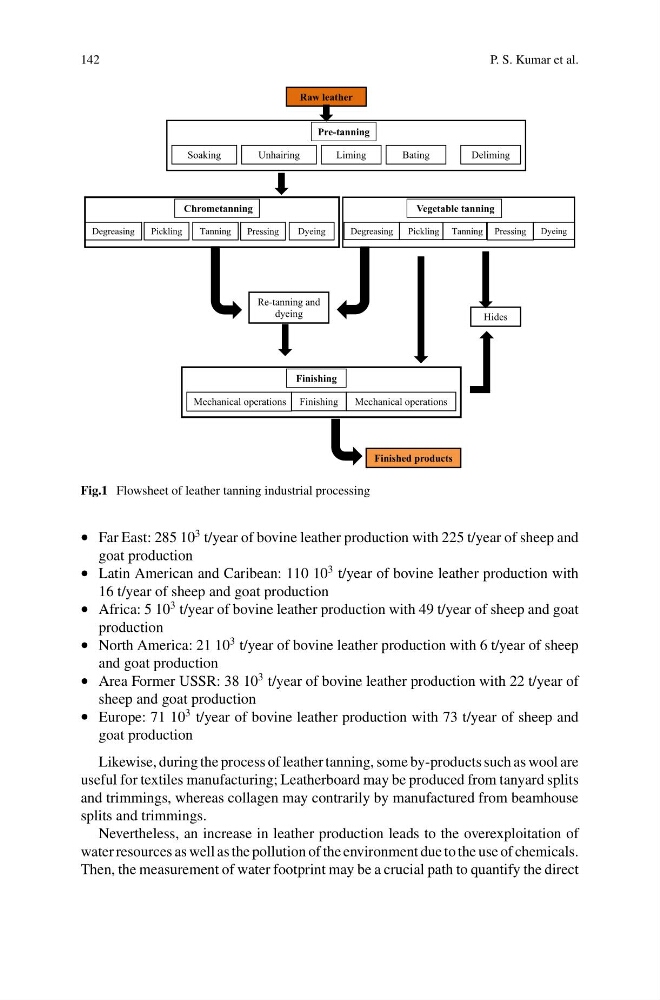
Fig.1 Flowsheet of leather tanning industrial processing
• Far East: 285 10
3 t/year of bovine leather production with 225 t/year of sheep and
goat production
• Latin American and Caribean: 110 10
3 t/year of bovine leather production with
16 t/year of sheep and goat production
• Africa: 5 10
3 t/year of bovine leather production with 49 t/year of sheep and goat
production
• North America: 21 10
3 t/year of bovine leather production with 6 t/year of sheep
and goat production
• Area Former USSR: 38 10
3 t/year of bovine leather production with 22 t/year of
sheep and goat production
• Europe: 71 10
3 t/year of bovine leather production with 73 t/year of sheep and
goat production
Likewise, during the process of leather tanning, some by-products such as wool are
useful for textiles manufacturing; Leatherboard may be produced from tanyard splits
and trimmings, whereas collagen may contrarily by manufactured from beamhouse
splits and trimmings.
Nevertheless, an increase in leather production leads to the overexploitation of
water resources as well as the pollution of the environment due to the use of chemicals.
Then, the measurement of water footprint may be a crucial path to quantify the direct
P. S. Kumar et al.
Raw leather
Soaking
Unhairing
Liming
Bating
Deliming
Pre-tanning
Vegetable tanning
Degreasing
Pickling Tanning Pressing
Chrometanning
Degreasing
Pickling
Tanning
Pressing
Dyeing
Dyeing
Re-tanning and
dyeing
Finishing
Mechanical operations Finishing
Mechanical operations
Hides
Finished products
Fig.1 Flowsheet of leather tanning industrial processing
• Far East: 285 10
3 t/year of bovine leather production with 225 t/year of sheep and
goat production
• Latin American and Caribean: 110 10
3 t/year of bovine leather production with
16 t/year of sheep and goat production
• Africa: 5 10
3 t/year of bovine leather production with 49 t/year of sheep and goat
production
• North America: 21 10
3 t/year of bovine leather production with 6 t/year of sheep
and goat production
• Area Former USSR: 38 10
3 t/year of bovine leather production with 22 t/year of
sheep and goat production
• Europe: 71 10
3 t/year of bovine leather production with 73 t/year of sheep and
goat production
Likewise, during the process of leather tanning, some by-products such as wool are
useful for textiles manufacturing; Leatherboard may be produced from tanyard splits
and trimmings, whereas collagen may contrarily by manufactured from beamhouse
splits and trimmings.
Nevertheless, an increase in leather production leads to the overexploitation of
water resources as well as the pollution of the environment due to the use of chemicals.
Then, the measurement of water footprint may be a crucial path to quantify the direct