

From Field to Bottle: Water Footprint Estimation …
127
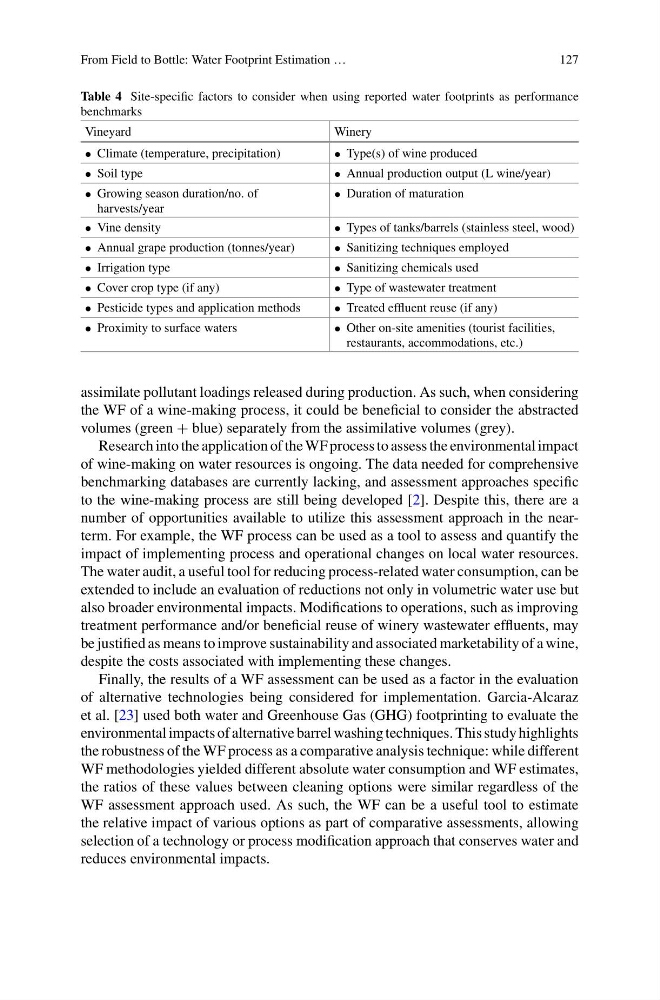
Table 4 Site-specific factors to consider when using reported water footprints as performance
benchmarks
Vineyard
Winery
• Climate (temperature, precipitation)
• Type(s) of wine produced
• Soil type
• Annual production output (L wine/year)
• Growing season duration/no. of
harvests/year
• Duration of maturation
• Vine density
• Types of tanks/barrels (stainless steel, wood)
• Annual grape production (tonnes/year)
• Sanitizing techniques employed
• Irrigation type
• Sanitizing chemicals used
• Cover crop type (if any)
• Type of wastewater treatment
• Pesticide types and application methods
• Treated effluent reuse (if any)
• Proximity to surface waters
• Other on-site amenities (tourist facilities,
restaurants, accommodations, etc.)
assimilate pollutant loadings released during production. As such, when considering
the WF of a wine-making process, it could be beneficial to consider the abstracted
volumes (green + blue) separately from the assimilative volumes (grey).
Research into the application of the WF process to assess the environmental impact
of wine-making on water resources is ongoing. The data needed for comprehensive
benchmarking databases are currently lacking, and assessment approaches specific
to the wine-making process are still being developed [2]. Despite this, there are a
number of opportunities available to utilize this assessment approach in the nearterm. For example, the WF process can be used as a tool to assess and quantify the
impact of implementing process and operational changes on local water resources.
The water audit, a useful tool for reducing process-related water consumption, can be
extended to include an evaluation of reductions not only in volumetric water use but
also broader environmental impacts. Modifications to operations, such as improving
treatment performance and/or beneficial reuse of winery wastewater effluents, may
be justified as means to improve sustainability and associated marketability of a wine,
despite the costs associated with implementing these changes.
Finally, the results of a WF assessment can be used as a factor in the evaluation
of alternative technologies being considered for implementation. Garcia-Alcaraz
et al. [23] used both water and Greenhouse Gas (GHG) footprinting to evaluate the
environmental impacts of alternative barrel washing techniques. This study highlights
the robustness of the WF process as a comparative analysis technique: while different
WF methodologies yielded different absolute water consumption and WF estimates,
the ratios of these values between cleaning options were similar regardless of the
WF assessment approach used. As such, the WF can be a useful tool to estimate
the relative impact of various options as part of comparative assessments, allowing
selection of a technology or process modification approach that conserves water and
reduces environmental impacts.
127
Table 4 Site-specific factors to consider when using reported water footprints as performance
benchmarks
Vineyard
Winery
• Climate (temperature, precipitation)
• Type(s) of wine produced
• Soil type
• Annual production output (L wine/year)
• Growing season duration/no. of
harvests/year
• Duration of maturation
• Vine density
• Types of tanks/barrels (stainless steel, wood)
• Annual grape production (tonnes/year)
• Sanitizing techniques employed
• Irrigation type
• Sanitizing chemicals used
• Cover crop type (if any)
• Type of wastewater treatment
• Pesticide types and application methods
• Treated effluent reuse (if any)
• Proximity to surface waters
• Other on-site amenities (tourist facilities,
restaurants, accommodations, etc.)
assimilate pollutant loadings released during production. As such, when considering
the WF of a wine-making process, it could be beneficial to consider the abstracted
volumes (green + blue) separately from the assimilative volumes (grey).
Research into the application of the WF process to assess the environmental impact
of wine-making on water resources is ongoing. The data needed for comprehensive
benchmarking databases are currently lacking, and assessment approaches specific
to the wine-making process are still being developed [2]. Despite this, there are a
number of opportunities available to utilize this assessment approach in the nearterm. For example, the WF process can be used as a tool to assess and quantify the
impact of implementing process and operational changes on local water resources.
The water audit, a useful tool for reducing process-related water consumption, can be
extended to include an evaluation of reductions not only in volumetric water use but
also broader environmental impacts. Modifications to operations, such as improving
treatment performance and/or beneficial reuse of winery wastewater effluents, may
be justified as means to improve sustainability and associated marketability of a wine,
despite the costs associated with implementing these changes.
Finally, the results of a WF assessment can be used as a factor in the evaluation
of alternative technologies being considered for implementation. Garcia-Alcaraz
et al. [23] used both water and Greenhouse Gas (GHG) footprinting to evaluate the
environmental impacts of alternative barrel washing techniques. This study highlights
the robustness of the WF process as a comparative analysis technique: while different
WF methodologies yielded different absolute water consumption and WF estimates,
the ratios of these values between cleaning options were similar regardless of the
WF assessment approach used. As such, the WF can be a useful tool to estimate
the relative impact of various options as part of comparative assessments, allowing
selection of a technology or process modification approach that conserves water and
reduces environmental impacts.