

14.5 Extraction of Aquatic Cellulose
319
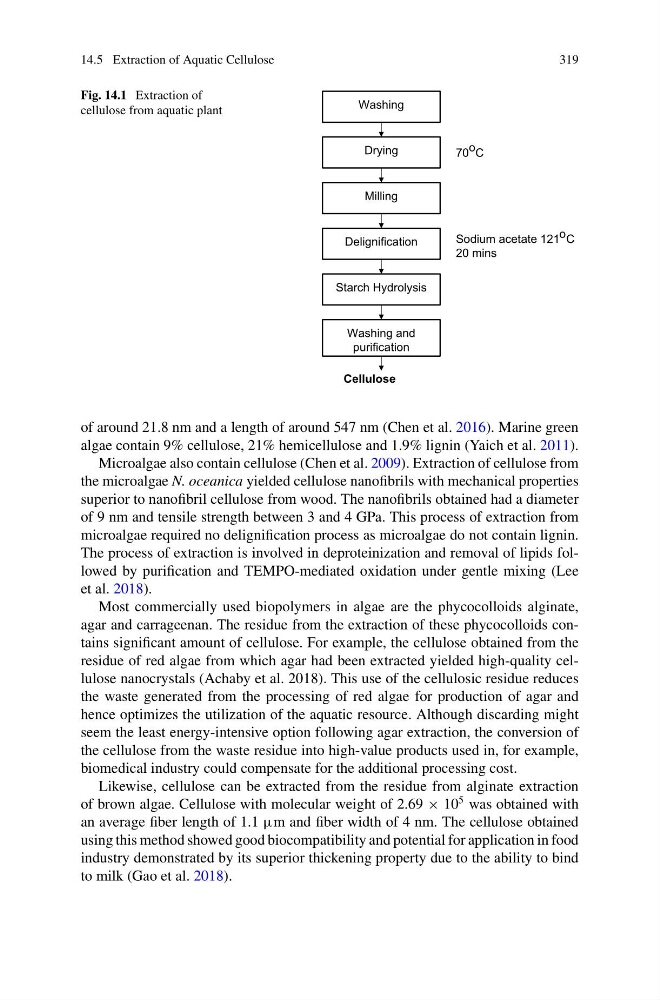
Fig. 14.1 Extraction of
cellulose from aquatic plant
Washing
Drying
Milling
Delignification
Starch Hydrolysis
Washing and
purification
Cellulose
70 C
Sodium acetate 121 C
20 mins
o
o
of around 21.8 nm and a length of around 547 nm (Chen et al. 2016). Marine green
algae contain 9% cellulose, 21% hemicellulose and 1.9% lignin (Yaich et al. 2011).
Microalgae also contain cellulose (Chen et al. 2009). Extraction of cellulose from
the microalgae N. oceanica yielded cellulose nanofibrils with mechanical properties
superior to nanofibril cellulose from wood. The nanofibrils obtained had a diameter
of 9 nm and tensile strength between 3 and 4 GPa. This process of extraction from
microalgae required no delignification process as microalgae do not contain lignin.
The process of extraction is involved in deproteinization and removal of lipids followed by purification and TEMPO-mediated oxidation under gentle mixing (Lee
et al. 2018).
Most commercially used biopolymers in algae are the phycocolloids alginate,
agar and carrageenan. The residue from the extraction of these phycocolloids contains significant amount of cellulose. For example, the cellulose obtained from the
residue of red algae from which agar had been extracted yielded high-quality cellulose nanocrystals (Achaby et al. 2018). This use of the cellulosic residue reduces
the waste generated from the processing of red algae for production of agar and
hence optimizes the utilization of the aquatic resource. Although discarding might
seem the least energy-intensive option following agar extraction, the conversion of
the cellulose from the waste residue into high-value products used in, for example,
biomedical industry could compensate for the additional processing cost.
Likewise, cellulose can be extracted from the residue from alginate extraction
of brown algae. Cellulose with molecular weight of 2.69 × 10
5 was obtained with
an average fiber length of 1.1 µm and fiber width of 4 nm. The cellulose obtained
using this method showed good biocompatibility and potential for application in food
industry demonstrated by its superior thickening property due to the ability to bind
to milk (Gao et al. 2018).
319
Fig. 14.1 Extraction of
cellulose from aquatic plant
Washing
Drying
Milling
Delignification
Starch Hydrolysis
Washing and
purification
Cellulose
70 C
Sodium acetate 121 C
20 mins
o
o
of around 21.8 nm and a length of around 547 nm (Chen et al. 2016). Marine green
algae contain 9% cellulose, 21% hemicellulose and 1.9% lignin (Yaich et al. 2011).
Microalgae also contain cellulose (Chen et al. 2009). Extraction of cellulose from
the microalgae N. oceanica yielded cellulose nanofibrils with mechanical properties
superior to nanofibril cellulose from wood. The nanofibrils obtained had a diameter
of 9 nm and tensile strength between 3 and 4 GPa. This process of extraction from
microalgae required no delignification process as microalgae do not contain lignin.
The process of extraction is involved in deproteinization and removal of lipids followed by purification and TEMPO-mediated oxidation under gentle mixing (Lee
et al. 2018).
Most commercially used biopolymers in algae are the phycocolloids alginate,
agar and carrageenan. The residue from the extraction of these phycocolloids contains significant amount of cellulose. For example, the cellulose obtained from the
residue of red algae from which agar had been extracted yielded high-quality cellulose nanocrystals (Achaby et al. 2018). This use of the cellulosic residue reduces
the waste generated from the processing of red algae for production of agar and
hence optimizes the utilization of the aquatic resource. Although discarding might
seem the least energy-intensive option following agar extraction, the conversion of
the cellulose from the waste residue into high-value products used in, for example,
biomedical industry could compensate for the additional processing cost.
Likewise, cellulose can be extracted from the residue from alginate extraction
of brown algae. Cellulose with molecular weight of 2.69 × 10
5 was obtained with
an average fiber length of 1.1 µm and fiber width of 4 nm. The cellulose obtained
using this method showed good biocompatibility and potential for application in food
industry demonstrated by its superior thickening property due to the ability to bind
to milk (Gao et al. 2018).