

12.5 Extraction of Collagen
269
Alkali pretreatment
Fish Waste
Defatting
Precipitation
Washing
Acid extraction
Centrifugation
Purification
Acid soluble collagen
pH adjustment
Pepsin extraction
Precipitation
Purification
Pepsin soluble Collagen
Solid residue
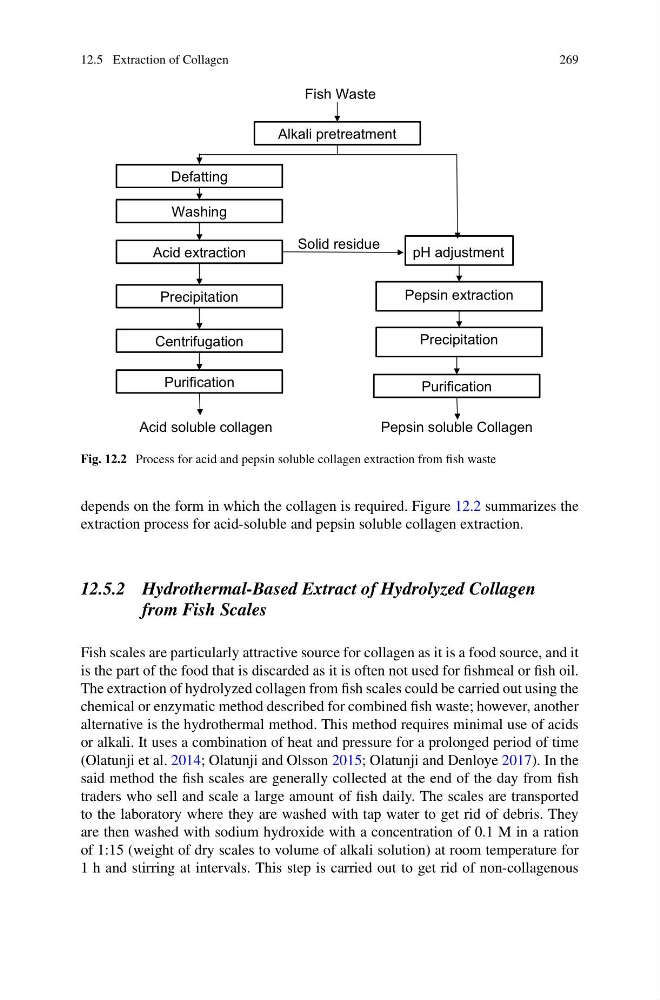
Fig. 12.2 Process for acid and pepsin soluble collagen extraction from fish waste
depends on the form in which the collagen is required. Figure 12.2 summarizes the
extraction process for acid-soluble and pepsin soluble collagen extraction.
12.5.2 Hydrothermal-Based Extract of Hydrolyzed Collagen
from Fish Scales
Fish scales are particularly attractive source for collagen as it is a food source, and it
is the part of the food that is discarded as it is often not used for fishmeal or fish oil.
The extraction of hydrolyzed collagen from fish scales could be carried out using the
chemical or enzymatic method described for combined fish waste; however, another
alternative is the hydrothermal method. This method requires minimal use of acids
or alkali. It uses a combination of heat and pressure for a prolonged period of time
(Olatunji et al. 2014; Olatunji and Olsson 2015; Olatunji and Denloye 2017). In the
said method the fish scales are generally collected at the end of the day from fish
traders who sell and scale a large amount of fish daily. The scales are transported
to the laboratory where they are washed with tap water to get rid of debris. They
are then washed with sodium hydroxide with a concentration of 0.1 M in a ration
of 1:15 (weight of dry scales to volume of alkali solution) at room temperature for
1 h and stirring at intervals. This step is carried out to get rid of non-collagenous
269
Alkali pretreatment
Fish Waste
Defatting
Precipitation
Washing
Acid extraction
Centrifugation
Purification
Acid soluble collagen
pH adjustment
Pepsin extraction
Precipitation
Purification
Pepsin soluble Collagen
Solid residue
Fig. 12.2 Process for acid and pepsin soluble collagen extraction from fish waste
depends on the form in which the collagen is required. Figure 12.2 summarizes the
extraction process for acid-soluble and pepsin soluble collagen extraction.
12.5.2 Hydrothermal-Based Extract of Hydrolyzed Collagen
from Fish Scales
Fish scales are particularly attractive source for collagen as it is a food source, and it
is the part of the food that is discarded as it is often not used for fishmeal or fish oil.
The extraction of hydrolyzed collagen from fish scales could be carried out using the
chemical or enzymatic method described for combined fish waste; however, another
alternative is the hydrothermal method. This method requires minimal use of acids
or alkali. It uses a combination of heat and pressure for a prolonged period of time
(Olatunji et al. 2014; Olatunji and Olsson 2015; Olatunji and Denloye 2017). In the
said method the fish scales are generally collected at the end of the day from fish
traders who sell and scale a large amount of fish daily. The scales are transported
to the laboratory where they are washed with tap water to get rid of debris. They
are then washed with sodium hydroxide with a concentration of 0.1 M in a ration
of 1:15 (weight of dry scales to volume of alkali solution) at room temperature for
1 h and stirring at intervals. This step is carried out to get rid of non-collagenous