

236
11 Enzymes
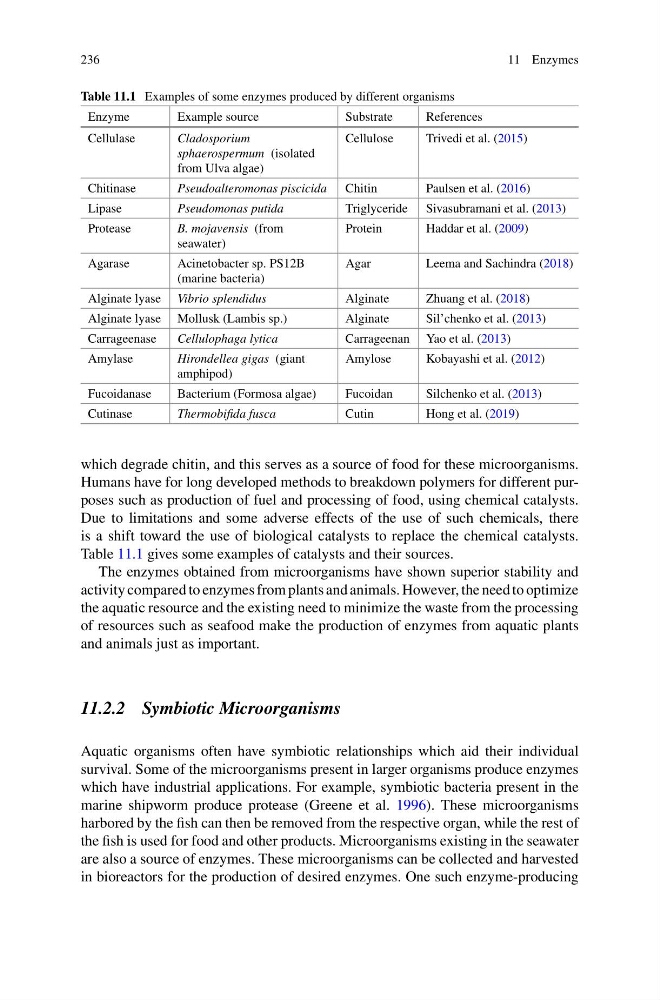
Table 11.1 Examples of some enzymes produced by different organisms
Enzyme
Example source
Substrate
References
Cellulase
Cladosporium
sphaerospermum (isolated
from Ulva algae)
Cellulose
Trivedi et al. (2015)
Chitinase
Pseudoalteromonas piscicida Chitin
Paulsen et al. (2016)
Lipase
Pseudomonas putida
Triglyceride Sivasubramani et al. (2013)
Protease
B. mojavensis (from
seawater)
Protein
Haddar et al. (2009)
Agarase
Acinetobacter sp. PS12B
(marine bacteria)
Agar
Leema and Sachindra (2018)
Alginate lyase Vibrio splendidus
Alginate
Zhuang et al. (2018)
Alginate lyase Mollusk (Lambis sp.)
Alginate
Sil’chenko et al. (2013)
Carrageenase
Cellulophaga lytica
Carrageenan Yao et al. (2013)
Amylase
Hirondellea gigas (giant
amphipod)
Amylose
Kobayashi et al. (2012)
Fucoidanase
Bacterium (Formosa algae)
Fucoidan
Silchenko et al. (2013)
Cutinase
Thermobifida fusca
Cutin
Hong et al. (2019)
which degrade chitin, and this serves as a source of food for these microorganisms.
Humans have for long developed methods to breakdown polymers for different purposes such as production of fuel and processing of food, using chemical catalysts.
Due to limitations and some adverse effects of the use of such chemicals, there
is a shift toward the use of biological catalysts to replace the chemical catalysts.
Table 11.1 gives some examples of catalysts and their sources.
The enzymes obtained from microorganisms have shown superior stability and
activity compared to enzymes from plants and animals. However, the need to optimize
the aquatic resource and the existing need to minimize the waste from the processing
of resources such as seafood make the production of enzymes from aquatic plants
and animals just as important.
11.2.2 Symbiotic Microorganisms
Aquatic organisms often have symbiotic relationships which aid their individual
survival. Some of the microorganisms present in larger organisms produce enzymes
which have industrial applications. For example, symbiotic bacteria present in the
marine shipworm produce protease (Greene et al. 1996). These microorganisms
harbored by the fish can then be removed from the respective organ, while the rest of
the fish is used for food and other products. Microorganisms existing in the seawater
are also a source of enzymes. These microorganisms can be collected and harvested
in bioreactors for the production of desired enzymes. One such enzyme-producing
11 Enzymes
Table 11.1 Examples of some enzymes produced by different organisms
Enzyme
Example source
Substrate
References
Cellulase
Cladosporium
sphaerospermum (isolated
from Ulva algae)
Cellulose
Trivedi et al. (2015)
Chitinase
Pseudoalteromonas piscicida Chitin
Paulsen et al. (2016)
Lipase
Pseudomonas putida
Triglyceride Sivasubramani et al. (2013)
Protease
B. mojavensis (from
seawater)
Protein
Haddar et al. (2009)
Agarase
Acinetobacter sp. PS12B
(marine bacteria)
Agar
Leema and Sachindra (2018)
Alginate lyase Vibrio splendidus
Alginate
Zhuang et al. (2018)
Alginate lyase Mollusk (Lambis sp.)
Alginate
Sil’chenko et al. (2013)
Carrageenase
Cellulophaga lytica
Carrageenan Yao et al. (2013)
Amylase
Hirondellea gigas (giant
amphipod)
Amylose
Kobayashi et al. (2012)
Fucoidanase
Bacterium (Formosa algae)
Fucoidan
Silchenko et al. (2013)
Cutinase
Thermobifida fusca
Cutin
Hong et al. (2019)
which degrade chitin, and this serves as a source of food for these microorganisms.
Humans have for long developed methods to breakdown polymers for different purposes such as production of fuel and processing of food, using chemical catalysts.
Due to limitations and some adverse effects of the use of such chemicals, there
is a shift toward the use of biological catalysts to replace the chemical catalysts.
Table 11.1 gives some examples of catalysts and their sources.
The enzymes obtained from microorganisms have shown superior stability and
activity compared to enzymes from plants and animals. However, the need to optimize
the aquatic resource and the existing need to minimize the waste from the processing
of resources such as seafood make the production of enzymes from aquatic plants
and animals just as important.
11.2.2 Symbiotic Microorganisms
Aquatic organisms often have symbiotic relationships which aid their individual
survival. Some of the microorganisms present in larger organisms produce enzymes
which have industrial applications. For example, symbiotic bacteria present in the
marine shipworm produce protease (Greene et al. 1996). These microorganisms
harbored by the fish can then be removed from the respective organ, while the rest of
the fish is used for food and other products. Microorganisms existing in the seawater
are also a source of enzymes. These microorganisms can be collected and harvested
in bioreactors for the production of desired enzymes. One such enzyme-producing